WTT International's Vision For The Future Of Industrial Water
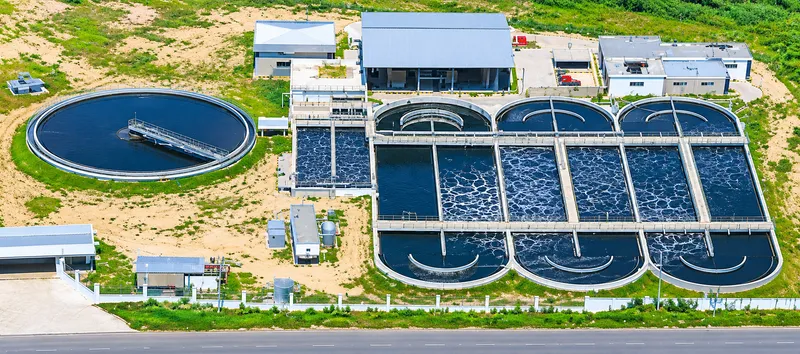
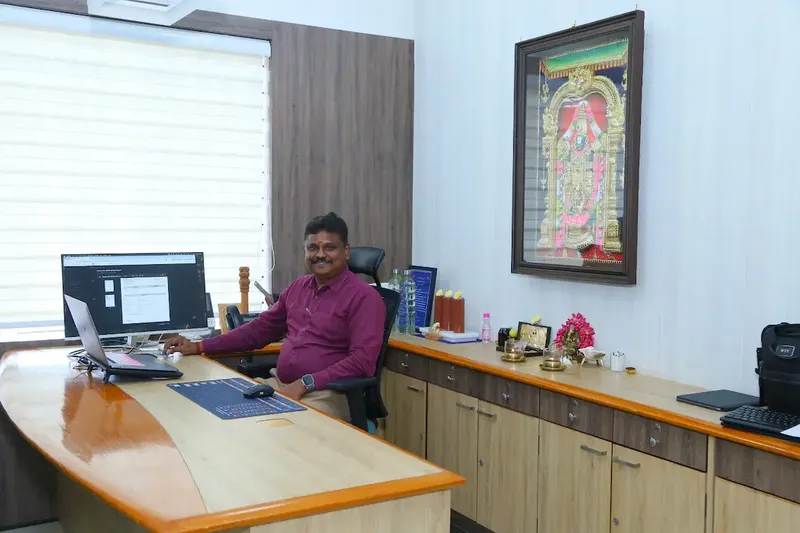
In an exclusive interaction, Mr. D. Venkatesh, Managing Director of WTT International, discusses the company's two-decade journey, breakthrough water recovery technologies, global expansion and its ambitious vision of making Zero Liquid Discharge economically viable.
As water scarcity, rising freshwater costs and environmental regulations reshape industrial manufacturing, sustainable water management has become a strategic business priority. WTT International, an engineering and technology-driven company headquartered in Tirupur, India, has been at the forefront of this transformation for more than two decades. With advanced water recycling, Zero Liquid Discharge (ZLD) and resource recovery solutions, the company is redefining how industries perceive and manage wastewater.
WTT International has been associated with industrial water recycling for more than two decades. What inspired this journey?
Our journey began in 2003 in Tirupur with a simple belief: wastewater should not be considered waste when it can be recovered and reused. At a time when industrial water recycling was still gaining acceptance, we focused on developing practical technologies that could demonstrate both technical reliability and commercial viability.
One of our defining milestones was the implementation of a large-scale recycling system at the Birla Group's Century Denim facility in Indore in 2004, achieving approximately 90% water recovery. This strengthened our confidence in industrial-scale recycling. Today, we have progressed towards integrated technologies capable of achieving over 97% recovery, while also developing solutions to recover valuable chemicals and salts.
Textile wastewater is particularly challenging to treat. How has WTT developed solutions to address these complexities?
Textile wastewater contains a complex combination of dyes, salts, chemicals, suspended solids and organic contaminants. Its characteristics also vary depending on dyeing, washing, bleaching and finishing operations.
Our approach is to develop integrated treatment systems rather than depend on individual technologies. We combine biological treatment, advanced filtration, membrane separation and specialized resource recovery processes to achieve consistent performance.
Our focus extends beyond removing pollutants. We aim to recover maximum water, reduce energy consumption and bring valuable resources back into the manufacturing process.
Your 30 MLD water recycling project at Sachin, Surat, is a significant achievement. What makes it special?
The Sachin project demonstrates the importance of establishing technological confidence through actual operating performance. Considering the scale and complexity of the textile cluster, stakeholders needed assurance that advanced recycling technology could deliver consistent results.
We initially established a 2 MLD demonstration plant, which operated successfully for more than a year. This allowed stakeholders to evaluate our ceramic membrane technology and high-recovery processes under actual operating conditions. Its successful performance paved the way for the 30 MLD full-scale recycling facility.
We strongly believe that large-scale investments in water treatment must be supported by demonstrated performance and long-term operational reliability.
Rewolutte® is one of WTT's flagship technologies. What differentiates it from conventional reverse osmosis systems?
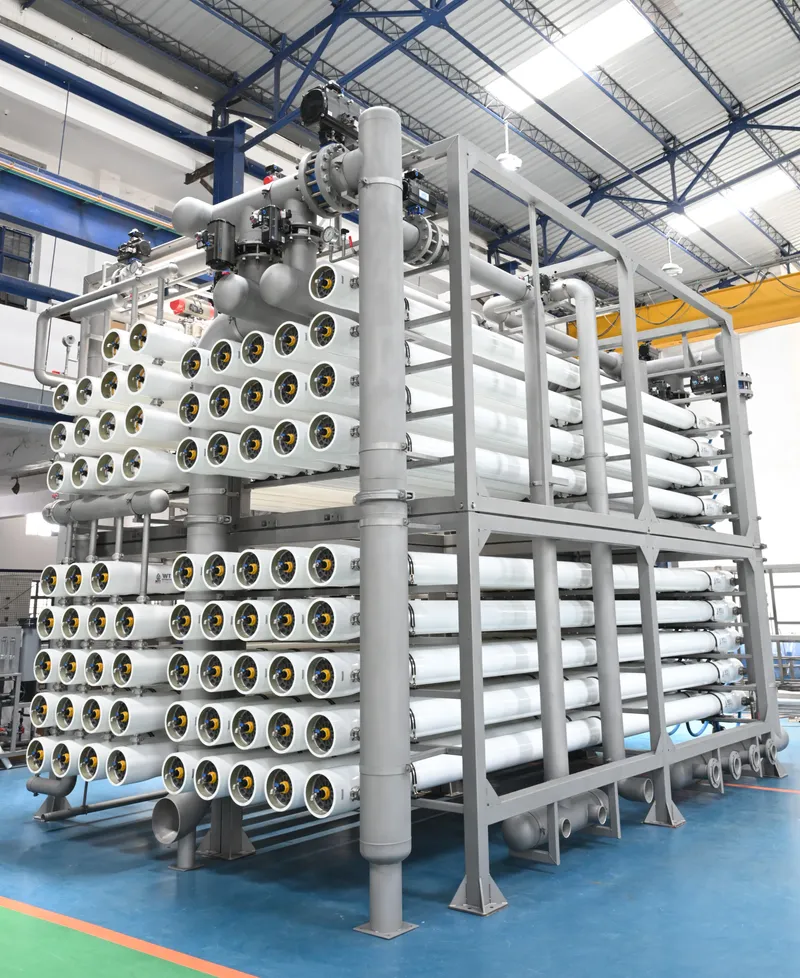
Rewolutte® is our patented, single-skid high-recovery reverse osmosis technology, developed to maximize water recovery while minimizing reject generation.
It can achieve more than 97% water recovery, with less than 3% reject. Compared with conventional configurations, it can also reduce capital investment by approximately 15–20% and requires significantly less installation space.
Its specialized membrane configuration and hydraulic design support improved energy efficiency, while automation enables effective monitoring and control. The concentrated stream can also be further processed through downstream recovery technologies.
Our objective is to make high-recovery water recycling more compact, efficient and commercially attractive.
WTT has also developed technologies to recover valuable chemicals and salts. Could you explain their applications?
Resource recovery is central to the future of industrial wastewater management. We have developed three important technologies in this area.
Brinex® recovers sulphate and chloride salts from RO reject streams, producing concentrated brine of approximately 120–140 grams per litre that can be reused in textile dyeing operations.
CaRe® recovers caustic soda from textile mercerization processes using cross-flow membrane technology. It removes fibres, colour particles and suspended impurities while retaining the chemical strength of the caustic solution.
Our Contaminants Removal System, Contox, addresses complex pollutants such as high-molecular-weight dyes, oligomers, heavy metals and toxic organic compounds that conventional biological treatment may not adequately remove.
Together, these technologies help industries reduce fresh chemical consumption, minimize waste and improve overall resource efficiency.
How important is biological treatment in achieving high water recovery?
Biological treatment is fundamental to the performance of an integrated recycling system. Advanced membranes can achieve excellent recovery, but their efficiency depends heavily on the quality of incoming water.
Our biological systems are designed to reduce organic contaminants under controlled aerobic and anoxic conditions. Precision aeration and automated monitoring help maintain stable biological performance.
Effective pretreatment protects downstream membranes, supports longer operating life and improves overall recovery efficiency. We engineer the entire treatment plant as one integrated system, ensuring that every process complements the next.
What is driving WTT's international expansion and diversification?
Water security is a global concern. Industries across Europe, Africa, South America and other international markets are increasingly looking for dependable solutions to reduce freshwater consumption and improve environmental performance.
The textile industry remains an important market, particularly as international apparel brands encourage their supply chains to adopt sustainable manufacturing practices.
However, our ambitions extend well beyond textiles. We are expanding into dairy, solar cell manufacturing, ultra-pure water for semiconductors, breweries, agriculture, mining and pharmaceuticals.
Each sector has distinct requirements, and our experience in membrane technologies, advanced treatment and resource recovery provides a strong foundation for developing application-specific solutions.
How does WTT's manufacturing capability in Tirupur support its global ambitions?
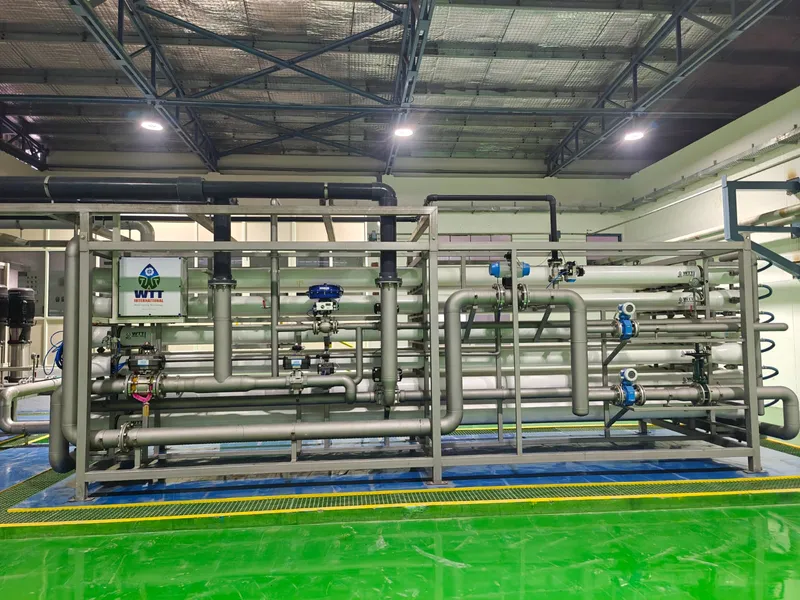
Our engineering and manufacturing capabilities in Tirupur are among our greatest strengths. Our technologies are engineered and manufactured in India, supported by investments in infrastructure, technical expertise and quality standards.
From fabrication and welding to equipment assembly and system integration, we emphasize precision and quality at every stage. We have also strengthened our workforce capabilities with support from European experts.
We believe Indian engineering companies can compete successfully in global markets by combining original technological innovation, manufacturing excellence and dependable project execution.
WTT has an ambitious vision of achieving Zero Liquid Discharge at Zero Cost. How realistic is this objective?
Traditionally, industries have viewed wastewater treatment primarily as a regulatory expense. We believe this perspective must change.
When freshwater costs exceed ₹100 per kilolitre in certain industrial regions, recovering and reusing water creates substantial economic value. Our technologies can achieve operating costs of approximately ₹45 per kilolitre at 97% recovery in certain applications. With brine recovery, the cost can be approximately ₹60 per kilolitre.
When we combine water recovery with the reuse of recovered salts and chemicals, the economic benefits increase further.
Our vision of ZLD at Zero Cost is about progressively offsetting wastewater treatment expenditure through the economic value generated from recovered water and resources.
What are WTT's key priorities for the coming years?
Our priorities include strengthening our international presence, developing more patented technologies, improving recovery efficiencies and expanding into new industrial sectors. We are targeting a turnover of ₹500 crore in the coming years.
However, growth is not measured by financial performance alone. We want to establish WTT as a globally recognized industrial water technology company, creating measurable value for customers while contributing to global water security.
Finally, what message would you like to convey to industries considering advanced water recycling and ZLD investments?
Industries must recognize that water is a valuable resource, not an unlimited commodity. Advanced recycling is no longer simply about regulatory compliance; it is about securing future water availability, reducing operating costs and building sustainable manufacturing operations.
At WTT, our philosophy has always been to treat water not as waste, but as treasure. Our mission is to continue pushing technological boundaries and demonstrate that environmental responsibility and commercial profitability can go hand in hand.
Ultimately, the future of industrial water management is not just about treating wastewater. It is about recovering its value, reusing every possible resource and ensuring that every drop contributes to productive use.