Why Textile Waste Is the Key to the Future of Fashion and Manufacturing
Parvinder Singh
Founder
Global Alliance for Textile Sustainability Council (GATS)
Introduction: Rewriting the Industry Playbook
The Global Alliance for Textile Sustainability Council (GATS), in partnership with Textile Value Chain (TVC), launches a 12-part Knowledge Series to equip the Indian textile and fashion ecosystem with essential knowledge on sustainability, circularity, competitiveness, ESG compliance, and emerging global regulations. This is not just a theory series — each edition is rooted in real-world practice, policy, and commercial advantage Edition 1 starts where the problem — and opportunity — begins: textile waste. "India’s future in global textiles will not be defined by how much we produce, but by how little we waste — and how wisely we reuse."
What is Textile Waste? A Modern Definition
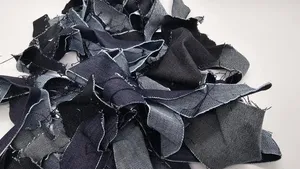
Textile waste is not just trash — it is every piece of material, product, or inventory in the textile value chain that does not reach or stay with the end consumer. It exists in many forms, across many points of the supply chain.
Post-Industrial Waste
Post-Consumer Waste
Textile waste categories: Most factories in India already deal with pre-consumer and post-industrial waste — yet these are rarely measured, valued, or optimised. Meanwhile, post-consumer waste is growing fast, especially with the rise of fast fashion and frequent wardrobe churn. India generates over 1.2 million tonnes of post-consumer textile waste annually. Yet less than 30% is formally collected, and only a fraction is recycled into usable fibre.
The Business Case: Why Textile Waste is Wealth in Disguise
- Raw Material Volatility
Cotton prices fluctuate up to 40% year-on-year. Polyester is fossil-fuel linked. Recycled fibres provide a stable, circular raw material stream.
- Compliance & Market Access
The EU Textile Strategy, CBAM, and EPR laws will make waste traceability, take-back programs, and recycled content mandatory for exports starting in 2025.
- Cost and Carbon Advantage
- Recycled cotton uses up to 90% less water
- Cuts carbon emissions by 40–80% per kg of fabric
- Pre-consumer recycled material is 30–50% cheaper than virgin alternatives in many cases
Panipat's Textile Recycling Model
Panipat, Haryana — the heart of India’s recycling sector — processes over 3000 tonnes of textile waste per day into yarns, rugs, shoddy blankets, and increasingly, recycled denim and fashion garments fabrics. Some units now directly work with brands to turn pre-consumer waste into high-value, GRS-certified yarns and fabrics. If scaled with sorting tech, EPR partnerships, and traceability platforms, India could become the global hub for circular fashion production.
Monetising Textile Waste: A Roadmap for Indian Factories
Turning waste into revenue is not just feasible — it’s already happening. Here’s a simplified roadmap to begin:
India’s Global Edge: Built for Circularity
India is uniquely positioned to lead the global waste-to-resource movement in fashion. Why?
- Rich ecosystem of recycling hubs (Panipat), craft revival, and low-impact production
- A vast network of women-led upcycling units, informal sorters, and agile MSMEs
- Cost-effective waste processing — up to 70% cheaper than EU or US market
The missing link? Structured programs, policy support, brand partnerships, and industry-wide readiness for EPR and ESG norms.
Key Takeaways
- Textile waste is not a liability. It is an untapped source of savings, compliance, and raw material.
- Pre-consumer and post-industrial waste are easiest to recycle — and monetisable today.
- Post-consumer waste, while complex, is key to long-term competitiveness in export markets.
- Indian manufacturers must build circularity into their DNA before global laws make it non-negotiable.
Coming Up Next in the GATS–TVIC Knowledge Series
Edition 2: "Demystifying Sustainability – What It Really Means for the Fashion and Textile Industry" We'll break down the idea of sustainability and how it impacts:
- Buyer decisions
- Funding eligibility
- Cost structures
- Market expansion
Get ready to move from buzzwords to business plans. Final Word “The future of fashion is circular — and the factories that treat waste as their first raw material will lead it.” Let’s stop exporting our best clothes and landfilling the rest. Let’s recycle. Regenerate. Reimagine. Because India isn’t just the world’s textile factory — it can be its circular fashion capital.