Why Outfit Repeating Has Become a Social Crime! — And the Fashion Industry Is Responsible
By Ruchika Rajan, Design-Accessory and Fashion, Renaissance University and Ananya Sharma, Assistant Professor, School of Fashion, Renaissance University, Indore.
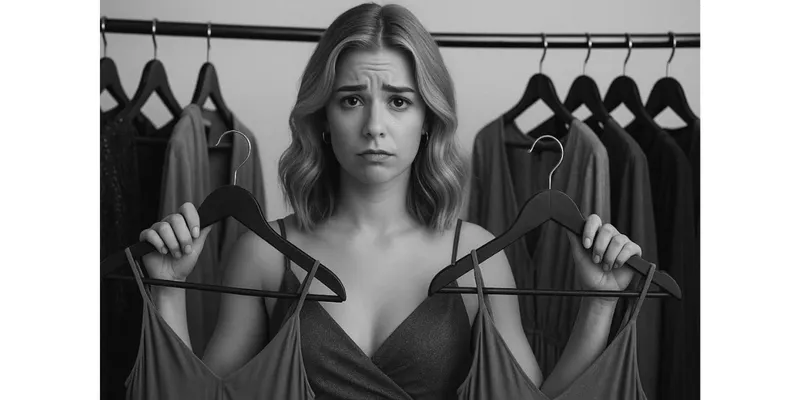
There are a lot of silly things society judges people for, but nothing feels more unnecessary than the embarrassment around wearing the same outfit twice. How did something so normal turn into something people feel ashamed of? Nobody announced a rule. No one wrote it in a book. Yet somehow, repeating an outfit has started feeling like a modern social crime. And the truth is harsh: this shame didn’t grow on its own. It was planted, watered, and fully nurtured by the fashion industry — because the industry profits the most when you feel like repeating an outfit is a failure.
The fashion industry generates 92 million tons of textile waste annually. About 85% of clothes are discarded each year, with less than 15% being recycled. In the U.S., 11.3 megatons of textile waste end up in landfills yearly—an 80% increase since 2000—as garments often last fewer than 10 wears. Globally, consumers discard $460 billion worth of usable clothing every year, typically after just 7–10 uses, worsening landfill overflow.
There was a time when clothes were worn because we loved them, not because we needed “new content.” Ten or fifteen years ago, repeating outfits was just a part of life. People wore what they owned, restyled the same pair of jeans for different days, and never stopped to wonder whether someone had already seen them in it. But the moment social media arrived, the simple act of getting dressed turned into a performance. Instagram turned everyone into their own personal brand. Every outing became an opportunity to post. Every outfit became documentation. And when your wardrobe starts living online instead of just on your body, repeating something suddenly feels like reposting the same picture — unnecessary, boring, maybe even embarrassing.
Platforms don’t say it out loud, but they reward newness. A fresh outfit catches attention; a repeated one scrolls past unnoticed. Once that pattern kicks in, people naturally start treating “new” like a measurement of effort. New means you’re trying. New means you’re relevant. New means you look like you belong. The pressure doesn’t come from inside — it comes from a system that celebrates constant novelty.
Influencers only made the problem louder. They rotate outfits faster than a washing machine. Everything is worn once: snap a photo, tag the brand, drop a discount code, move on. Their feeds create an illusion that wearing the same outfit twice is basically a style sin. Their audience absorbs this without even realising it. The unspoken message is clear: don’t repeat what’s already been seen. And the more people start believing that, the more they shop to keep up — exactly how the cycle was designed to work.
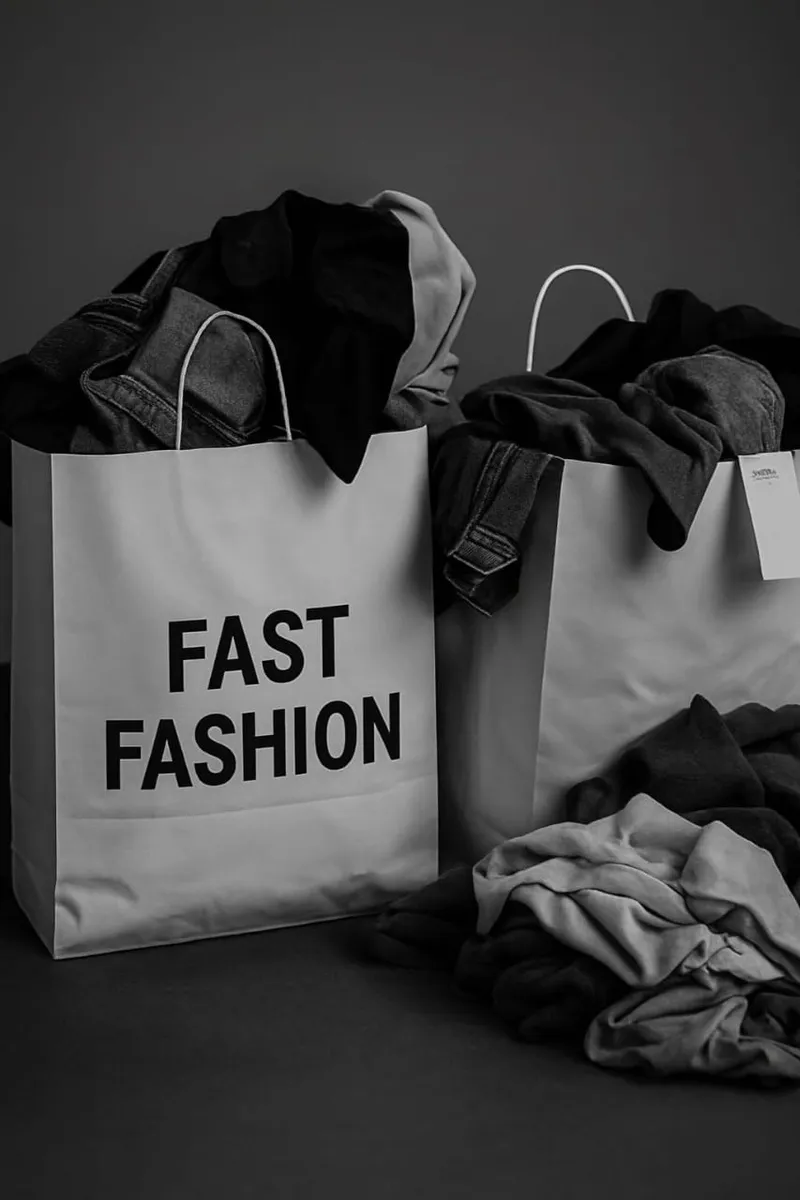
Brands, of course, didn’t waste a second. They pivoted from two collections a year to weekly drops. Fast fashion went full-speed into “new arrivals every day,” “micro-trends,” and endless hauls. The industry learned how to sell insecurity packaged as style. If trends last two weeks, last month’s outfit becomes “old news.” Outfit repeating went from being normal to being a sign that you aren't keeping up with the rotation. The cruel part is that this pressure doesn’t come from your friends — it comes from a billion-dollar industry that gains money every time you feel the need to look “new.”
Celebrities add another layer to this mess. Red carpets are filled with one-wear outfits. Stylists borrow pieces, the celebrity wears them once, returns everything, and the outfit disappears. But what the public sees is perfection: a new look for every event. When the most photographed people in the world never repeat clothes, it quietly tells everyone else, “Maybe you shouldn’t either.” The comparison isn’t fair, but comparison rarely ever is.
The heart of the issue is visibility. We don’t feel embarrassed because the outfit is worn twice. We feel embarrassed because we think someone might notice — or worse, judge. When every look is documented, repeating something becomes a digital before-and-after. The pressure isn’t on what you wear; it's on who might see it. Dressing becomes less about joy and more about maintaining an image.
But this mindset has consequences. Massive ones. Overconsumption in fashion is out of control, and outfit-shaming is a huge driver behind it. When people feel uncomfortable rewearing their own clothes, they naturally end up buying more than they’ll ever need. Fast fashion companies know this and keep feeding the insecurity. The result is a mountain of clothing waste: donation bins overflowing, landfills growing, and garments designed to last one photograph instead of one lifetime. The industry never talks about this part because it exposes the truth — outfit repeating shame is profitable.
“It’s not about having a lot of clothes. It’s about havingthe right ones.”
-Jenna Lyons (FormerJ.Crew Creative Director)
Yet, ironically, the return of outfit repeating is already happening, quietly but strongly. Some major celebrities — Kate Middleton, Zendaya, even Cate Blanchett — have re-worn entire looks publicly, and their reputation didn’t crack. If anything, they were praised for confidence. Designers don’t care if customers repeat. Craftspeople don’t care. Stylists don’t care. The pressure isn’t artistic — it’s commercial. And the moment influential people normalize repeating outfits, people begin to realise how artificial the shame truly is.
The truth behind all of this is painfully simple: outfit repeating feels wrong today only because the fashion industry made it feel wrong. It exaggerated the idea of “newness” until the world believed that being stylish meant constantly refreshing yourself. It wasn’t consumers who created this mindset — it was the system that wanted them to never feel satisfied.
People aren’t tired of their clothes. They’re tired of pretending they need new ones every week.
Fast fashion encourages rapid turnover, with shoppers buying an average of 68 new items per year. A 2017 poll reported that 41% of women aged 18–25 felt pressured not to repeat outfits when going out, largely due to fear of judgment on social media. Meanwhile, 25% of social media users plan outfits specifically for photos, prioritizing novelty over practicality.
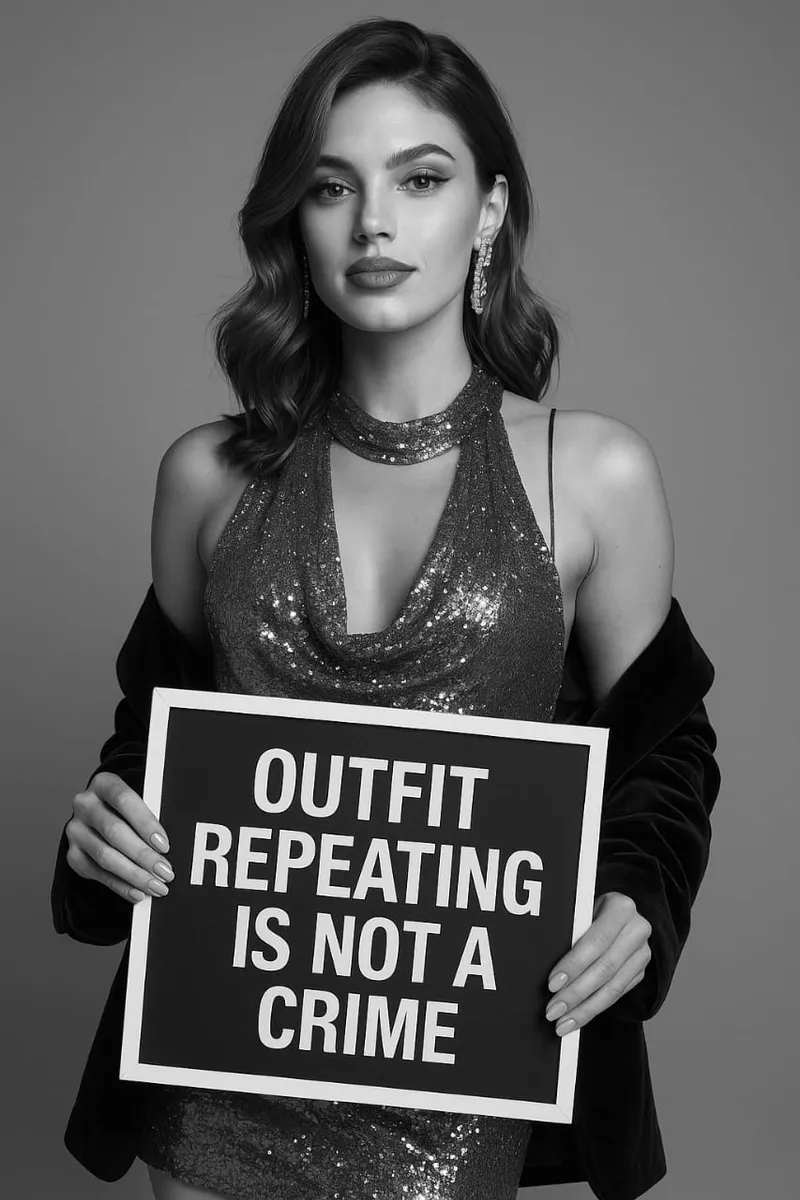
If fashion is ever going to be honest again, repeating outfits needs to stop being a statement and start being normal. It should never feel like a confession. It should never feel like proof of anything. And if someone judges you for wearing something twice, the problem isn’t your outfit — it’s the world that convinced them constant novelty equals worth. Repeating an outfit isn’t a lack of style. It’s a refusal to let the industry decide how many times you’re allowed to enjoy your own clothes.