Why an inverter generator throws away the power its engine makes and builds it again
Three percent on the label
Many generator labels list a figure for total harmonic distortion, and on some it reads under
three percent. That small number explains why an inverter generator can run a furnace control
board or a laptop charger that a basic machine might upset, which matters as fall storms begin
knocking out power across Canada and outages stretch into the colder months.
The electricity is made twice
A conventional generator's alternator produces household current directly, so the engine has to
spin at a fixed speed to hold the frequency steady. Any wobble in engine speed or any sudden
load shows up as a ragged waveform at the outlet.
An inverter design does something that sounds wasteful. Its alternator produces rough, high-
frequency current, which electronics convert to direct current and then rebuild into a smooth
alternating wave at the correct frequency. The engine is no longer responsible for the shape of
the power, only for the quantity.
Distortion describes how far a waveform strays from a smooth curve, the extra ripples riding on
top of it. Motors fed a distorted supply run warmer, and electronic controls such as the variable-
speed blower in a modern furnace can misread it and shut down. A low figure means the supply
looks much like utility power to those devices.
Why does the engine slow down?
Because frequency now comes from the electronics, the engine can change speed to match
demand. With only a refrigerator and a few lights connected, it idles down, burns less fuel and
makes far less noise, which is why an inverter is often the practical answer for anyone looking
for a quiet generator near a house.
When a large load such as a well pump starts, the engine speeds up to supply it, and the output
waveform stays clean throughout. Motors draw a brief surge several times their running current
as they start, so an inverter generator has to be sized for that starting surge rather than for the
pump's running rating alone.
How a dual fuel inverter generator behaves in a Canadian winter
It runs on gasoline or propane, and the choice changes how it behaves. Gasoline carries more
energy, so output is usually higher on it, but stored gasoline goes stale within months unless it is
treated.
Propane keeps indefinitely in its cylinder, which suits a machine that may sit unused until an ice
storm. Its weakness is cold. The pressure inside a propane cylinder falls as temperatures drop,
and in a deep freeze a small cylinder may struggle to deliver fuel as fast as a heavily loaded
engine wants it. A larger cylinder vaporizes fuel more readily in the cold, and cylinders should
never be warmed with a flame or heater.
Connecting to the house is the dangerous part
An inverter generator for home backup should never be plugged into a household outlet to feed
the wiring backward. That current can travel out onto the utility lines and injure the crews
working to restore power. A transfer switch or interlock installed by a licensed electrician keeps
the house isolated from the grid.
Exhaust matters as much. Generators belong outdoors, well away from windows, doors and
vents, since carbon monoxide builds up quickly in garages and sheds. A home generator used
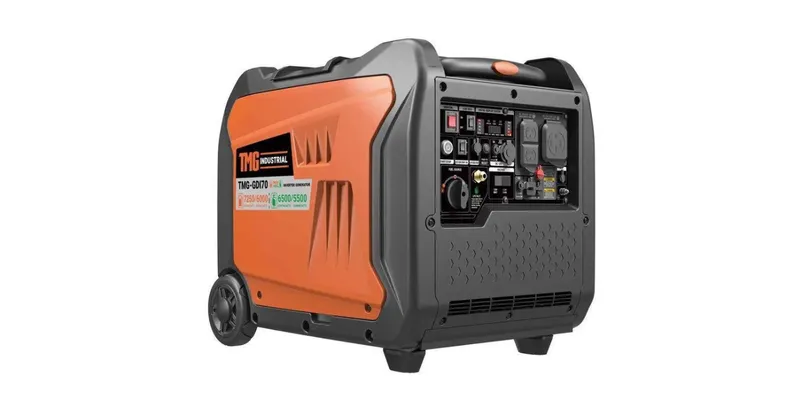
this way, such as the 7250 watt dual fuel inverter generator from TMG Industrial with its low
distortion rating, can carry essential circuits through a long outage when it is placed and
connected this way.