When Textile Innovation Quietly Rewrites the Supply Chain
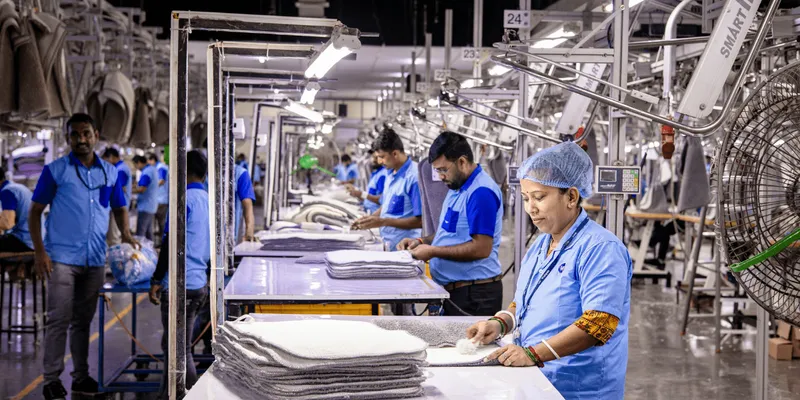
Every January, the fabric markets in Asia shift into high gear. New weaves appear. Mills pushes experimental blends. Designers hunt for materials that let them stand out without breaking the cost structure. In this early-season rush, one group tends to arrive earlier than everyone else: the companies that work directly with manufacturers rather than buying finished bags. They come to evaluate materials not for the next photoshoot, but for production feasibility—how fabric behaves under stitching tension, how coatings age, how colors react under real-world abrasion.
During a visit this year, a sourcing manager mentioned how much easier her workflow became after partnering with a custom bag manufacturer rather than juggling multiple vendors. Instead of guessing which textiles would survive mass production, she could test fabric behavior directly against real manufacturing constraints—lamination temperatures, bonding strength, shrinkage rates, and yield efficiency. The insight wasn’t about any specific factory; it was about how vertical understanding reduces waste in textile-driven industries.
Another buyer—this one developing a minimalist handbag line—shared a similar shift. Instead of sourcing fabrics first and then hunting for a supplier later, she looped in a prototype team early. She had previously assumed that “factory” meant low creativity. Then she collaborated with a development team she found through a page for a Chinese factory handbag expert. What changed wasn’t the bag style—it was the way materials were evaluated. Weight, stretch, fold memory, UV stability… every detail fed into a more predictable outcome. The final products used the same fabrics she initially selected, but the performance was dramatically higher because stitching, reinforcement, and patterning were optimized for those exact textiles.
Why These Stories Matter to the Textile World
Most discussions in the textile field revolve around innovation at the material level—coatings, fibers, sustainability, or price movement. Yet the real friction in the textile-to-product chain often happens downstream, during transformation. A brilliant material can still fail in the hands of a manufacturer who does not understand its behavior. A budget fabric can exceed expectations when engineered with precision.
The quiet advantage lies here: Textile innovation doesn’t become market innovation until someone translates it into a manufacturable product.
And that translation depends on how early production knowledge is incorporated into the material-selection process.
Where the Industry Is Heading
More brands—large and small—are collapsing the gap between fabric sourcing and product engineering. Several trends are driving this shift:
- Designers want a material-first identity but without production risk。
- Procurement teams push for lower sample failure rates and predictable lead times。
- Sustainability standards force companies to consider fabric waste, durability, and total lifecycle cost。
- Textile mills increasingly collaborate with downstream manufacturers to pre-test compatibility.
We’re seeing a new ecosystem forming: fabric innovation linked tightly with manufacturing pragmatism。
For textile-focused readers, the takeaway is clear。 The next competitive edge will not come from one more recycled yarn or one more coated canvas. It will come from the integration of textile properties with production engineering earlier in the cycle。
The companies that master this bridge—designers, sourcing teams, or manufacturers—quietly gain advantages: fewer failed samples、faster development cycles、more predictable quality。
A Final Thought
In the textile industry, the story rarely ends at the loom. It ends when the material becomes a dependable, scalable product that consumers can actually use.