What Are We Becoming? Arzan Khambatta’s SCRAPTURE at ACETECH Mumbai 2025
We are constantly in motion—chasing progress, ideas, milestones that resemble success. Yet amid this relentless acceleration, few pause to ask where this journey is truly leading. Technology races ahead, reshaping our lives at a speed that leaves little room for reflection. While its advancement feels inevitable, its impact on the human condition often remains unseen, unmeasured, and deeply personal.
This invisible cost—emotional, psychological, existential—is where art becomes essential. It is within this space that Arzan Khambatta’s work intervenes, urging viewers to slow down, confront discomfort, and engage with questions that rarely surface in everyday life.
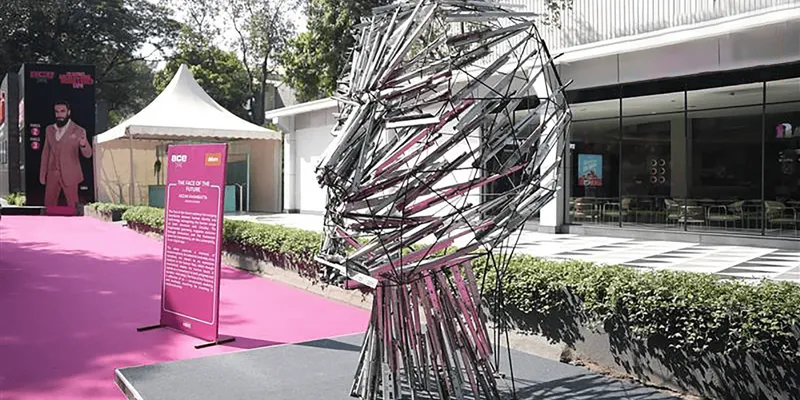
Presented at ACETECH Mumbai 2025, Khambatta’s installation created using Blum’s TANDEM runners is deliberately understated. It avoids spectacle, yet commands attention. The work compels viewers to stop—not through noise or scale, but through quiet intensity—inviting introspection on what humanity is becoming in an age shaped by machines.
Trained as an architect, Khambatta once worked within the structured logic of form and function. Over time, however, he felt constrained by conventional boundaries and turned toward discarded materials—wood, metal, industrial remnants often dismissed as waste. From these fragments emerged his signature practice of SCRAPTURES: raw, unpolished assemblages that carry traces of human experience. Imperfect by design, they reflect reality as it is—layered, unresolved, and deeply human.
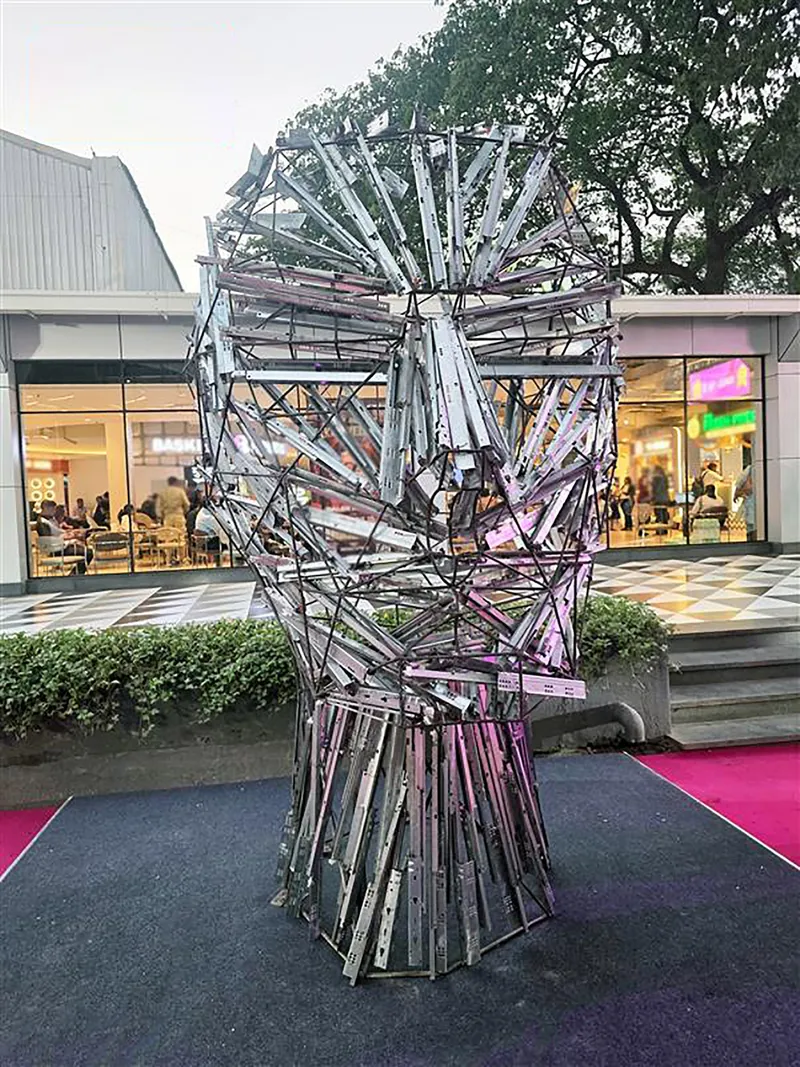
His latest work, The Face of the Future, created for ACESTREET at ACETECH Mumbai 2025, resists the notion of a sleek, utopian tomorrow. Instead, it occupies a liminal space—part human, part something else—caught between memory and anticipation. The form feels familiar yet unsettling, embodying the tension between technological evolution and emotional identity.
The installation offers no solutions, only questions. How is technology reshaping our humanity? What is the price of unchecked progress? And what does it truly mean to evolve? In a world consumed by momentum, Khambatta’s work becomes a moment of pause—a reminder that reflection is as vital as innovation.
Speaking about the installation, Arzan Khambatta says,
“For decades, I’ve used industrial materials to tell human stories,” he says. "With this piece, I wanted to take Blum’s TANDEM runners — these beautifully engineered, hidden fittings — and make them part of something bigger. The piece is a reminder of the paradox that is our reality today. We're changing, along with technology, evolving but still searching for meaning. The impossible just takes a little longer, but we’re getting there. Using Blum’s runners felt right to pose a question that matters today more than ever."
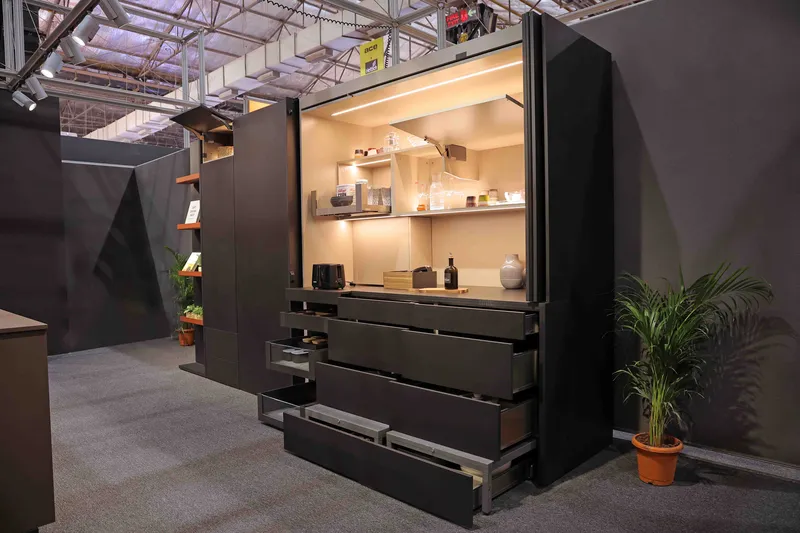
From Blum’s perspective, the collaboration was equally reflective. Neelam Shah, Head of Marketing at Blum, notes,
“At Blum, collaborating with architects and designers is part of our DNA,” she says. “But working with a creative genius like Arzan — there’s something uniquely special about it. There’s a deeper purpose behind what he does. He has this way of making you stop and truly reflect. That’s the power of art — it should move you, it should make you think. This collaboration gave us the chance to spark a bigger conversation. It asks us to take a serious look at the growing relationship between humans and technology. The message is poignant, more urgent than ever, yet so often goes unspoken. The response to this installation has been amazing, and we’re proud that our TANDEM runners were part of it.”
At its core, The Face of the Future stands as a quiet yet powerful intervention—one that does not celebrate speed, but questions it. In doing so, it reminds us that sometimes, the most meaningful progress begins by stopping to reflect.