Weaving Heritage into Future: A Conversation with Ms Roop Rashi Mahapatra
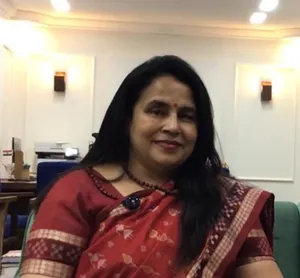
Ms Roop Rashi Mahapatra
CEO,
Khadi and Village Industries Commission (KVIC)
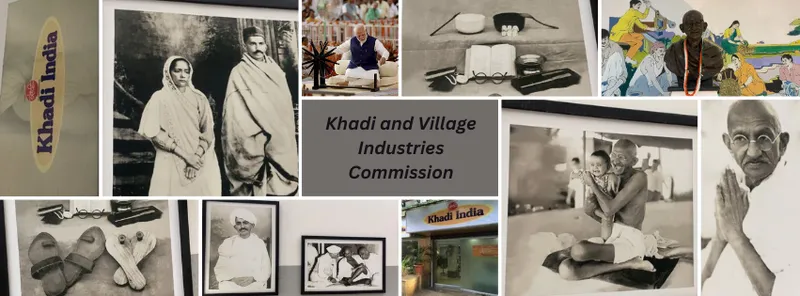
In an era where fast fashion dominates the global textile landscape, Khadi stands as a timeless symbol of India's heritage, sustainability, and self-reliance. As the Khadi and Village Industries Commission navigates the challenges of modernisation while preserving tradition, who better to lead this transformation than Ms Roop Rashi, CEO of KVIC—a seasoned administrator with deep expertise in finance, textiles, and policy implementation over three decades. The TVC Media Team sat down with Ms Roop Rashi to explore her vision for Khadi's future, the lessons from her professional journey strengthening Textile Value chains as Textile Commissioner, GOI, and how this ancient craft can resonate with contemporary consumers while empowering millions of artisans across India.
Given your background in finance and textiles, what is your vision for modernising khadi at KVIC?
I joined the textiles sector in 2020 and come from the Indian Audit and Accounts Service, 1994 batch. The Government of India has entrusted me with diverse assignments over the years—I've worked with speciality commodities like coffee, served as Secretary of Finance (Fiscal Reforms) for the Government of Karnataka, and focused extensively on financial inclusion at a granular level.
Khadi and village industries represent genuinely inclusive micro-enterprises. My experience in financial inclusion is directly relevant here because all the players in the khadi value chain—the manufacturers and artisans, whom I prefer to call ARTISTS of their unique crafts —need support through various financial instruments to transform their art into sustainable enterprises.
My knowledge of textiles, particularly the three primary fibres we use—cotton, silk, and wool—will enable me to contribute toward increasing the capacity of khadi artisans, primarily spinners and weavers working through khadi institutions. I hope we can engage and create an Enterprise alongside. My goal is to add value to our current work through deeper stakeholder engagement and more comprehensive, outcome-oriented support systems.
What key lessons from scaling medical textiles during COVID-19 are influencing khadi's production today?
The COVID-19 period demonstrated something remarkable. As you are aware, the Ministry of Textiles under esteemed leadership of Hon’ble PM Sir showcased to the world the power of synergy and collaboration—bringing together government, field offices, industry, and the banking system to generate an industry worth approximately $1 billion within just two to three months of medical textiles to protect our front runner warriors and am grateful that I could join that effort.
This experience reinforced a crucial insight: when you work collaboratively across all fibres and along the entire value chain, you can increase total value returns for everyone involved. That confidence—knowing the sector supports you and the government supports the sector—is my guiding principle in delivering results for khadi.
I consider our khad, the eldest sister among the various textiles we have. It's unique because it provides not just hand-spun cloth, but fabric where even the thread is made with care, and approximately 80% of this work is done by women. The warmth of mothers and sisters that comes through khadi as a micro-enterprise to all our citizens is something that needs to be packaged and promoted as a solution for sustainable enterprise and a sustainable earth in the long run.
What was your top priority upon taking charge as CEO of KVIC?
My top priority is strengthening every stakeholder in the ecosystem. This means contributing meaningfully to policy in Delhi while engaging significantly with each player—whether at the fibre level, convergence with Research Institutions, spinning or weaving level, the artisans, the khadi institutions, state governments, state finance departments, or my own state offices. I want to ensure they can effectively engage with the various khadi and village industry enterprises and prospective khadipreneurs across India.
The support rendered through KVIC as part of the Ministry of MSME has generated an aggregated estimated value of approximately ₹1,72,000 crore for khadi and village industries. That's a substantial figure, especially considering many perceive this to be a very small micro-enterprise sector.
This underscores an important development paradigm—one that doesn't rely on just a few leaders at the top, but instead focuses on developing a strong base by strengthening the micro and small enterprises that form the foundation of our economy. By creating surpluses for them and making them sustainable, the entire economic superstructure becomes more vibrant and sustainable, contributing to the all-round development of India.
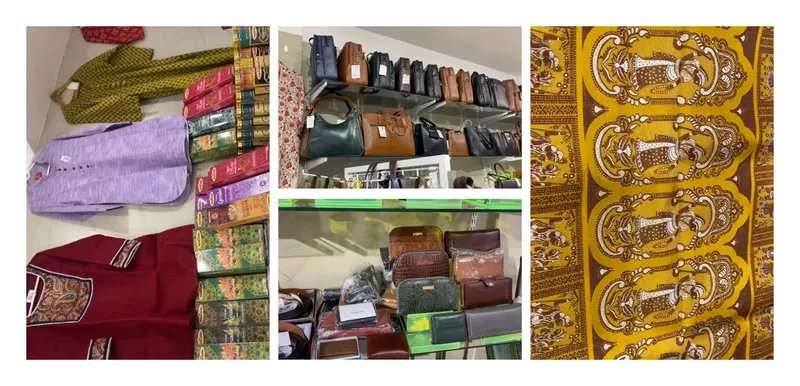
When we think of khadi, we often associate it with October and Gandhi Jayanti sales. However, Khadi is largely viewed as heritage, while today's market is shifting toward fast fashion, slow fashion, and different mill sectors. How do you ensure that Khadi sustains its heritage in this new environment and adapts to contemporary culture, including Gen Z?
We are a very large country with a tremendous heritage, and with our demographics, we represent a very large market. I don't see a conflict between Khadi, which represents our heritage, and other textile options.
I'd like to quote the Honourable Prime Minister, who says: "Khadi For Nation, Khadi For Fashion, Khadi For Transformation." This doesn't mean everyone must change their entire wardrobe to khadi, but rather that we need to create a distinct space for khadi for several reasons.
First, it's linked to our rural economy and provides vital support. Second, there's something magical about how a person develops thread by hand that eventually reaches the consumer—this magic needs to be demystified for the new generation. Not to forget that khadi carries historical significance as a powerful instrument used by Mahatma Gandhi to break free from colonial rule. Gandhi's vision of "production by masses" rather than "production for masses" struck at the foundation of British colonialism in India.
Nearly 100 years after Gandhi gave us that confidence, we are in a new epoch. For the past 11 years, under our Prime Minister's leadership, our Bharat is getting recognised as Vishwaguru because we have heritage, knowledge, and the capacity for sustainable production—through small economies, smaller models, closer to villages and local resources.
Khadi embodies all the basic elements of sustainability: low resource use, low energy consumption, minimal water usage, largely natural dyes, and inclusive job creation for people with differential skills near their homes. We don't need to pull people back from commercialisation—we already have this model. We just need to design and package it to inspire the new generation's imagination. They shouldn't see it as only something from the past, but as one of the progressive drivers for the future.
We're already seeing people return to naturopathy, organics, and millets—many of these activities are part of the village industries segment of KVIC. If we have this rich heritage, and khadi represents the aggregation of these micro capacities across India, we shouldn't view it as an either-or proposition.
Our Hon’able Home Minister has suggested that everyone should purchase ₹5,000 worth of khadi clothing to support our rural artisan base. If we package it better, the rest of the world has shown they're willing to pay premium prices for heritage products, especially those that support the environment and use resources efficiently.
This magic is already happening. It's happening with handlooms too—India exports to about 220 countries, supporting approximately 43 lakh artisans. The government needs to be present because these are microenterprises. We need to facilitate training, credit flow, market access, and help them leverage technology so these goods can reach wider audiences.
I have tremendous faith in how the new generation views resource consumption. This generation has an amazing capacity to look into the future. If we position ourselves imaginatively with designs that support their sensibilities, nothing can stop khadi from taking a leadership position across the textile spectrum. Textiles is a beautiful world—let's not get into either-or thinking. Let's look at how we complement and supplement each other while creating employment across the board, with Khadi leading the way for the rest of the ecosystem.
What awareness campaigns is KVIC conducting for Khadi?
We have regular activities happening through our approximately 86 offices across India. We work closely with all the Khadi and Village Industries Boards in the states and with the Directors of Industries.
This year, since we assumed charge, we organised a seva pakhwada (fortnight of service) starting from Vishwakarma Diwas on September 17th through the end of October. Similarly, we're conducting another campaign from late December through January 26th.
We're also developing educational initiatives. CBSE has a course on Khadi for students from the 7th standard onwards. We're exploring how to better leverage student engagement so they understand this sector and its potential, along with other low-energy consumption economic goods being produced in India.
How does KVIC ensure fair wages and sustainable livelihoods for artisans?
KVIC supports khadi institutions through two major verticals: margin money subsidy and interest subvention.
Within the margin money subsidy, we have a wage compensation component. We've increased prices by 100%—from ₹7.50 per hank to ₹15 per hank—which now matches most other enterprises. If an artisan produces about 30 hanks per day, they would earn approximately ₹450 or more in wages.
We're supplementing wages by increasing charkha productivity through science and technology interventions, with support from IIT Kharagpur, IIT Delhi, and other institutions like NID and NIFT. This should enable artisans to generate more hanks—the qualitatively differentiating parameter for khadi. Additionally, if people can complete the same work in fewer hours, it will reduce drudgery.
We're also exploring ergonomically suitable models for women of different age groups, since approximately 80% of our artisans are women. These efforts aim to increase value in three ways: first, in monetary terms; second, in terms of quality during the activity; and third, by making this work viable as either a primary or secondary activity for additional income generation across various marginalised groups in society.
Khadi is traditionally handcrafted, so how is technology being adapted while maintaining this essence?
That's an interesting point. While solar charkhas have been developed, they technically don't qualify under the khadi definition. What we're doing instead is increasing the spindle capacity, where human labour still drives the process but can produce more hanks in the same time. This involves largely mechanical improvements—we cannot use anything with a power component, as that's Khadi's unique selling proposition.
You may know about Ponduru Khadi, for which we just received a Geographical Indication. It's a very niche form of khadi made only on the Ambar Charkha. We hope this will provide better earnings to farmers growing the particular type of cotton used for Ponduru cotton products.
I believe the world recognises that everything handmade and handcrafted should be sustained with much more dedicated traceability, marketing support, and projection. Our Hon’ble Prime Minister Sir frequently patronises several of our products, handlooms, and heritage items as gifts. We believe that by continuing to promote khadi and creating awareness among influential audiences—particularly youth—this will be a game changer for the entire khadi value chain.
What strategies are being implemented to attract more fashion designers and artisans to the khadi ecosystem?
I believe most designers and artisans already recognise khadi as a jewel in the crown. Rather than having a major strategy to attract them, we need to enable our systems so they can participate more easily.
There are procedural aspects—defining what constitutes a khadi institution, who can use the khadi mark, ensuring proper regulations and IPR protections so the name isn't misused. Nobody should be able to masquerade as khadi, so we need to strike the right balance.
In terms of design and bringing in new talent, the Khadi and Village Industries Commission established a Centre of Excellence for Khadi with NIFT Delhi, which has seven spokes across India. We're working to expand this to other centres as well.
Recently, we launched something called Navyug Khadi—meaning "new epoch" or "new era." The concept is that under the Honourable Prime Minister's leadership, khadi will not merely remain our pride from the past, but will become a leader for the future.
Do you have any funny or memorable incidents from your KVIC journey so far?
It's still early, but there was something quite interesting. Whenever I asked people, "What is khadi?" they had very superficial understandings. They'd say, "Oh, khadi means khaddar." I'd respond, "What do you mean? Even silk is khadi." Then suddenly they'd realise it's not just khaddar or plain fabric—very smart-looking dresses come from khadi, and excellent designers work with it.
I attended one of Vaishali Shadangule's shows at the Asiatic Library, where she created amazing menswear with exceptional khadi weaves. Once you understand that the distinguishing feature is spinning the thread yourself, weaving it on the loom, and ensuring fabric stability through processing, it becomes clear how special khadi is. That particular show demonstrated that the fabric remains stable even underwater.
There's already tremendous excitement about khadi. I'm just part of this journey—it's not about claiming individual achievements. I feel excited about inspiring young minds and enabling branding in a way that captures the intrinsic value in the khadi way of producing textiles and the handmade products of village industries.
I feel grateful to the Government of India for giving me this opportunity to be part of this journey.
-800x386.webp?2026-02-25T09:06:55.375Z)
What is the most interesting new innovation in khadi that would attract people to wear it? What's that one compelling factor?
There's no single factor, but there's something I feel we should emphasise—and we're doing this on a small scale now, hoping to escalate it. India has traditionally been home to very high-quality cotton with differential staple lengths.
For example, using naturally colored cotton for shirts—like the colored cotton grown in North Karnataka—eliminates the need for dyes. Imagine the excitement this generates: it's not only low-energy but uses virtually no chemicals. Similarly, we've developed certain products using Kasturi cotton through the khadi process. We're exploring whether Kasturi cotton khadi can represent Bharatiyata—Indianness—to the rest of the world.
The saree is making a significant comeback because people are looking back to our heritage and feeling proud to be part of our beautiful culture—our Bharat. The new market seeks stories behind products. We don't need to create stories—we need to unravel them. The stories already exist; we just need to position and package them better for discerning users.
I look forward to generating excitement about this category, ensuring our artisans are properly compensated, attracting more people, and fostering innovation to bring in new talent. We need to weave our cultural strengths into what we wear—as they say, "I wear my culture on my shoulder." People should wear their very, very rich culture with pride.
This may sound romantic or literary, but since you've been part of textiles, I'm sure you understand it's more about passion than anything else. When users don't realise the effort and work that goes into what they're wearing, they take everything for granted. If we bring those stories out, people will start valuing these products more.
Even if just a fraction of our 1.4 billion people keep khadi as part of their wardrobe, that would be enough to sustain the sector. But I don't think we should be satisfied with mere sustenance. We should become world leaders, given the differential work we can do in all three major fibres, plus many other natural fibres, duly blended when required. Though the Khadi Act doesn't allow too many variations, we can at least bring the khadi element as a speciality flavour for all others. That could be one of the strong ways forward.
From a governance perspective, why are we here? Khadi creates enormous employment. Currently, with KVIC support through PMEGP, about 1.94 crore people are receiving support. If we increase this—even if it's not full-day income but partial income generation—and involve students, the impact multiplies. Working the charkha itself is therapeutic. We can provide ancillary benefits to the next generation by taking them back to nature, back to doing things that bring peace, calm, and concentration, which enables them to perform better in the marketplace as well.
Do you have any personal recommendations or a message about why people should use Khadi?
When I suggested the name Navyug Khadi, it was appreciated by our Hon’ble Chairman and Hon’ble Secretary, MoMSME Sir. We created a framework for our women artisans who won recognition in Tussar silk—we called it "Women 11."
I consider NAVYUG KHADI representing nayi khadi of our naya bharat under our inspiring leadership, rediscovering ourselves and our Bhartiyata with confidence in culture
I would like to share something I wrote that captures my feelings for Our Khadi:
अपने कार्य क्षेत्र को समर्पित
#खादी#
खादी
की जो कहानी है
वो
शायद
सबसे पुरानी है;
इसमें
दादी की निशानी है
हाथ कती हाथ बुनी
सूती रेशमी साड़ी
तो लगे
मॉं सी
सुहानी है;
और
वो
मलमल तो
जैसे
इक कविता
नानी की ज़ुबानी है;
अब हमें
ये अनूठी धरोहर
सहेज, संवार
बिटिया को
पहनानी है
औ'
अनोखी पशमीना की
शान
अपनी
नतनी पर सजानी है !
मेरी तुम्हारी
हमारी
खादी
'नवयुग खादी'
नये सिरे से
दुनिया को अपनानी है!
चाहे
खादी
की जो कहानी है
वो
शायद
सबसे पुरानी है;
इसकी हर इक
झलक की
अपनी ही रवानी है!
इसीलिये
मेरी, तुम्हारी
हमारी
खादी
'नवयुग खादी'
नये सिरे से
दुनिया को अपनानी है!
रूपराशि १४११२०२५
#नवयुग#
#खादी#
#नयाभारत#
#नईखादी#
I wanted to convey this message because khadi is not just the past—it is continuing and will lead the future.
Conclusion
Ms Roop Rashi expressed deep gratitude for the opportunity to discuss Khadi, noting that media attention from frontline textile reporters itself confirms the amazing attraction of the magical world of Khadi, its potential to ignite the imagination of the current generation. She emphasised that when the media views khadi as the way forward, it becomes a strategic element in reopening people's eyes to its magic. Though still in the early months of her tenure and continuing to learn, she acknowledged the ongoing work to develop and provide machinery support and looked forward to future developments in making khadi a sustainable, attractive enterprise supporting large numbers in the interiors of India and also becoming the Fashion statement for the eco-conscious new generation with its amazing spectrum of high-quality products.