Water-Based Inks Drive the Future of Eco-Friendly Printing
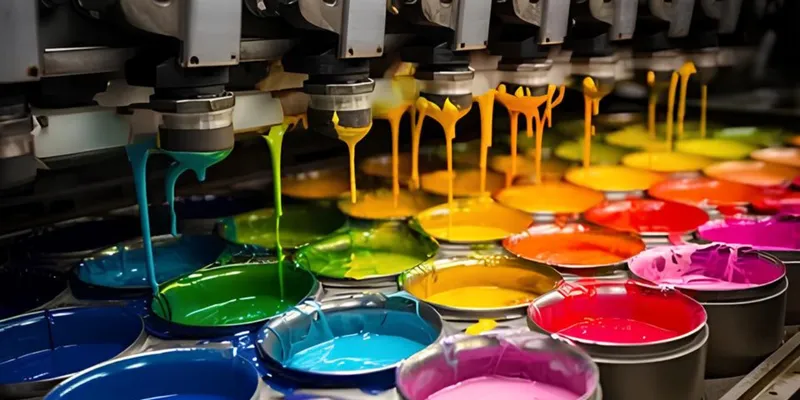
A new era of sustainable innovation is reshaping the global printing inks market as water-based technologies redefine efficiency, safety, and environmental responsibility.
The global printing inks market is entering a transformative phase led by sustainability goals and advanced technology. Water-based inks—offering low emissions, superior performance, and regulatory compliance—are fast becoming the preferred eco-friendly solution across packaging, textiles, and commercial printing sectors.
The global printing inks market is witnessing a major transformation driven by the pursuit of sustainability and rapid technological innovation. At the heart of this change is the growing adoption of water-based inks, now seen as the cornerstone of eco-friendly printing. As industries and governments intensify efforts to cut carbon emissions and reduce environmental hazards, these inks are reshaping production processes in packaging, textiles, and commercial printing. This evolution marks not just a regulatory shift but a long-term commitment to cleaner and safer manufacturing.
From Solvent-Based to Water-Based Innovation
Historically, solvent-based inks dominated the printing industry due to their quick-drying nature and vibrant finishes. However, concerns about volatile organic compound (VOC) emissions and toxicity have accelerated the move toward water-based systems, which use water instead of harmful solvents. According to Fairfield Market Research, more companies are switching to water-based formulations to meet ESG targets and sustainability goals. This transition is particularly strong in the packaging sector, where major brands are prioritizing green alternatives to attract environmentally conscious consumers.
Global regulations such as the U.S. Clean Air Act and Europe’s REACH have reinforced the adoption of low-VOC technologies, making water-based inks a defining feature of responsible, compliant, and sustainable production.
Sustainability in Packaging and Flexible Printing
Packaging represents nearly half of global ink demand—and this segment is leading the eco-transition. As companies adopt recyclable and biodegradable packaging materials, the demand for compatible water-based inks continues to surge. These inks bond effectively with paper, cardboard, and flexible films, providing excellent adhesion and food-safe properties.
In flexible packaging, water-based inks eliminate solvent retention issues that can affect product safety, while also reducing odor, improving recyclability, and cutting overall carbon emissions. This compatibility with both sustainability and performance needs has made them a preferred choice across food, personal care, and consumer goods industries.
Technological Progress Enabling Adoption
Continuous innovation has been key to the success of water-based inks. New-generation formulations now match solvent-based inks in terms of print quality, color vibrancy, and durability. Advances in pigment dispersion, fast-drying mechanisms, and abrasion resistance have improved their performance even in high-speed industrial applications.
Printing equipment manufacturers have adapted by developing flexographic and gravure presses optimized for water-based systems, incorporating efficient drying and humidity controls. Collaborations between ink producers and research institutions are also introducing bio-resins and natural pigments, further enhancing sustainability and product performance.
A Competitive Advantage in Green Printing
Beyond compliance, water-based inks are now a strategic asset for printers. As global corporations pursue net-zero commitments, suppliers offering eco-friendly solutions enjoy higher brand preference and stronger partnerships. Consumer-driven industries like food, beverage, and personal care increasingly demand sustainable packaging, creating new opportunities for eco-certified printers.
Moreover, reduced VOC emissions enhance workplace safety and lower energy consumption, allowing manufacturers to achieve cost efficiency while improving environmental credentials.
Overcoming Implementation Challenges
Despite significant progress, widespread adoption still faces hurdles. Drying time remains slower than solvent-based inks, potentially affecting production speed. However, new technologies such as infrared dryers and optimized airflow systems are helping mitigate this issue.
Substrate compatibility is another factor—non-porous materials may require primers or coatings for improved adhesion. Fairfield Market Research notes that continued R&D is addressing these challenges to ensure broader usability. Although the initial conversion costs of upgrading printing equipment can be high, scaling and innovation are rapidly reducing expenses.
Asia-Pacific Leading the Sustainability Shift
The Asia-Pacific region—particularly China, India, and Japan—is emerging as the global leader in sustainable ink adoption. Driven by industrial expansion, environmental policy reforms, and consumer demand for green products, Asia-Pacific is becoming the hub of eco-printing innovation. Major global players are investing in R&D centers across the region to create localized, cost-effective solutions.
While North America and Europe continue to lead in technical sophistication, Asia’s scale and agility are fueling rapid market expansion and mass adoption.
The Next Step: Bio-Based Ink Systems
The evolution of sustainable printing doesn’t stop with water-based technology. The next frontier lies in bio-based inks, derived from renewable sources like plants and algae. These formulations eliminate petrochemical content entirely while maintaining print quality.
Fairfield Market Research predicts that hybrid systems—combining water-based inks with bio-resins—will define the next generation of printing innovation. This synergy of technology and sustainability will make eco-friendly practices a necessity, not a choice.
The transition to water-based inks signals more than a trend—it’s a structural transformation toward responsible manufacturing. As companies adapt to stricter environmental mandates and consumer expectations, water-based inks stand as a powerful symbol of innovation, sustainability, and the future of global printing.