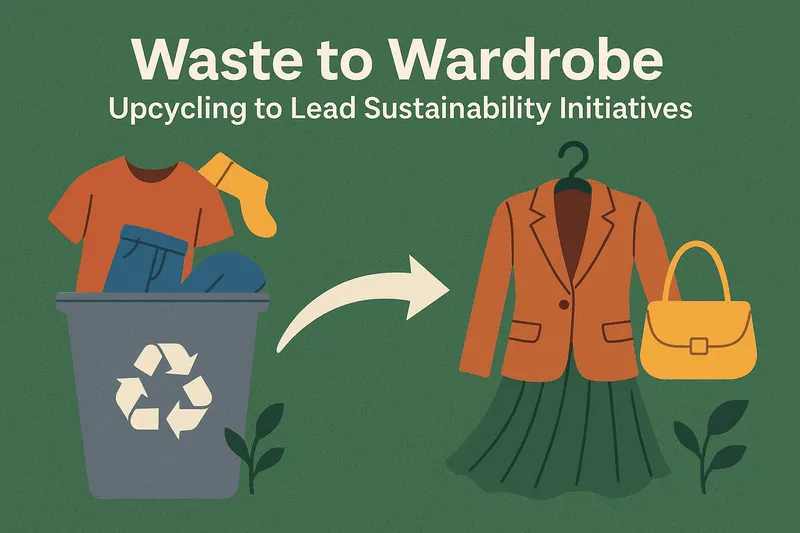
Waste to Wardrobe: Upcycling to Lead Sustainability Initiatives
Arvind Gaur
Introduction You see it everywhere now. Walk past any charity donation bin in a major city, and it’s overflowing. Thrift stores are inundated. Our landfills are literally clothed in our discarded past. It’s a visible, tangible symptom of a fashion industry that’s hit a breaking point with its own waste. The numbers are almost too vast to comprehend: 92 million tons of textile waste generated globally every single year. Let that sink in. In my years observing this industry’s turbulent relationship with its environmental footprint, one thing has become painfully clear: the old model of ‘take, make, dispose’ is broken. It’s a relic. But amidst the piles of discarded fabric, something remarkable is stirring. A perfect storm of consumer awakening, genuine climate anxiety, and real economic pressure is pushing us toward a revolution. And at the heart of it? Textile upcycling. This isn’t some fleeting, feel-good trend destined for the sustainability graveyard. What we’re witnessing is a fundamental recalibration of how fashion is designed, consumed, and valued. We’re turning waste into tangible opportunity and weaving responsibility directly into the fabric of innovation. The environmental stats are a gut punch. Our industry is responsible for a staggering 10% of global carbon emissions—that’s more than all international flights and maritime shipping combined. We’re the second-largest consumer of the world’s water supply. Meanwhile, mountains of synthetic garments sit in landfills, destined to outlive our great-grandchildren, while our virgin resources become scarcer by the day. The circular economy, once a theoretical concept debated in academic circles, has become a business imperative. The smart companies get it. Sustainable practices are no longer just a moral choice; they’re a financial one. And leading this charge is textile upcycling, offering a pragmatic, creative solution that tackles environmental degradation head-on while creating real value for businesses and consumers alike. What Exactly Is Textile Upcycling? First, let’s bust a myth. Upcycling is not recycling. The distinction is crucial. Traditional recycling typically involves breaking down materials, often degrading their quality in a process more accurately called ‘downcycling.’ Each cycle makes the material a little worse. Upcycling flips this on its head. It’s about enhancement. It’s the art of preserving the integrity of a textile and transforming it into something of higher value, both perceived and real. The creative possibilities here are what truly excite me. Denim jeans are reborn as stylish handbags and journal covers. Tailoring scraps find new life as intricate patchwork quilts or unique, artisanal furnishings. A vintage sari is deconstructed and reinvented into a contemporary, cutting-edge dress. Factory off-cuts become striking home décor. A damaged luxury handbag is meticulously restored, its scars telling a new story. Outdated corporate uniforms are reimagined as coveted streetwear. This is where “waste-to-worth” moves beyond a catchy slogan. It becomes a tangible intersection of creativity, skilled craftsmanship, and genuine sustainability. The process is fascinating—it demands both an artistic eye and technical prowess. It requires a deep understanding of fabric behaviour, durability, functionality, and aesthetic potential. A typical upcycling project is a journey. It starts with a careful assessment of the material’s quality and potential. Then comes the design phase, a puzzle of maximising strengths and creatively working around limitations. The transformation itself involves a symphony of techniques—precision cutting, strategic sewing, natural dyeing, and thoughtful embellishment. It all culminates in rigorous quality assurance, ensuring the reborn product isn’t just beautiful, but durable and functional for modern life. Why This Matters More Than Ever
- The Environmental Reality
The environmental argument for upcycling is now undeniable. I still remember my shock learning that producing a single cotton t-shirt requires an astonishing 2,700 litres of water. Then there’s the silent scourge of microplastics—every wash of synthetic garments releases tiny plastic fibres, amounting to nearly 500,000 tons polluting our waterways annually. In the United States alone, 11.3 million tons of textile waste are dumped into landfills each year. Every upcycled garment is a direct strike against this waste. We save water, avoid carbon emissions, and divert waste from landfills. But the benefits ripple out much further. We reduce the pressure on agricultural land used for virgin cotton, cut the chemical runoff from dyeing processes, and minimise the emissions from globe-spanning supply chains. Perhaps one of the most profound yet understated impacts is on biodiversity. By slashing demand for new cotton—a crop often drenched in pesticides that harm local ecosystems—and reducing our reliance on fossil-fuel-derived synthetics, upcycling quietly helps preserve our planet’s delicate ecological balance.
- Economic Opportunities Everywhere
The economics of this shift are incredibly compelling. The sustainable fashion market is already valued at over $6 billion and is growing at a robust 8.7% annually. Here’s the kicker: upcycled goods often command premium prices, typically 20-40% higher than their conventional counterparts. Why? Because they offer uniqueness, a story, and an ethical guarantee that modern consumers are actively seeking. This creates a fertile ground for entrepreneurship. I’ve seen it empower local artisans, spark small to medium enterprises, and create new jobs focused on creative reuse instead of mindless production. Communities that once relied on traditional manufacturing are finding new economic life in these skills. The beauty of the upcycling economy is its accessibility. A small-scale entrepreneur can start with minimal infrastructure, relying on creativity and skill rather than massive capital investment. This democratisation has given rise to countless micro-enterprises and social ventures that seamlessly blend profit with purpose. Even for major brands, the math works. Many report 15-30% savings on raw material costs by integrating upcycled elements, simultaneously cutting waste disposal fees and building powerful, positive brand equity that marketing dollars can’t buy.
- Social and Cultural Renaissance
Beyond the environmental and economic case, upcycling generates profound social value. I’ve had the privilege of watching traditional crafts—patchwork, hand-embroidery, weaving, natural dyeing—be revived from the brink of obscurity. These skills are finding new relevance and a new market. Community is being reforged through clothing swap events, repair cafés, and local workshops. These aren’t just skill-sharing sessions; they’re social hubs that strengthen bonds while making sustainable living accessible to everyone, regardless of income. In developing nations like India, where automation threatens millions of traditional manufacturing jobs, upcycling offers a hopeful alternative. It places a premium on human creativity and meticulous craftsmanship over robotic efficiency. I’ve been particularly moved by community programs targeting women entrepreneurs and artisans, providing them with skills, resources, and market access that empower them economically and socially. Innovation Driving the Movement
- The Designer Revolution
Global designers are proving that upcycled fashion can be aspirational, not just sustainable. Pioneers like Eileen Fisher, with her Renew program that takes back old garments to transform them into new collections, or Christopher Raeburn, who built an entire luxury identity around upcycling military surplus, are showing what’s possible. In India, this movement is catching fire. Designers like Dhruv Kapoor and brands like 11.11/Eleven Eleven are gaining international acclaim by masterfully blending traditional Indian textile techniques with sharp, contemporary design. They are proving that heritage and innovation can coexist beautifully.
- Scaling Up Successfully
The movement is evolving from small-scale artisanal work to systematic industrial integration. We’re now seeing structured partnerships between large manufacturers and upcycling specialists, turning deadstock fabrics, cutting-room waste, and unsold inventory into profitable new product lines. Cross-industry partnerships are emerging, turning fashion waste into automotive upholstery or building insulation. Automated sorting systems are coming online, using sensors and AI to process massive volumes of waste, categorising materials by fibre type and condition for optimal reuse. Major manufacturers are finally designing with zero-waste principles, ensuring every scrap of material is utilised from the very beginning.
- Technology as a Game-Changer
Technology is the great accelerator. AI and machine vision can now identify fibre composition and quality with stunning accuracy, streamlining the sorting process. 3D printing using recycled polymer fibres is creating accessories and components once thought impossible. Digital marketplaces connect upcyclers directly with a global audience of eco-conscious buyers, bypassing traditional gatekeepers. Blockchain technology is being piloted to provide undeniable proof of a garment’s upcycled origins, bringing unprecedented transparency to the supply chain. Even virtual reality is playing a role, allowing designers to experiment with deconstruction and redesign in a digital space before ever making a cut, minimising material waste in the design process itself. The Challenges We Face For all its promise, the path isn’t without obstacles. Much upcycling remains small-batch. Scaling it industrially requires solving problems of standardisation, consistent quality control, and managing highly complex, fragmented supply chains. We desperately need better infrastructure for collection, sorting, and traceability. A significant consumer perception hurdle remains; many still see “upcycled” as a fancy word for “used,” rather than recognising it as a value-added creative product. This demands education and smart marketing. Regulatory frameworks are lagging far behind, creating uncertainty. There’s a skills gap—we need more designers and technicians who are fluent in both traditional craftsmanship and modern design software. Finally, access to capital for scaling operations and investing in advanced technology remains a significant barrier for many. The Path Forward Success demands a coordinated effort. We need smart policy: tax incentives for green manufacturing, extended producer responsibility (EPR) regulations that make brands accountable for their waste, and public funding for R&D in sustainable textile technology. Education is key. Fashion schools must weave upcycling and circular design principles into their core curricula, ensuring the next generation of designers thinks this way from day one. We need a cultural campaign that makes “repair, reuse, repurpose” a mainstream lifestyle value, promoted through influencers, media, and community engagement. Investment in physical infrastructure—efficient collection networks, regional sorting facilities, and distribution channels—is non-negotiable for scale. And we must continue to support innovation in material science and production tech to unlock new possibilities. India stands at a unique crossroads. With sustainability becoming non-negotiable globally, India can position itself as a leader in upcycled fashion exports. We have the raw material (waste), the legendary craft heritage, a young and creative workforce, and competitive costs. It’s a powerful combination waiting to be harnessed. Final Thoughts Textile upcycling is more than an environmental solution; it’s a philosophical shift. It represents a fundamental reimagining of how we create value. By transforming waste into objects of desire, it challenges our deepest notions of newness, luxury, and quality. The momentum is undeniable, fueled by a convergence of necessity, opportunity, and a genuine cultural shift toward consciousness. But unlocking its full potential requires commitment from all of us: designers who choose creativity over convenience, manufacturers who invest in closed-loop processes, consumers who value story and durability over disposability, and policymakers who have the courage to support real change. We are at a critical juncture. Upcycling offers a genuine vision of hope. It proves that fashion can be both beautiful and responsible, profitable and purposeful. The future isn’t about producing more; it’s about creating better, smarter, and with respect. Through textile upcycling, that future is already being stitched together, one transformed garment at a time.