Visual Search Technology in Fashion Retail: A Case Study of Google Lens

Ms. Priti Jhawar, Fashion Management Scholar, Department of Fashion Management Studies National Institute of Fashion Technology, Ministry of Textiles, Govt. of India, Daman Campus
Introduction
The fashion retail industry has experienced rapid digital change due to technological innovations that improve consumer shopping experiences. With the growth of e-commerce and digital media, consumers increasingly rely on online platforms to discover and purchase fashion products. However, traditional search methods based on text keywords often create difficulties when consumers cannot accurately describe a fashion item they want to purchase. Visual search technology has emerged as a solution to this problem.
One of the most prominent visual search tools is Google Lens, developed by Google. This technology enables users to search for products by taking a photo or uploading an image rather than typing keywords. By combining artificial intelligence, machine learning, and image recognition technologies, Google Lens identifies objects and provides visually similar results from online platforms. In the context of fashion retail, this innovation allows consumers to instantly identify clothing, accessories, or footwear they see in real life, social media, or online images. As a result, visual search technology is transforming the way consumers discover fashion products and interact with digital retail platforms.
Case Description: Google Lens and Visual Search
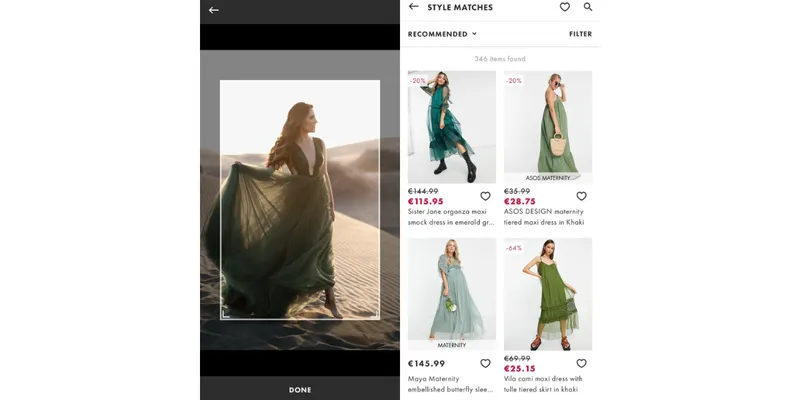
Google Lens functions as a visual search engine that analyses images captured through a smartphone camera or uploaded from a device. The system identifies elements such as colour, shape, pattern, and texture within an image and compares them with billions of images available online. After analysis, it generates visually similar results along with product details and links to retailers where the item can be purchased.
This feature has significant applications in the fashion industry. For example, if a consumer notices a handbag, dress, or pair of shoes they like while browsing social media or walking in a store, they can simply take a photo and search for similar items online using Google Lens. The technology then provides product information, price details, reviews, and purchase links, making the search and buying process faster and more convenient. According to Google’s official product blog, the platform processes nearly 20 billion visual searches every month, and a significant portion of these searches are related to shopping and product discovery.
Furthermore, visual search enables consumers to combine images with text queries to refine results. For instance, a user may upload an image of a dress and add keywords such as “black cotton” or “summer style” to narrow down the search results. This integration of visual and textual data enhances the accuracy and efficiency of product discovery.
Analysis: Impact on Fashion Consumer Behaviour
Visual search technologies such as Google Lens are significantly influencing consumer behaviour in fashion retail. Fashion products are highly visual and aesthetic in nature, meaning consumers often rely on visual cues when making purchasing decisions. Research in fashion e-commerce suggests that images play a critical role in shaping consumer perception, attention, and purchase intention because visual presentation communicates product attributes that are difficult to describe through text alone.
Traditional online searches require consumers to describe the product they are looking for using keywords, which can be challenging for fashion items. For example, consumers may not know the exact name of a specific clothing style, pattern, or fabric. Visual search addresses this issue by allowing consumers to search directly through images, which aligns with natural human perception and cognitive processing.
Another important impact of visual search technology is the reduction of the gap between offline inspiration and online purchasing. Consumers often encounter fashion inspiration through various sources such as street fashion, celebrity outfits, fashion shows, or social media platforms. With tools like Google Lens, these inspirations can be instantly converted into searchable shopping opportunities. For instance, a consumer who sees a stylish jacket worn by someone on the street can capture the image and quickly locate similar products available online.
From a retailer’s perspective, visual search technologies increase product visibility and improve the chances of product discovery. Retailers that optimize their product images for visual search can attract more online traffic and enhance customer engagement. Additionally, the integration of visual search with large product databases allows consumers to access a wide range of alternatives, which may encourage exploration and impulse buying.
Findings:
The case of Google Lens demonstrates several important implications for the fashion industry and digital retailing.
First, visual search improves product discovery by allowing consumers to search for fashion items using images rather than complex text descriptions. This simplifies the search process and reduces the time required to find specific products.
Second, the technology enhances the overall shopping experience by providing instant access to product information such as pricing, reviews, and retailer links. This convenience increases consumer satisfaction and encourages online purchasing.
Third, visual search connects offline inspiration with online shopping opportunities. Consumers can convert real-world observations into digital searches, which expands the possibilities for product discovery and retail engagement.
Finally, visual search technologies create new opportunities for fashion retailers to improve digital marketing strategies. By optimizing images and product information for visual search platforms, retailers can increase brand visibility and reach a broader audience of potential consumers.
Conclusion
Technological innovations continue to reshape the fashion retail industry, particularly in the area of digital consumer experiences. Visual search technology represents a major advancement in online shopping by enabling consumers to search for products through images rather than text. The case of Google Lens illustrates how artificial intelligence and image recognition technologies can transform fashion product discovery and purchasing behaviour.
By simplifying the search process, enhancing convenience, and connecting offline inspiration with online retail platforms, visual search tools are improving the efficiency and effectiveness of fashion e-commerce. As technology continues to evolve, visual search is expected to play an increasingly important role in shaping the future of fashion retail, influencing how consumers explore, evaluate, and purchase fashion products in the digital marketplace.
References
- Google Lens – Official Product Information
https://lens.google - Rincon, L. (2024). 3 Ways Visual Search Helps You Shop. Google Blog.
https://blog.google/products-and-platforms/products/shopping/visual-search-lens-shopping/ - Di, W., Bhardwaj, A., Jagadeesh, V., Piramuthu, R., & Churchill, E. (2014). When Relevance is Not Enough: Promoting Visual Attractiveness for Fashion E-commerce.
https://arxiv.org/abs/1406.3561 - Research Intelo. (2024). Visual Search Fashion Market Research Report.
https://researchintelo.com/report/visual-search-fashion-market