Vishwa Sutra Showcases Indian Handlooms on Global Stage at 61st Femina Miss India
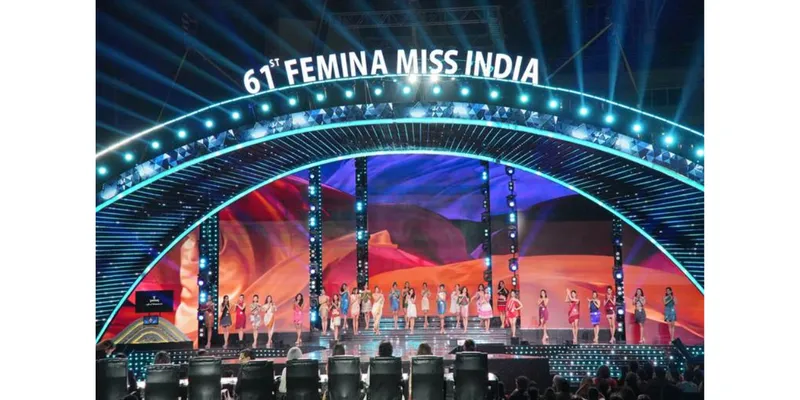
30 weaves inspired by 30 countries presented in Bhubaneswar event
“Vishwa Sutra – Weaves of India for the World” was introduced as part of the 61st Femina Miss India event held in Bhubaneswar. The initiative has been developed by the Office of the Development Commissioner (Handlooms), Ministry of Textiles, Government of India, in partnership with the National Institute of Fashion Technology (NIFT).
The collection includes 30 handloom weaves representing different states of India. Each weave has been reinterpreted using design elements inspired by 30 countries, incorporating varied cultural references, silhouettes, and design formats.
The concept focuses on presenting Indian handlooms within a contemporary global framework while maintaining traditional techniques and craftsmanship. These weaving methods continue to be preserved across generations and remain a part of India’s textile heritage.
The collection pairs Indian textiles with global design influences, including Odisha Ikat with Greek forms, Kanchipuram with Norwegian lines, Muga with Egyptian elements, Patola with Spanish influences, and Banarasi with UAE-inspired ensembles.
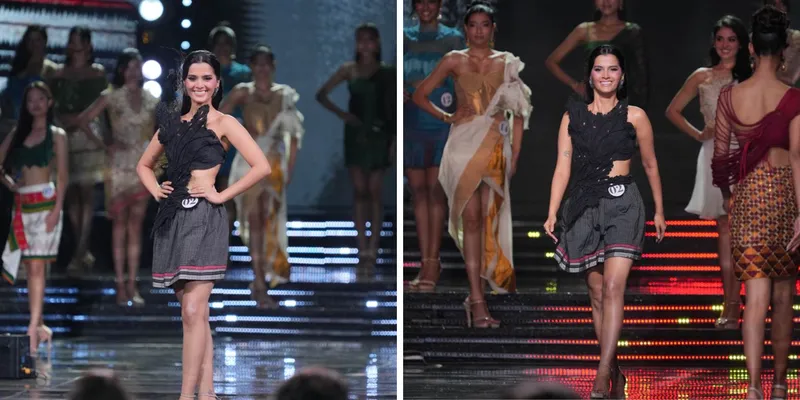
The Vishwa Sutra collection was showcased by 30 state winners during the opening round of the 61st Femina Miss India.
Addressing the media, Dr. M. Beena, Development Commissioner (Handlooms), emphasized the significant role of the handloom sector in sustaining India’s cultural identity, supporting livelihoods, and enabling women-led entrepreneurship. She highlighted the Prime Minister’s vision of “Gaon to Global”, underscoring the importance of connecting traditional weaves with modern design narratives and evolving market landscape.
Sadhvi Satish Sail, winner of the 61st Femina Miss India, was presented wearing the traditional Kunbi weave, interpreted through a Central European skirt silhouette. The Kunbi weave, derived from kun (family) and bi (seed), reflects generational craftsmanship and community traditions.
The initiative aligns with the Government of India’s approach to expanding the global reach of traditional industries under the “Vocal for Local to Global” framework and the 5F model — Farm to Fibre to Factory to Fashion to Foreign. It also reflects the role of the handloom sector in employment generation and cultural industry development.