U.S. Tariffs and Their Impact on Indian Textiles
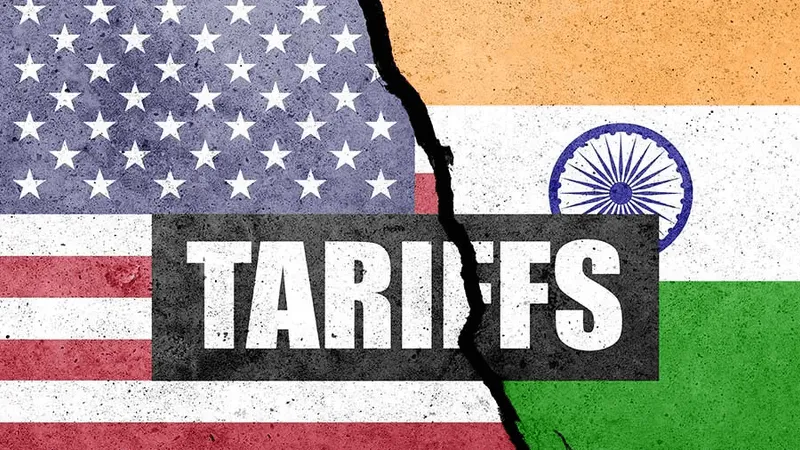
The U.S. government’s recent decision to impose steep tariffs on Indian exports has unsettled several industries, with textiles standing at the forefront of concern. Announced as a penalty linked to India’s continued purchase of Russian oil, the move has not only heightened trade tensions but also placed India’s exporters in a vulnerable position in their single largest market. The new tariff regime, which effectively doubles duties to 50%, came into effect in two phases—an additional 25% duty from early August, followed by another 25% towards the end of the month. This escalation has been described by industry observers as one of the most significant trade barriers India has faced in recent years.
Textile Industry: A High-Stakes Battle
Among all sectors, textiles and apparel are expected to feel the sharpest impact. The U.S. has long been the biggest destination for India’s textile exports, and many exporters had projected steady growth in shipments this year. Those ambitions are now at risk, as Indian products will enter the American market at a much higher landed cost compared to competitors. This not only threatens India’s price competitiveness but also places additional strain on the labour-intensive textile sector, which is already grappling with global demand fluctuations and rising input costs. Exporters, while alarmed, are closely watching the unfolding negotiations between New Delhi and Washington to secure some relief.
Industry Viewpoint: Temporary Setback or Lasting Concern?
Sharing his perspective on the situation, Mr. Rajeev Gupta, Joint Managing Director of RSWM Ltd., noted: “The 25% tariff by the U.S. comes as a temporary setback, especially when expectations were set around 15–20%. While it might lead to a slowdown in the short term, we believe it's not a long-lasting disruption. Our Free Trade Agreement with the UK opens up varied opportunities and is a welcoming move for the industry. India’s capacity and trained labour constraints remain; what will set us apart is focus on the UK market to ensure sustained business. Indian entrepreneurs and manufacturers are resilient, and we are confident that business momentum will be consistently rising with planned strategies. What remains crucial is clarity on the tariff position against China. A more pressing concern is the undefined penalty clause linked to India’s ties with Russia, which adds a layer of uncertainty." His remarks reflect a cautiously optimistic outlook—acknowledging the disruption but emphasising adaptability and the importance of diversifying markets.
Major Countries Hit by U.S. Tariffs
The U.S. tariff measures have been imposed on a broad range of countries worldwide, with rates varying based on trade relations and perceived “offence” in unfair trade practices.
Source: BBC: See the Trump tariffs list by country
The Road Ahead
While textiles are at the heart of the challenge, the broader export ecosystem—including sectors like leather, footwear, gems, jewellery, chemicals, and seafood—is also expected to bear the weight of the new duties. For the government, balancing diplomacy while safeguarding the interests of millions of workers remains a top priority. The path forward will depend on the progress of bilateral trade talks and whether the U.S. offers any space for reconsideration. For now, exporters are preparing for a difficult adjustment while looking to trade agreements with other countries to offset potential losses. In summary, the sudden escalation of U.S. tariffs has put India’s textile industry under immense strain, threatening competitiveness in its most crucial market. While challenges are immediate, industry voices such as Mr. Rajeev Gupta’s stress resilience, diversification, and strategic planning as the way forward.