U.S. Laundry Detergent Market to Hit USD 57.65 Billion by 2034
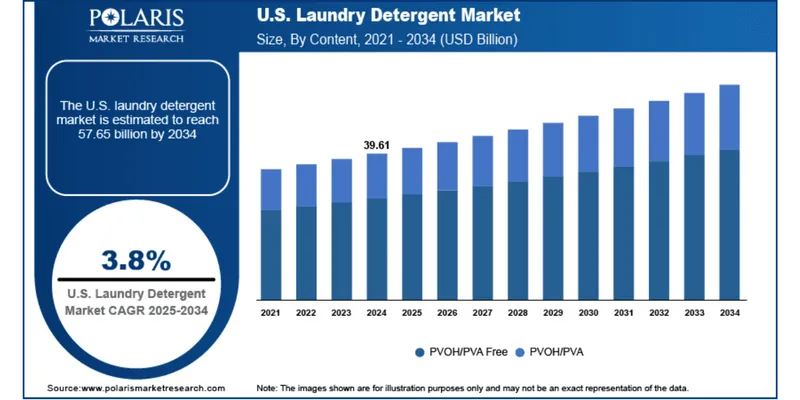
Sustainability, smart formulations, and evolving consumer habits are redefining the U.S. laundry detergent landscape.
The U.S. laundry detergent market is undergoing a dynamic transformation driven by sustainability, innovation, and shifting consumer preferences. While traditional powders and liquids continue to dominate, the rise of eco-friendly and automated washing solutions is reshaping the industry. According to Polaris Market Research, the market, valued at USD 39.61 billion in 2024, is expected to reach USD 57.65 billion by 2034, expanding at a CAGR of 3.8%.
Evolving Product Landscape in Laundry Detergents
Liquid Detergents:
Highly popular for their easy application, quick dissolution, and effective stain removal, liquid detergents remain a staple. In commercial settings, concentrated formulations reduce dosage needs and minimize environmental impact, offering a balance of performance and sustainability.
Powder Detergents:
Though demand has slowed, powders still play a significant role—particularly in rural areas and larger households. Favored for their affordability, long shelf life, and efficiency in hot water, modern powder detergents now feature low-residue, phosphate-free formulas appealing to eco-conscious users.
Pods and Capsules:
Among the fastest-growing categories, laundry pods deliver convenience, precise dosing, and minimal waste. Their pre-measured design resonates with modern consumers seeking efficiency. Manufacturers are investing in child-safe, water-soluble packaging to enhance safety and environmental sustainability.
Key Growth Drivers
1. Rising Focus on Sustainability:
Consumers increasingly prefer detergents made from renewable, biodegradable, and refillable materials. Major brands are responding with green chemistry innovations and zero-waste packaging to align with eco-conscious lifestyles.
2. Advanced Formulations:
Modern detergents leverage enzyme-rich and polymer-based compounds for superior cleaning power, even in cold water. Compatibility with high-efficiency (HE) washing machines helps reduce energy and water use without compromising results.
3. Changing Lifestyles:
Urbanization and fast-paced living have boosted demand for compact and easy-to-use formats like pods and liquid capsules. Subscription-based detergent delivery models are also transforming consumer convenience and purchasing behavior.
4. Growth in Commercial Laundry Segment:
Rising demand from hotels, hospitals, and laundromats is fueling market expansion, with increasing interest in professional-grade, cost-efficient cleaning solutions.
Market Trends Shaping the Future
- Green Chemistry & Clean Labeling:
Manufacturers are removing harsh chemicals such as phosphates and optical brighteners, creating clean-label detergents that appeal to health- and sustainability-driven consumers. - Concentrated & Waterless Formulations:
The rise of concentrated liquids and detergent sheets reduces water use and packaging waste, significantly lowering the industry’s carbon footprint. - Smart Washing Technology:
Partnerships between detergent and appliance makers are enabling IoT-based washing systems that automatically measure and dispense detergents, optimizing performance and efficiency. - Customization & Fragrance Innovation:
Consumers now seek personalized laundry experiences with hypoallergenic, fragrance-free, or natural scent options that promote freshness and comfort without synthetic additives.
Future Outlook
The future of the U.S. laundry detergent industry lies at the intersection of eco-conscious innovation and digital technology. Biodegradable, refillable, and smart detergent systems will continue to gain traction, reflecting the growing consumer demand for sustainability, convenience, and health-conscious living.
As green chemistry, connected appliances, and personalized options advance, the U.S. market is evolving beyond traditional cleaning — becoming a hub of smart, sustainable, and tech-driven home care solutions.