US Imposes 10% Section 301 Tariff on India; Trade Experts Flag Textile and BTA Concerns
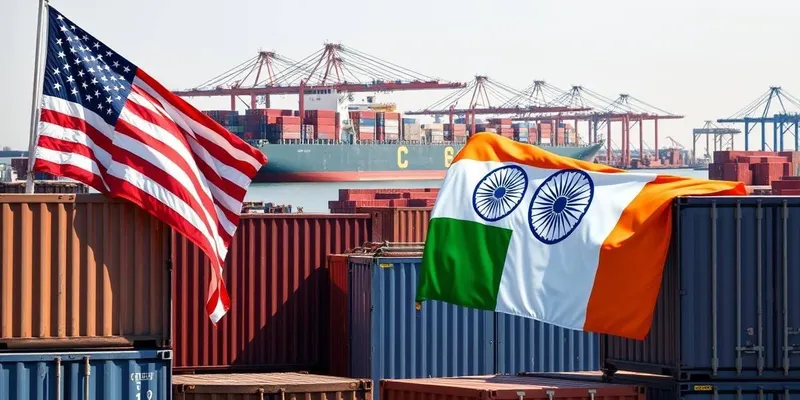
Lower tariff rate offers partial relief, but exporters say unresolved issues in textiles, pharmaceuticals, oil and the proposed Bilateral Trade Agreement (BTA) remain key concerns.
India has been placed under a 10% tariff by the United States under its revised Section 301 forced-labour regime after the Government of India strengthened import regulations prohibiting goods produced using forced labour.
The revised duty replaces the temporary 10% global tariff imposed under Section 122, which expired on July 24. Although the new tariff is lower than the 12.5% rate proposed by Washington on June 3, exporters noted that the overall tariff burden for most Indian products will remain largely unchanged because the new Section 301 levy replaces the earlier temporary duty.
According to the Ministry of External Affairs (MEA), the tariff announcement followed a Section 301 enforcement action initiated by the United States after its ruling in February. MEA spokesperson Randhir Jaiswal said:
"We have noted the announcement. This was a Section 301 enforcement action initiated after a US ruling on the tariff issue, which came in February. We have made our position clear on this subject. Our talks with the US on BTA continue with a view to concluding it at an early date."
Trade experts stated that the revised tariff allows Indian exporters to retain their relative competitiveness because competing suppliers in several markets will continue to face similar or higher tariff levels. SC Ralhan, President of the Federation of Indian Export Organisations (FIEO), said Indian exporters could also benefit from trade diversion in product categories where competing countries face the higher 12.5% tariff.
However, industry representatives cautioned that unresolved issues remain, particularly in textiles. The United States has announced tariff-rate quota (TRQ) exemptions for Bangladesh, Cambodia, Indonesia and Malaysia, allowing specified volumes of textiles and apparel manufactured using US-origin cotton and fibre to enter without Section 301 tariffs. No comparable TRQ has been announced for India.
Exporters said this arrangement could reduce sourcing of cotton, yarn and other intermediate textile inputs from India, as competing countries may increasingly source US-origin materials under the TRQ mechanism.
The Confederation of Indian Textile Industry (CITI) also raised concerns over the long-term implications of the Section 301 action. Ashwin Chandran, Chairman of CITI, said:
"The tariff imposition on the issue of forced labour is unfortunate as it does not indicate an expiry date, causing reputational risks, and CITI looks forward to the Indian government taking up this issue with the US given the detrimental impact it could have on textile and apparel exports from India."
He further stated:
"A window has been opened for textile and apparel exports from these countries to enter the United States free of the Section 301 tariffs. This differential treatment risks diverting sourcing orders for textile and apparel items away from India."
Trade observers also noted that, beyond textiles, unresolved issues surrounding proposed US tariffs on pharmaceuticals, possible penalties linked to purchases of Russian oil, and an ongoing Section 301 investigation into excess industrial capacity remain areas that could influence discussions under the proposed India-US Bilateral Trade Agreement.
Former JNU professor Biswajit Dhar said India should continue exercising caution while negotiating the BTA until these pending trade issues are addressed.