Upcoming FTAs Can Expand Export Opportunities for Indian Textile Sector, Says Giriraj Singh
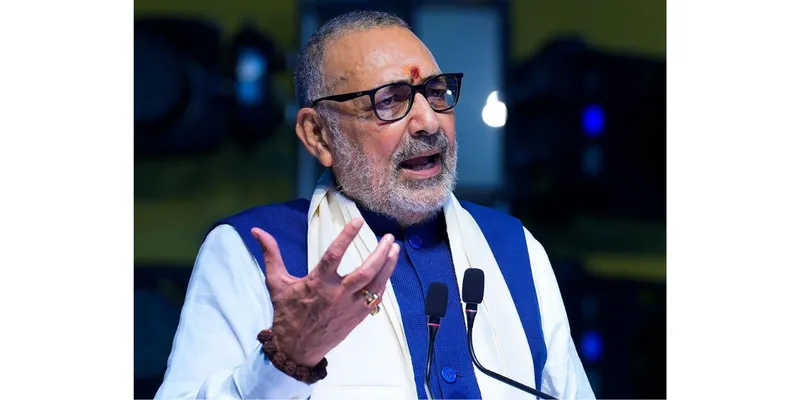
Textiles Minister discusses the impact of the India-UK FTA, ongoing trade negotiations, export diversification and government initiatives to support exporters.
The India-UK Free Trade Agreement (FTA), which came into effect on July 15, has opened duty-free access for Indian textile and apparel exports to one of the country's key overseas markets. In an interview with Business Line, Union Textiles Minister Giriraj Singh outlined the expected impact of the agreement and the government's efforts to strengthen export competitiveness.
The India-UK Free Trade Agreement (FTA) came into effect on July 15, providing duty-free access for Indian textile and apparel exports to one of the country's major overseas markets. The agreement is expected to support market access for exporters.
In an interview with Business Line, Textiles Minister Giriraj Singh discussed the opportunities emerging from India's expanding FTA network, the resilience of the textile sector amid global uncertainties, the spread of textile exports across districts, and the government's initiatives to strengthen exports through trade facilitation and improved implementation of free trade agreements.
Responding to a question on the expected impact of the India-UK FTA, Giriraj Singh said:
"The biggest advantage of the FTAs that India is signing now, including the one with the UK, is the significant expansion of market access. Earlier, our FTA network had relatively limited coverage. We had 10 FTAs covering 19 countries, with some agreements, particularly in Asia, covering multiple countries under a single pact. As a result, our exporters had access to a much smaller set of markets. Now, things are moving much faster and wider. The agreement with the UK has come into force, negotiations with the European Union and New Zealand are almost ready to be implemented, and more agreements are in the pipeline. The coming years, our FTA network is expected to cover 56 countries. On the pending FTAs, including the one with the European Union, are concluded, these 56 countries will account for nearly 60 per cent of the global textile import market. That will create a significant opportunity for Indian exporters."
On whether FTAs with developed economies could expose Indian exporters to tariff uncertainties in the United States market, the Minister said:
"The US textile market itself is worth around $90-100 billion. Before 2024, India's textile exports to the US were around $10.9 billion. Despite the recent developments, we have managed to retain about 80 per cent of our business, which is around $8 billion, but that did not happen without a challenge. There was a decline, but the shortfall was around $2 billion. Necessity is the mother of invention, and we delivered."
Asked about government measures to broaden textile exports and encourage manufacturers to enter new markets, Giriraj Singh said:
"India's domestic market is very strong. Our manufacturers have historically shown less interest in exports because of fears—a container getting returned, or uncertainty over whether quality compliance will hold up. In the domestic market, there's no such compliance pressure. Everything just moves. But here's the thing: across India, of all the registered exporters across all sectors combined, a substantial number are from our sector. Something special happened in our sector this time—exports to 548 districts. Whether an individual export was worth ₹1 lakh or ₹1 billion, and whether it was handicrafts, handloom, or garments, the encouraging fact is that the geographical spread reached 548 districts. We currently have close to 60–70 centres under the Textile Department, the Textile Committee, and the Textile Commissioner. Right now, we're developing six of these into dedicated Export Facilitation Centres—giving new exporters registration, documentation, and other basics. Going forward, I'll be meeting the Chief Ministers of all States to highlight these 548 districts—asking them to have their District Magistrates reach out, recognise these exporters, boost their morale, and work out which schemes can offer them incentives."
On whether the proposed Export Facilitation Centres would help exporters better understand procedures such as obtaining Certificates of Origin, the Minister said:
"Exactly. That's why we are setting them up as Export Facilitation Centres. They will guide exporters on the procedures and documentation required for exports, including issues related to FTAs. We have also directed all 11 Export Promotion Councils to conduct awareness programmes and actively bring smaller and regional businesses into the export ecosystem."