Union Budget 2026–27 Strengthens MSMEs Through Equity, Liquidity and Reform Measures
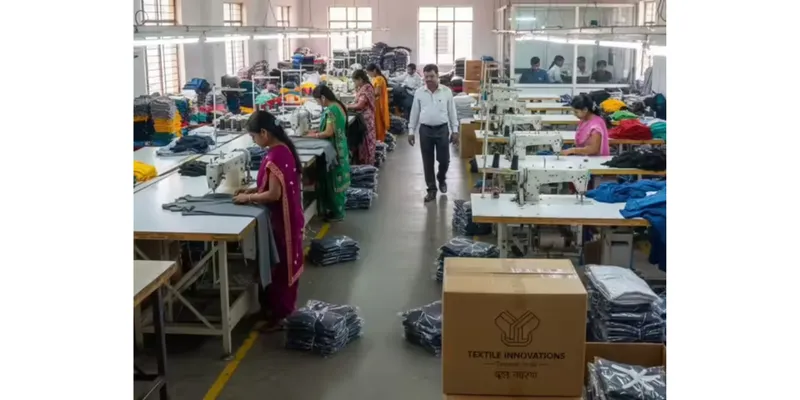
The Union Budget 2026–27 outlines a comprehensive strategy to reinforce the Micro, Small and Medium Enterprises (MSME) sector. With focused interventions in equity funding, liquidity access, digital formalisation and market expansion, the Budget positions MSMEs at the centre of India’s economic growth framework. The sector continues to play a significant role in manufacturing output, exports and employment generation.
MSMEs in India’s Economic Landscape
Micro, Small and Medium Enterprises remain a major contributor to India’s economy. The sector comprises over 7.47 crore enterprises employing more than 32.82 crore persons, making it the second-largest employer after agriculture. According to Budget 2026–27 data, MSMEs contribute approximately 35.4% of manufacturing output, 48.58% of exports and 31.1% of the country’s GDP.
The Budget identifies three core Kartavyas: sustaining economic growth, addressing public aspirations and building capacities while ensuring equitable access to opportunities across regions and sectors.
Strategy to Develop MSME Champions
Under the first Kartavya, the Budget introduces a three-fold framework to help MSMEs scale and strengthen their competitiveness.
Equity Infusion
A ₹10,000 crore SME Growth Fund has been proposed to support enterprises meeting defined eligibility standards and facilitate the emergence of future growth-oriented firms.
In addition, the Self-Reliant India (SRI) Fund, set up in 2021, will receive an additional ₹2,000 crore allocation. As of 30 November 2025, the SRI Fund has supported 682 MSMEs with investments totalling ₹15,442 crore.
Liquidity Enhancement
Over ₹7 lakh crore has already been mobilised for MSMEs through the TReDS platform. The Budget proposes the following steps to expand its reach:
- Making TReDS mandatory for CPSE procurement from MSMEs.
- Extending CGTMSE-backed credit guarantees for invoice discounting through TReDS.
- Linking Government e-Marketplace (GeM) data with TReDS to improve access to financing.
- Introducing TReDS receivables as asset-backed securities to strengthen secondary market liquidity.
TReDS operates as a digital system that enables MSMEs to discount trade receivables through multiple financial institutions.
Professional and Compliance Support
Professional bodies including ICAI, ICSI and ICMAI will design modular training programmes aimed at building a network of ‘Corporate Mitras’. These trained professionals, particularly in Tier-II and Tier-III cities, will assist MSMEs in meeting regulatory and compliance requirements at affordable costs.
Courier Export Reform
The existing ₹10 lakh value cap per consignment on courier exports is proposed to be removed. The measure is intended to support cross-border B2C trade and enable small businesses, artisans and start-ups to expand into international markets. The reform also includes improved tracking mechanisms for rejected or returned consignments.
Formalisation Through Digital Platforms
Between 1 July 2020 and December 2025, more than 7.30 crore enterprises registered on the Udyam Registration Portal and Udyam Assist Platform.
Breakdown of registrations:
- 4.37 crore on the Udyam Portal
- 2.92 crore on the Udyam Assist Platform
The Udyam Portal offers paperless registration, while the Udyam Assist Platform integrates informal micro enterprises into the formal credit system.
Employment and Enterprise Promotion Schemes
Prime Minister’s Employment Generation Programme (PMEGP)
Since FY 2008–09 to December 2025 (FY 2025–26), PMEGP has supported over 10.71 lakh micro enterprises with ₹29,249.43 crore in margin money subsidy, generating employment for more than 87 lakh persons.
MSME Champions Scheme
The MSME Champions initiative consists of:
- MSME-Sustainable (ZED)
- MSME Competitive (LEAN)
- MSME-Innovative (Incubation, Design & IPR)
Under this framework:
- 2,71,373 MSMEs registered under the ZED scheme, with 1,92,689 certified.
- 32,077 MSMEs registered under the LEAN scheme, and 31,987 adopted the Lean pledge.
E-Commerce and Market Integration
The expansion of the Open Network for Digital Commerce (ONDC) and the TEAM initiative aims to onboard 5 lakh MSMEs into structured e-commerce ecosystems, reducing transaction costs and strengthening supply chain integration.
Dispute Resolution Mechanism
The MSE Online Dispute Resolution (ODR) Scheme provides a pre-adjudication mechanism under the MSMED Act, 2006 for addressing delayed payment disputes. The ODR portal was launched on 27 June 2025.
Credit Guarantee Expansion
The Credit Guarantee Scheme for Micro and Small Enterprises (CGSME) continues to expand collateral-free credit access.
Key data points:
- 1 crore guarantees issued since August 2000.
- 29.03 lakh guarantees approved between 1 January and 30 November 2025 worth ₹3.77 lakh crore.
- Guarantee limit enhanced from ₹5 crore to ₹10 crore.
- 10% fee concession and 85% guarantee coverage introduced for MSEs promoted by transgender entrepreneurs (effective 1 March 2025).
PM Vishwakarma Scheme
Launched in September 2023, the scheme supports artisans across 18 trades.
As of 1 December 2025:
- 30 lakh beneficiaries registered
- 23.09 lakh beneficiaries trained
- 20 lakh+ artisans receiving training and banking assistance
- 7.7 lakh completed basic skill training in 2025
- ₹2,257 crore sanctioned to 2.62 lakh beneficiaries in 2025
- 6.7 lakh digitally enabled
- 30,000+ onboarded on Government e-Marketplace
Labour Code Reforms
Labour Code reforms aim to formalise employment structures, simplify compliance through digital systems, enhance social security provisions and promote workplace safety. The reforms seek to balance enterprise growth with worker protection.
Closing Overview
The MSME sector continues to support employment generation, regional industrialisation and integration into supply chains. Through fiscal measures, digital initiatives and regulatory reforms outlined in Union Budget 2026–27, MSMEs are positioned to enhance their contribution to manufacturing growth and global value chains.
Source: PIB Research