Understanding the Consumer Behaviour of Gen Z towards Oversized Fit Apparel
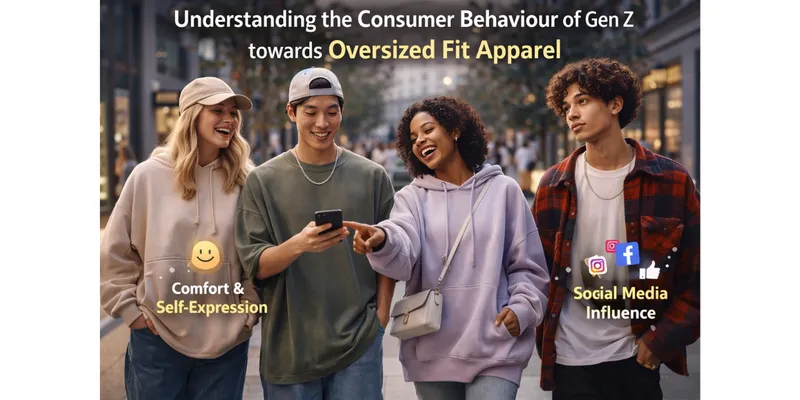

Ms Rishita Patel , Fashion Management Scholar, Department of Fashion Management Studies, National Institute of Fashion Technology, Ministry of Textiles, Govt of India, Daman Campus
Abstract
Generation Z has emerged as a key consumer segment influencing contemporary fashion consumption patterns. One notable trend within this group is the increasing preference for oversized fit apparel, particularly in casual and streetwear categories. This study aims to understand Gen Z consumer behaviour towards oversized fit apparel through a theoretical review of existing literature. The research focuses on three key factors influencing apparel preference: comfort perception, style and trend appeal, and self-expression and identity. A qualitative, literature-based approach was adopted to analyse previous academic and industry studies related to youth fashion consumption. The findings indicate that comfort perception is a primary driver of Gen Z’s preference for oversized apparel, as such garments offer ease of movement, physical comfort, and body neutrality. Additionally, oversized fits are perceived as fashionable and aligned with contemporary trends influenced by social media and street culture. The study also highlights the role of self-expression and identity, with oversized apparel enabling Gen Z consumers to communicate individuality and personal values. Overall, the study provides insights for fashion brands and future research in consumer behaviour.
Keywords: Generation Z, Oversized Fit Apparel, Consumer Behaviour, Comfort Perception, Self-Expression
Introduction
The fashion industry is continuously evolving in response to changing consumer lifestyles, preferences, and socio-cultural influences. In recent years, Generation Z has emerged as a key consumer group driving significant changes in fashion consumption patterns. Characterized by high digital engagement, strong individualism, and a preference for comfort-oriented lifestyles, Gen Z consumers demonstrate distinctive behaviour in apparel selection. One notable trend reflecting these changing preferences is the increasing acceptance and popularity of oversized fit apparel, which has become prominent across casualwear and streetwear categories.
Existing studies on youth and fashion consumption suggest that Gen Z consumers evaluate apparel based on a combination of functional, aesthetic, and psychological factors. Comfort perception has been widely recognized as a crucial determinant of clothing choice, as modern consumers increasingly prioritize ease of movement, wearability, and physical comfort in everyday apparel. Oversized fit garments are often associated with relaxed silhouettes and non-restrictive designs, making them particularly appealing to Gen Z consumers who value practicality and comfort in their clothing.
In addition to functional benefits, style and trend appeal plays a significant role in shaping Gen Z’s fashion preferences. This generation is highly influenced by digital media, social platforms, and contemporary fashion movements, which continuously introduce new trends and silhouettes. Oversized fits have gained popularity as a representation of modern street fashion and global youth culture, thereby contributing to their perceived fashionability. Gen Z consumers often seek apparel that aligns with current trends while allowing versatility in styling, further strengthening their inclination toward oversized clothing.Moreover, fashion serves as an important medium for self-expression and identity formation among Gen Z consumers. Clothing choices are increasingly viewed as a reflection of personal values, creativity, and individuality. Oversized apparel provides flexibility in styling and allows consumers to experiment with layered looks and unconventional silhouettes, enabling greater freedom of expression. Prior research highlights that Gen Z consumers prefer fashion that supports individuality and helps communicate their personal and social identity.
The present study focuses on understanding Gen Z consumer behaviour towards oversized fit apparel. The study aims to review existing literature related to Gen Z fashion consumption, theoretically analyse consumer behaviour patterns associated with oversized clothing, and suggest an appropriate plan of action based on the findings. By synthesizing insights from previous research, this study seeks to contribute to a deeper understanding of the factors influencing Gen Z’s preference for oversized fit apparel and provide valuable implications for fashion brands and marketers targeting this consumer segment.
Objective
1. To review literature related to understanding the consumer behaviour of Gen Z towards oversized fit apparel.
2. To theoretically analyse the reviews.
3. To suggest an appropriate plan of action based on the above given topic.
Research Methodology
This research follows a theoretical qualitative approach by reviewing papers in the relevant area. It synthesizes key findings from peer-reviewed journals and scholarly articles to build a conceptual framework. Data was thematically analysed to identify patterns, gaps, and implications for future studies in textile and fashion management. The review encompasses sources from recent publications, ensuring contemporary relevance to industry trends. Ethical considerations guided the selection, prioritizing open-access and credible publications.
Literature review
The study “Gen Z Fashion Preferences in India” (Dewani et al., 2024)examined the key drivers influencing Gen Z’s fashion consumption in the Indian context. The study revealed that comfort plays a dominant role in shaping Gen Z’s apparel preferences, especially in casual and everyday wear. Respondents preferred clothing that allows ease of movement and provides physical comfort, indicating a shift away from restrictive or body-conscious fits. In addition to comfort, the study highlighted the influence of trends and social media in forming positive attitudes toward contemporary fashion styles. The findings suggest that Gen Z consumers evaluate apparel not only on aesthetic appeal but also on functional benefits. This research supports the inclusion of comfort perception as a critical attitude variable in studying oversized fit apparel, as such silhouettes are often associated with relaxed wearability and enhanced comfort.
The study “Threads of Identity: Gen Z Fashion Trends” explored how fashion choices among Gen Z are closely tied to self-expression and identity formation. Using qualitative analysis, the research found that Gen Z consumers use clothing as a tool to communicate individuality, beliefs, and emotional states. Apparel preferences were influenced by the desire to stand out while simultaneously aligning with peer groups. Oversized and relaxed fits were discussed as styles that allow personal interpretation and creative styling, making them appealing to younger consumers. The study emphasizes that fashion is not merely functional but symbolic, contributing to the construction of personal identity. These findings strongly support the
inclusion of self-expression and identity as an attitude variable, as Gen Z consumers perceive clothing as an extension of their personality and social presence.
The study “ Fast Fashion Consumption and Gen Z Values” (Escourido-Calvo et al., 2025) investigated Gen Z’s fast fashion consumption through the lens of consumer values and attitudes. The study identified fashion leadership, trend consciousness, and emotional value as significant factors influencing attitudes toward apparel. Results showed that Gen Z consumers are highly responsive to style and trend appeal, often adopting silhouettes that reflect current global and streetwear trends. The research also found that positive attitudes toward trendy designs significantly increase purchase intention. Oversized fits, often associated with modern street fashion, align well with Gen Z’s preference for trend-driven clothing. This study supports the relevance of style and trend appeal as a key attitudinal factor influencing Gen Z’s fashion behaviour.
The study “Clothing as a Social Signal” (Aghaei et al., 2017) conceptualized clothing as a form of social signal that communicates identity, personality traits, and social belonging. The study suggests that individuals use clothing choices to convey messages about who they are and how they wish to be perceived by others. For younger consumers, especially Gen Z, clothing plays an important role in identity construction and self-presentation. Oversized apparel, which deviates from conventional fitted styles, can signal non-conformity, creativity, and comfort-oriented values. This research provides a theoretical foundation for including self-expression and identity as an attitude variable, reinforcing the idea that fashion choices extend beyond utility to social and psychological meaning.
The study “Gen Z Fashion Shopping Behaviour” (Šimek 2024) examined changes in Gen Z fashion shopping behaviour before and after the COVID-19 pandemic. The study found an increased preference for comfortable, casual, and relaxed clothing as lifestyles shifted toward home-based activities. Additionally, trends promoting comfort and versatility gained popularity among young consumers. The research also highlighted that Gen Z closely follows fashion trends through digital platforms, influencing their attitudes toward certain apparel styles. These findings suggest that both comfort perception and style appeal play an essential role in shaping Gen Z’s fashion attitudes. Oversized fit apparel aligns with these preferences, as it combines ease of wear with contemporary fashion trends.
The study “Streetwear and Identity Expression” (Correia 2024) explored how streetwear functions as a medium for identity expression among Gen Z consumers. The study revealed that oversized silhouettes are commonly associated with streetwear culture and are perceived as symbols of individuality, freedom, and authenticity. Participants viewed oversized clothing as a way to resist traditional fashion norms and embrace personal comfort. The research emphasizes that Gen Z values clothing that allows creative styling and aligns with their lifestyle and beliefs. This study directly supports the inclusion of self-expression and identity as a core attitude variable, as oversized apparel enables Gen Z consumers to express their personal and cultural identity.
The study “Psychology of Oversized Fashion” (The Wearified 2025) discussed the psychological reasons behind Gen Z’s growing preference for oversized fashion. The research highlighted comfort perception as a major factor, stating that oversized clothing reduces physical restriction and body image anxiety. Additionally, oversized fits promote body neutrality, allowing consumers to feel confident regardless of body shape. The study also linked oversized fashion to a sense of emotional comfort and casual lifestyle preferences. Although industry-based, the findings strongly support academic research by emphasizing comfort as a key attitudinal driver. This literature reinforces the relevance of comfort perception in understanding Gen Z’s preference for oversized apparel.
The study “Gen Z and Fashion Trends” (Worn Fashion Journal (2025)examined how Gen Z influences and adopts emerging fashion trends. The study noted a clear shift toward casualization in fashion, with comfort becoming a priority over formality. Oversized silhouettes were identified as a dominant trend due to their relaxed aesthetic and adaptability. The research also found that Gen Z consumers associate oversized clothing with modernity and trend relevance. These findings support the inclusion of style and trend appeal as an attitude variable, as Gen Z consumers are highly trend-driven and visually influenced by social media and pop culture.
The study “Apparel Psychology and Comfort” (Joshi and Kushwaha 2025) studied consumer psychology in relation to apparel preferences, particularly focusing on comfort and lifestyle alignment. The research found that comfort significantly affects consumer satisfaction and attitude toward clothing. Apparel that supports ease of movement and fits relaxed lifestyles was more positively evaluated. The study also highlighted that consumers associate comfortable clothing with emotional well-being. These findings are applicable to oversized fit apparel, as such garments naturally align with comfort-driven attitudes. This study reinforces comfort perception as a strong predictor of positive consumer attitude toward apparel.
The study “Consumer Behaviour in Fashion Industry” analyzed broader consumer behaviour patterns in the fashion industry, with a focus on youth and Gen Z consumers. The findings indicated that style preferences, self-expression, and social influence significantly affect apparel attitudes. The study emphasized that Gen Z consumers seek clothing that reflects their individuality while staying aligned with current fashion trends. Oversized fits were identified as popular among youth due to their fashionable appearance and expressive nature. This research supports both style & trend appeal and self-expression & identity as important attitudinal components in fashion consumption studies.
Insights from Literature Review
The reviewed studies highlight important insights into Gen Z’s preference for oversized fit apparel. A key theme across studies is the importance of comfort perception, with Gen Z consumers prioritizing ease of movement, relaxed silhouettes, and everyday wearability.
Oversized apparel is commonly associated with non-restrictive designs that suit comfort-oriented lifestyles. Additionally, style and trend appeal significantly influence Gen Z’s apparel choices. Existing research shows that Gen Z is highly trend-conscious and influenced by social media and streetwear culture, perceiving oversized fits as fashionable and contemporary.The literature also emphasizes self-expression and identity as critical factors in apparel selection. Oversized clothing allows creative styling and personal expression while aligning with peer-driven fashion norms. Overall, Gen Z’s preference for oversized fit apparel is shaped by comfort, trend relevance, and the need for self-expression.
Findings
The theoretical analysis reveals several key findings regarding Gen Z’s preference for oversized fit apparel. Comfort perception emerges as a primary factor, with oversized garments associated with physical ease, emotional comfort, and body neutrality. Style and trend appeal also significantly influence Gen Z’s apparel choices, as oversized fits are widely perceived as fashionable and aligned with contemporary streetwear trends. Additionally, self-expression and identity play a crucial role, with oversized apparel enabling Gen Z consumers to express individuality and personal values. Overall, Gen Z’s preference for oversized fit apparel is driven by a combination of comfort, trend relevance, and psychological factors.
Conclusion
The present study examined Gen Z consumer behaviour towards oversized fit apparel through a theoretical review of existing literature. The findings indicate that oversized apparel has gained popularity among Gen Z due to its alignment with comfort-oriented lifestyles, contemporary fashion trends, and the need for self-expression.Comfort perception emerged as a key driver, reflecting Gen Z’s preference for relaxed and practical clothing, while style and trend appeal influenced their acceptance of oversized silhouettes as fashionable and socially relevant. Additionally, self-expression and identity were found to play an important role, as Gen Z consumers use apparel to communicate individuality and personal values.Based on these insights, fashion brands targeting Gen Z should focus on oversized designs that combine comfort, trend relevance, and expressive styling. This study enhances understanding of Gen Z’s apparel preferences and offers direction for future research in fashion consumer behaviour.
References
1. Dewani, B., & Nagaych, Y. (2024). Gen Z rewrites fashion: A study of Gen Z consumer preferences and drivers in the fashion industry
2.Escourido-Calvo, M., Prado-Dominguez, A. J., & Martin-Palmero, F. (2025). Understanding Gen Z’s fast fashion consumption: The role of gender identity and consumer values. Journal of Fashion Marketing and Management.
3. Universepg Journal Article. (2025). Threads of identity: Decoding Gen Z’s fashion fads and trends. Universepg Journal.
4. Wearified. (2025). The psychology of oversized fashion: Why Gen Z loves baggy everything. Wearified.store.
5. Joshi, D. A., & Kushwaha, R. (2025). The psychology of consumer behavior: A study on motivations, attitudes & preferences of seamless active wear.
6. Šimek, P. (2024). Generation Z fashion shopping behaviour during and after COVID-19. International Journal of Consumer Studies.
7. Correia, B. M. S. (2024). Identity expression through streetwear: How Gen Z use fashion to construct identity.
8. WornFashionJournal.com. (2025). The influence of Gen Z on future fashion trends. Worn Fashion Journal.
9. Aghaei, M., Parezzan, F., Dimiccoli, M., Radeva, P., & Cristani, M. (2017). Clothing and people: A social signal processing perspective. arXiv.
10. Multiresearch Journal. (2024). A deep dive into consumer behaviour in the fashion industry. International Journal of Advanced Multidisciplinary Research and Studies.