UK Last Mile Delivery: Is the Market Ready for Autonomous Solutions?
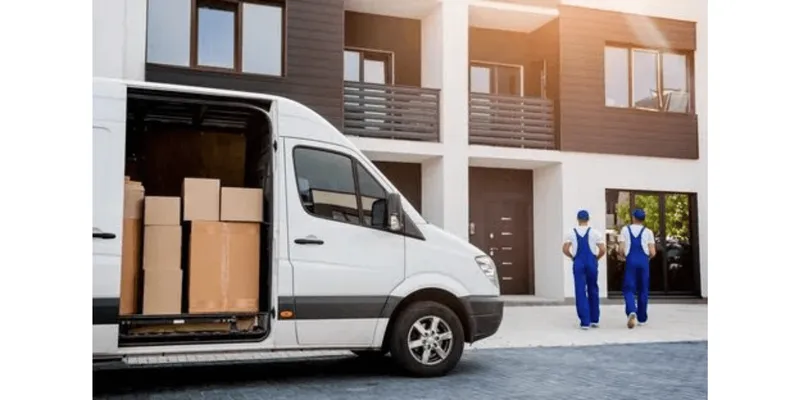
Assessing the UK’s preparedness for a future driven by autonomous vehicles and drone delivery.
As automation reshapes global logistics, the UK Last Mile Delivery Market is evaluating whether autonomous vehicles and drones can deliver faster, more efficient, and sustainable fulfillment. Fairfield Market Research explores the nation’s readiness across regulation, infrastructure, technology, and public acceptance.
The rapid advancement of logistics technology, automation, and digital intelligence has positioned the industry at a major inflection point — the adoption of autonomous vehicles and drone-based delivery. With e-commerce continuing to expand and customer expectations shifting toward faster fulfillment, the UK Last Mile Delivery Market is actively exploring new models to improve efficiency, reduce operational costs, and meet sustainability commitments. This has raised an essential yet multifaceted question among investors, logistics leaders, and retailers: Is the UK genuinely equipped for autonomous transport and drones to transform last-mile operations?
According to Fairfield Market Research, the UK logistics ecosystem is evolving quickly, shaped by the demand for speed, scalability, and environmental responsibility. The rise of autonomous vans, robotic delivery units, and drone fleets has moved beyond theoretical projections. Government-led frameworks, corporate investments, and ongoing pilot projects are accelerating adoption. Yet full readiness depends not only on innovation but also on regulation, infrastructure development, public trust, and cost viability.
Why Automation Is Becoming Crucial in the UK Logistics Sector
The surge in online shopping and the increasing frequency of same-day and subscription-based deliveries have dramatically altered customer behavior. Logistics networks are under pressure to operate with greater precision and agility. Automation supports cost reduction, route optimization, enhanced safety, and uninterrupted operations — advantages that are becoming essential amid rising fuel prices, labor shortages, and congested urban environments.
Fairfield Market Research reports that last-mile operations remain one of the most expensive components of logistics for retailers and service providers. Autonomous vehicles and drones offer opportunities to strike a balance between affordability and performance, particularly in dense cityscapes and remote regions where manual delivery often experiences bottlenecks. As a result, the UK Last Mile Delivery Market is positioned at the intersection of necessity and innovation.
How Autonomous Vehicles May Reshape Last-Mile Delivery
Driverless vans, AI-driven pods, and robotic ground vehicles are already being tested across multiple UK cities. Companies such as Starship Technologies have deployed small delivery robots in selected neighborhoods, showcasing how automated mobility can support doorstep fulfillment and micro-delivery. Major logistics companies are also evaluating autonomous vans to enhance route efficiency and deliver zero-emission transport solutions.
Autonomous vehicles offer significant benefits, from improved safety to higher operational uptime. They can shorten delivery cycles and enable multiple dispatch runs in a single day. Integration with warehouse automation, predictive traffic systems, and smart routing will reduce inconsistencies and minimize human error. Fairfield Market Research highlights that improvements in 5G networks and smart-city infrastructure will be pivotal in scaling deployment and strengthening reliability.
Drone Delivery: A Transformative Shift or Long-Term Vision?
Drone-based logistics continues to gain traction across Europe, with particular focus on semi-urban and rural regions. The UK government has approved certain drone corridors, enabling companies to experiment with aerial delivery for pharmaceuticals, emergency items, and select retail applications.
For the e-commerce sector, drone delivery could significantly enhance accessibility and speed. Aerial logistics reduce dependence on congested roads and overcome terrain barriers, ensuring parcels reach remote destinations within minutes. This aligns with sustainability goals by reducing reliance on fuel-based vehicles.
However, challenges persist. Regulatory constraints, sound pollution, flight safety, and community acceptance remain key hurdles. Fairfield Market Research points out that customer trust, insurance mechanisms, and scalable drone management systems must advance before widespread adoption becomes realistic across the UK market.
Urban Planning and Policy Will Shape the Future
Technology alone cannot guarantee adoption. The shift toward autonomous delivery depends on well-defined regulations, investment-friendly policies, and infrastructure capable of supporting automated transportation. The UK government’s Future of Transport regulatory framework has taken early steps in addressing autonomous trials, drone governance, and mobility safety standards.
Urban infrastructure must evolve accordingly — from establishing dedicated drone air corridors to deploying smart charging hubs for electric autonomous vehicles. Fairfield Market Research stresses that multi-stakeholder cooperation among telecom providers, policymakers, logistics companies, and vehicle manufacturers is essential for building a future-ready logistics environment.
Public Trust and Consumer Adoption
Whether the UK is prepared for widespread autonomous delivery also depends on consumer mindset. Younger, digitally oriented consumers show greater acceptance of autonomous logistics, while other groups remain hesitant due to concerns about safety, privacy, and reliability. Public-awareness efforts, transparent regulations, and successful pilot results will be vital to building trust.
Autonomous logistics will introduce cultural and behavioral changes. Seeing drones overhead or robots delivering parcels may appear unusual at first, but as convenience becomes evident, familiarity will grow — similar to earlier shifts seen with contactless payments or online shopping.
Will Automation Replace Last-Mile Jobs?
A common debate centers on the future of delivery jobs. Rather than eliminate roles, automation is expected to transform them. Employees will increasingly move into roles involving fleet oversight, system monitoring, compliance, and technical support. Fairfield Market Research emphasizes that workforce transition will require reskilling programs, vocational courses, and partnerships between public and private entities.
So, Is the UK Ready?
Although the UK is advancing rapidly, readiness varies by region, regulatory maturity, and investment capacity. Major urban centers like London, Birmingham, Manchester, and Bristol show strong potential for early adoption, while rural regions may adopt drone logistics sooner due to their suitability for remote deliveries.
The UK Last Mile Delivery Market is not entirely prepared for mass-scale deployment, but strong momentum is undeniable. Pilot initiatives, technological improvements, sustainability goals, and better infrastructure are driving the transition from testing to real-world implementation.
With continued investment, regulatory clarity, and public acceptance, autonomous vehicles and drones are poised to become an integral component of the UK’s logistics landscape — transforming last-mile operations from a cost-driven pressure point into a strategic advantage.