Turning Waste Into Resource: Wtt International's Zero-Compromise Approach To Water Recovery
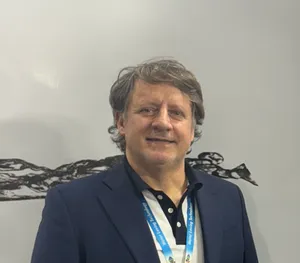
Andrea Pelissero
Head of Global Sales,
WTT International
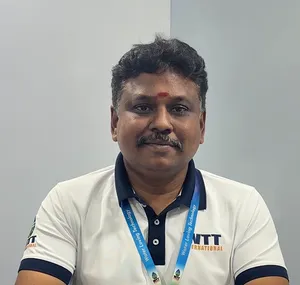
Venkatesh D
MD & CEO,
WTT International
Andrea Pelissero, Head of Global Sales, and Venkatesh D, MD & CEO, WTT International, on pioneering ZLD technology, India's global leadership in water sustainability, and the road to 40 million euros
In the crowded landscape of water treatment technology, WTT International occupies a distinct position — not merely as a solution provider, but as a company that has spent over two decades turning one of the industry's most persistent problems into a measurable, replicable, and commercially viable resource recovery system. At the NetTech India exhibition in Tirupur, Textile Value Chain sat down with MD & CEO Venkatesh D and Head of Global Sales Andrea Pelissero for a wide-ranging conversation on technology, markets, sustainability, and what it truly means to achieve Zero Liquid Discharge.
What WTT Does — and Why It Matters
Venkatesh set the context with characteristic precision. WTT International operates water recycling plants across the globe, specialising in industrial water recycling through a process that is entirely chemical-free. "We specialise in industrial water recycling using a completely chemical-free, natural biological treatment process, followed by tertiary treatment and reverse osmosis," he explained. "Beyond water recovery, we also focus on brine recovery, caustic recovery, and resource recovery in general."
The scope is significant. This is not a company selling equipment — it is a company engineering closed-loop systems that return near-total volumes of clean water back into industrial processes, while recovering valuable by-products that would otherwise be lost.
-800x1422.webp?2026-06-16T07:16:08.153Z)
A Global Footprint, a Tirupur Home
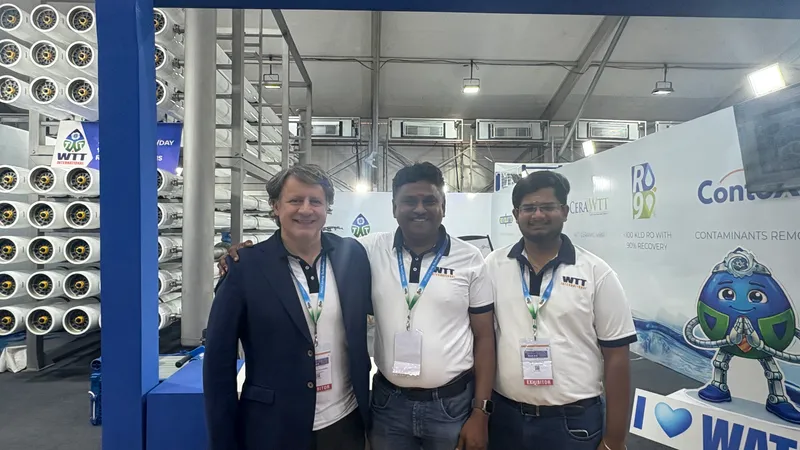
Pelissero, speaking from WTT's stall in what is arguably India's most important textile manufacturing hub, outlined the company's international structure. With offices in Italy, Dubai, and Tirupur — where WTT operates both an office and a manufacturing facility — and a network of nearly 40 agents worldwide, the company has built genuine global reach over more than 20 years in the field. "We actively market our technologies and products across many countries, with our agents representing us locally," he said. "We regularly travel to support them and promote our latest innovations."
Opportunity Within Uncertainty
Asked about the impact of global volatility — wars, supply chain disruptions, economic uncertainty — on an industry already navigating transformation, Pelissero offered a perspective that was both grounded and deliberately optimistic.
"At WTT International, we always look at the positive side. These problems create opportunities. The world continues, and behind every challenge lies an opportunity." The demand signals, he noted, bear this out. Enquiries are arriving not just from textile manufacturers but from paper, pharmaceutical, petrochemical, tannery, dairy, iron, and several other industries. The need for water treatment and recovery transcends any single sector — and in a world increasingly defined by resource scarcity, that need is only growing.
The REWOLUTTE Absolute Recovery System
At the technical heart of WTT's exhibition presence was its flagship innovation: REWOLUTTE Absolute Recovery — a patented process that achieves 97% water recovery from heavily polluted industrial wastewater. Pelissero walked through the process in detail.
Wastewater from production — heavily laden with chemicals, dyes, and organic matter in the case of textile processing — is fed into a multi-stage system. It begins with filtration and biological treatment, where bacteria digest the COD and BOD load while the sludge is separated. This is followed by a Membrane Bioreactor (MBR) stage for further filtration, and then advanced Reverse Osmosis. The result: from every 100 litres of heavily polluted input water, 97 litres of crystal-clear, pollution-free water are returned — water that meets drinkable quality standards. Only 3% becomes reject.
"This is true sustainability, recycling, and a green process," Pelissero said simply — and the numbers make it difficult to argue otherwise.
-800x450.webp?2026-06-16T07:16:25.550Z)
The Economics: Competitive, Aggressive, and Payback in Three Years
For industries evaluating capital investment in water treatment infrastructure, cost remains a decisive factor. Pelissero was forthcoming on both pricing and returns. Every WTT plant is customised to the client's specific requirements, making a standard price point impossible, but on the flagship 97% recovery system, the total process cost — encompassing capital payback, energy, labour, and maintenance — comes in at under one euro per cubic metre of recovered water. "With new technologies, we have made it very competitive and aggressive compared to the past," he noted.
The payback timeline is equally compelling. "Most of our customers report a payback period of around 3 years for the total investment." In an environment where long-term operational costs can make or break the case for sustainability investment, WTT's low OpEx figures are a central part of the commercial proposition. "Customers choose us because while capital cost matters over 20-30 years, daily operational costs are critical. Our low OpEx enables the fast 3-year payback."
India: The World's Most Advanced Market for Water Recovery
When asked how India compares to other markets, Pelissero's answer was unequivocal — and striking in its directness.
"India is our main and strongest market. In terms of water sustainability and recovery, India is number one in the world. No other country matches its advancement in water treatment technology." The drivers, he explained, are structural: severe pollution challenges, an enormous population, massive water demand, and acute scarcity have together compelled India to lead where others have lagged. "Over the last 20-25 years, India has done an outstanding job in water recycling and cleaning."
The contrast with other markets is telling. Countries like Italy, Pelissero noted, are only now beginning to discuss 30-40% recycling targets — largely because international brands are starting to apply pressure. India, meanwhile, has been operating at 97% recovery targets for two decades. "India started focusing on Zero Liquid Discharge and water recovery 20 years ago. Many other countries are only now beginning to think about it."
WTT's own history in India reflects this trajectory. The company installed the first ZLD plant in India 21 years ago — at Birla Century in Indore — and has since grown to operate 93 plants running successfully across the country. The most recent landmark order: a 30 MLD (30,000 m³/day) plant at 95%-plus recovery — a volume, Pelissero noted, equivalent to supplying a small city.
A Green Sector in a Turbulent World
On the question of WTT's future vision, both Pelissero and Venkatesh spoke with quiet confidence. The company is targeting a turnover of 40 million euros in the near term — a goal that reflects both the scale of demand and the pace at which WTT is growing. "Our field is fortunate because it is directly linked to sustainability — a true green sector," Pelissero observed. "The company is growing rapidly due to strong worldwide demand for water-saving and recycling solutions. While many sectors face depression due to the global scenario, we are in a different field and remain highly optimistic."
The portfolio underpinning that growth is substantial: ten patents, the lowest operational expenditure in the world for systems of this kind, and a young, technically capable team that Pelissero described as bringing both energy and rigour to daily problem-solving. "Every day brings new challenges — we receive highly polluted wastewater from different industries every day. But we sharpen our minds, face them head-on, and deliver solutions to our customers."
A Vote of Confidence for Tirupur
Closing the conversation on a note that resonated with the exhibition's host city, Pelissero spoke warmly of Tirupur and its textile community. "Tirupur is a fantastic hub for textiles, and we are meeting many friends and customers here." He expressed genuine optimism about the city's recovery and future trajectory. "Our customers here have always invested in advanced European technology and maintain excellent, export-oriented facilities. After recent challenges, we hope they see good business again soon."
It was the kind of closing remark that comes not from a sales pitch, but from more than two decades of being present in a market — understanding its rhythms, its resilience, and its people.