Turning 7,800 Kilo Tonnes of Textile Waste into an INR 30,000 Crore Economic Opportunity for the Country
Devroop Dhar India CEO and Co-Founder Primus Partners
Kamakshi Verma Asst. Vice President Primus Partners
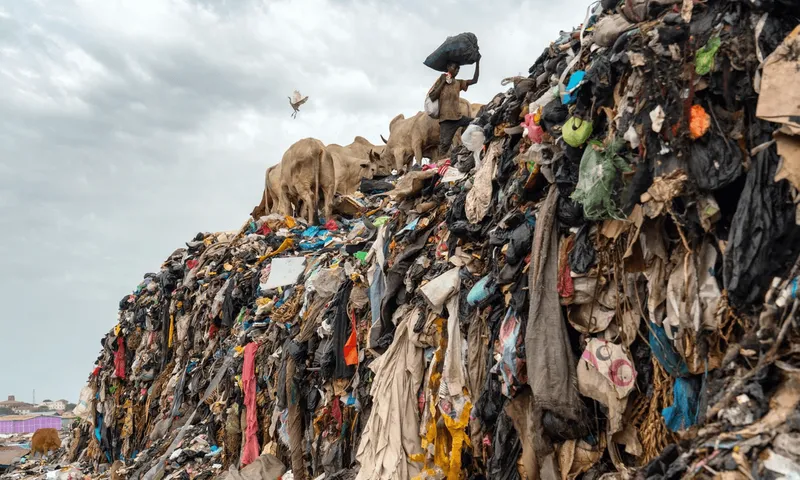
India stands at a pivotal crossroads in its journey toward sustainability. As one of the world’s largest textile producers and consumers, the country generates an estimated 7,800 kilo tonnes of textile waste annually, contributing to 8.5% of the global total. ¹Driven by fast fashion, overproduction, and a throwaway culture, these factors have taken a massive environmental toll—landfills are overflowing, water bodies are contaminated, and the textile industry’s greenhouse gas emissions now exceed those from international aviation and shipping combined. Yet, within this challenge lies a transformative opportunity: India has the potential to lead the world in creating a zero-fashion waste ecosystem, turning textile waste into a resource for economic growth, green jobs, and environmental renewal. The demand for low-cost, trend-based clothing has reinforced a linear "take, make, wear, discard" model, with 34% of post-consumer textile waste ending up in landfills. Synthetic fibres like polyester, which dominate fast fashion, take centuries to decompose, releasing microplastics and emissions. In India, 42% of textile waste is pre-consumer, much of which is downcycled or incinerated due to poor waste management. To make India a zero-fashion waste country, we must reimagine the textile value chain as a circular system where waste is not an endpoint but a resource. The transition to a circular economy is not only an environmental necessity but also a significant economic opportunity for India. It has the potential to transform the textile and apparel industry into a more efficient, sustainable, and globally competitive sector. Embracing circular practices could unlock an estimated economic value of INR 30,000 crore while generating approximately 1 Lakh new jobs across the country. This vision hinges on these Five Pillars: Strengthen Policy and Regulatory Framework, Unified B2B Digital Marketplace, Innovative Design and Production and Advanced Recycling Technologies, Skilled and Sustainability-Focused Textile Workforce. A comprehensive National Policy for Sustainable Textiles is essential to mainstream sustainability, circularity, and ethical practices across India’s textile industry. The policy should establish clear guidelines for responsible raw material sourcing, eco-friendly manufacturing, efficient waste management, and full lifecycle regulation of textile products. Mandatory sustainability certifications such as GOTS and OEKO-TEX must be enforced alongside the promotion of green technologies and circular business models. To further strengthen the regulatory framework, the government should implement Extended Producer Responsibility (EPR) norms and offer incentives—including tax benefits, subsidies, and enhanced access to green finance—for businesses adopting sustainable practices. Investment in shared recycling infrastructure and innovation hubs will also be critical in driving large-scale transformation toward a zero-waste fashion economy. Creating a unified B2B digital marketplace to manage pre-consumer textile waste efficiently. This tech-driven platform would connect manufacturers, recyclers, and up-cyclers, enabling seamless waste trading and repurposing. By integrating IoT, blockchain, and AI, it would offer real-time tracking, improve supply chain visibility, and support predictive inventory management—ensuring better resource use, reduced landfill waste, and consistent supply for SMEs and recyclers. Innovative design and production methods are key to reducing waste in the fashion industry. To scale these practices, sustainability must be embedded into fashion education, encouraging future designers to prioritize material efficiency from the start. Brands should also be incentivized to adopt waste-reducing techniques. Advanced technologies such as 3D knitting and direct-panel-on-loom weaving offer significant potential by enabling garments to be made directly from yarn, eliminating the need for traditional fabric cutting and thereby minimizing material loss. Additionally, the adoption of advanced recycling technologies—both mechanical and chemical—holds significant potential to convert mixed-fiber textile waste into high-quality raw materials for the production of new textiles. While India has established itself as a global leader in mechanical recycling, there is a growing need to expand into chemical recycling to effectively manage the increasing volume of synthetic and polyester-based waste. Investing in such technologies will ensure that textile waste is reintegrated into the production cycle rather than ending up in landfills. Encouragingly, states such as Maharashtra have begun incentivizing the establishment of recycling units, demonstrating a proactive approach to promoting sustainable textile practices and fostering a circular economy at the regional level. To move towards a zero-fashion waste future, India must invest in building a skilled and sustainability-focused textile workforce. This includes introducing specialized courses on sustainable textiles, circular economy practices, and waste management across universities, fashion schools, and vocational institutes. Upskilling workers in green manufacturing—such as waste recycling, sustainable fibre production, and digital traceability—will be key to accelerating eco-friendly innovation. Collaborative efforts between the government, industry, and academia can ensure that practical training, certifications, and research are embedded into the ecosystem, making the workforce ready to power a circular, sustainable textile economy. Making India a zero-fashion waste country is not a distant dream but an actionable goal. It requires rekindling our cultural roots, harnessing cutting-edge solutions, and uniting stakeholders such as government, industry, consumers, and international partners in a shared mission. With robust policy frameworks, cutting-edge technological innovations, and growing consumer awareness, India is well-positioned to become a global leader in zero-waste fashion. The country has a unique opportunity to spearhead the movement against escalating textile waste, demonstrating that fashion can be a catalyst for positive change—a sustainable legacy that future generations can proudly inherit.
¹ Primus Analysis