Transparency and Trust: From Fibre to Fashion - Building an Accountable Textile Value Chain

Ameet Kaul
The future of the textile and apparel industry will depend not just on product quality, cost and speed, but increasingly on the credibility of information behind every product. Building transparency from raw material to retail is becoming a business necessity, a competitive differentiator and the foundation of long-term trust.
Transparency is not merely about tracking a product. It is about establishing trust through verifiable information, responsible practices and accountability at every stage of the textile value chain.
1. The Textile Value Chain: A Journey That Needs To Become Visible
A garment displayed on a retail shelf may have travelled through several countries, manufacturing facilities and a complex network of suppliers before reaching the consumer.
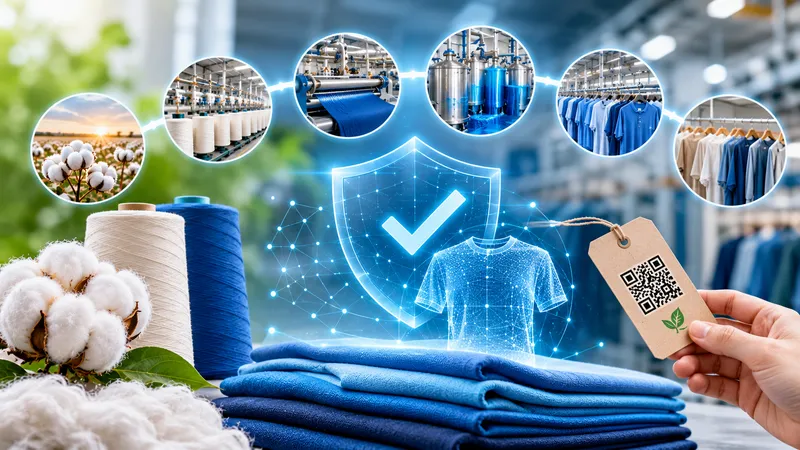
Consider a simple cotton shirt. Its journey begins with cotton cultivation, followed by ginning, spinning, weaving or knitting, dyeing, finishing, garment manufacturing, distribution and retail.
But how much do we actually know about this journey?
Can a brand establish where the cotton originated? Can a buyer verify the environmental footprint of the fabric? Can a manufacturer demonstrate the chemicals used during processing?
These questions highlight a fundamental challenge: while the textile value chain is globally connected, the information supporting it often remains fragmented.
According to the OECD's 2026 assessment of garment and footwear supply chains, their multi-tiered and decentralised structure makes visibility and responsible business due diligence particularly challenging.
Transparency, therefore, is not simply about tracking a product. It is about creating a reliable chain of information that establishes accountability at every stage.
2. Traceability Begins With Raw Materials
The foundation of a transparent textile value chain lies in the credibility of its raw materials.
For natural fibres such as cotton, wool and jute, traceability begins at the agricultural or production source. For man-made fibres, it involves understanding the origin of polymers, feedstock, recycled inputs and manufacturing processes.
Case Study: Kasturi Cotton Bharat – India's Traceability Initiative
India's Kasturi Cotton Bharat initiative is an interesting example of connecting raw material identity with digital traceability. The programme uses QR-based certification at different processing stages and blockchain-enabled systems to establish transaction-level traceability.
As reported by the Ministry of Textiles, 3,29,550 cotton bales had been certified under the initiative by 30 June 2026.
This demonstrates how traceability can evolve beyond compliance to become a branding and market-positioning instrument for Indian cotton.
However, challenges emerge when fibres are aggregated, blended and transformed across multiple manufacturing stages. Physical segregation is not always commercially practical. Businesses must therefore distinguish between physical product traceability and mass-balance accounting, ensuring that claims accurately reflect what has actually been verified.
3. The Missing Link: Transparency Across Manufacturing
One of the biggest gaps in textile traceability lies between raw material sourcing and finished-product manufacturing.
Spinning mills, weaving units, knitting facilities, dyeing houses and garment manufacturers generate information that contributes to a product's identity and environmental footprint.
Case Study: Lenzing And Textilegenesis – From Fibre To Retail
A notable industry pilot led by Fashion for Good tested TextileGenesis' blockchain-based traceability platform with Lenzing, ENKA and Tangshan Sanyou, alongside brands including Kering, BESTSELLER and Zalando.
The initiative successfully traced approximately 23,000 product units containing responsibly sourced viscose through physical and digital tracking mechanisms.
The important learning is that traceability must follow the transformation of materials across successive manufacturing stages, not merely record the identity of the original supplier.
For manufacturers, this means documenting material composition, production batches, processing conditions, chemical inputs, energy consumption and environmental performance.
The challenge is particularly significant for MSMEs, which often operate with limited digital infrastructure and manual documentation. Affordable, scalable solutions will be essential to bring these businesses into the transparency ecosystem.
4. Manufacturing Transparency: Beyond Product Information
Knowing where a product was manufactured is not enough. We must also understand how it was manufactured.
Chemical management, wastewater discharge, energy consumption and workplace practices are equally important components of responsible production.
Case Study: Vtl Group, Tunisia – Unido And Zdhc Initiative
Under the EU-funded SwitchMed programme, UNIDO and the ZDHC Foundation supported VTL Group in improving its chemical management systems.
The initiative helped the company strengthen chemical inventories, engage suppliers, register additional chemical products on the ZDHC Gateway and improve wastewater monitoring.
The company reported registering 13 additional chemical products on the Gateway during the project and replacing two hazardous chemicals.
This is a practical example of how manufacturing transparency can translate into measurable operational improvements and stronger buyer confidence.
It also reinforces an important distinction: traceability identifies the journey, while verification helps establish whether the manufacturing practices meet responsible production expectations.
5. Digital Product Passports: Connecting Products With Consumers
Digital Product Passports (DPPs) are emerging as an important development in the global movement towards product transparency.
Under the European Union's Ecodesign for Sustainable Products Regulation, textiles and apparel have been identified as a priority product group for future product-specific requirements.
A Digital Product Passport, accessible through a QR code or another data carrier, can provide information relating to product identity, fibre composition, sourcing, environmental performance, care and end-of-life management.
Case Study: Kappahl And Marimekko – Sweden's Textile Dpp Pilot
Through the Trace4Value initiative, GS1 Sweden and technology partners worked with Kappahl and Marimekko to test Digital Product Passports on garments.
The pilot involved more than 3,000 products carrying QR codes linked to supplier and product information.
It demonstrated how information from different supply-chain participants can be connected and presented through a common digital access point.
For consumers, this creates an opportunity to understand more about the products they purchase. For brands and manufacturers, it provides a foundation for improved information exchange, regulatory preparedness and circularity.
However, a QR code is only an access point. Its credibility depends entirely on the accuracy and verification of the underlying information.
6. MSMEs: Making Transparency Commercially Practical
The textile industry cannot achieve meaningful transparency if its smaller manufacturing units remain outside the digital ecosystem.
Expecting every supplier to immediately invest in sophisticated technologies may increase compliance costs without necessarily improving accountability.
Case Study: Nahar Industrial Enterprises – India
Nahar Industrial Enterprises, a vertically integrated Indian textile manufacturer, worked with the ZDHC Implementation Hub to introduce chemical management guidelines across two production units.
The programme included baseline assessments, on-site support, technical training and implementation reviews.
It demonstrates that structured guidance and practical hand-holding can help manufacturers progressively adopt responsible manufacturing systems.
The lesson for the wider industry is clear: digital adoption must be accompanied by capacity building, standardised processes and affordable implementation models.
7. Collaboration: The Foundation Of Trust
No individual manufacturer, brand, retailer or technology provider can independently establish complete visibility across a global textile value chain.
The industry needs collaborative ecosystems where information can be shared responsibly, with appropriate safeguards for data ownership, commercial confidentiality and access rights.
The OECD's work on responsible garment and footwear supply chains highlights the importance of shared supplier information and collaborative due diligence. Initiatives such as Open Supply Hub demonstrate how facility-level information can be consolidated and made accessible to multiple stakeholders.
This is also where collaborative digital platforms such as Aladdin365 represent an emerging opportunity: connecting textile and apparel stakeholders, facilitating knowledge exchange and supporting a more integrated professional ecosystem.
The objective should not be to create another isolated technology platform, but to enable meaningful connections between existing systems, businesses and information sources.
8. From Transparency To Trust: A New Competitive Advantage
For India, transparency represents both a challenge and a significant opportunity.
With its extensive capabilities across fibres, spinning, weaving, processing, technical textiles and garment manufacturing, India has the potential to strengthen its position as a responsible and dependable global sourcing destination.
The priorities should be practical: establish digital material records, improve manufacturing documentation, strengthen independent verification, develop supplier collaboration and support MSMEs in adopting affordable technologies.
Consumers may continue to purchase products based on design, quality, comfort and affordability. However, the credibility of material sourcing and manufacturing practices will increasingly influence brand reputation and buyer confidence.
For manufacturers, this is an opportunity to move beyond being suppliers of products and become trusted partners in global supply chains.
My perspective is simple: The future of textiles will not be defined only by what we manufacture, but also by how credibly we can demonstrate what goes into making it.
From raw material to retail, transparency creates visibility, verification establishes credibility, and consistent responsible practices build trust.
And in the global textile business of tomorrow, trust could well become one of our most valuable competitive assets.