Toyota Industries Textile Machinery
Executive Summary
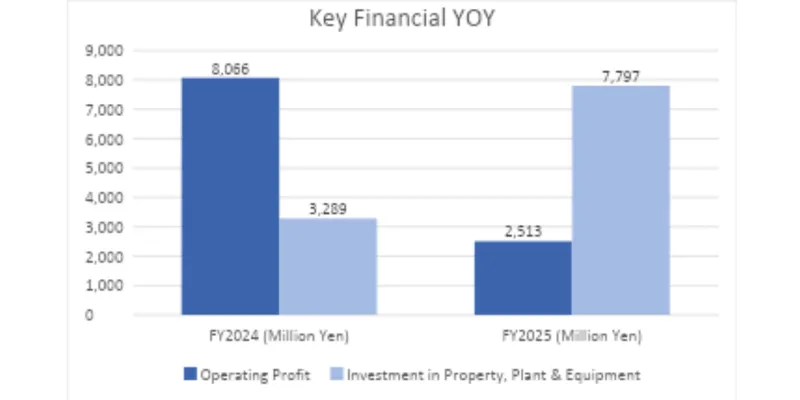
Toyota Textile Machinery is one of the divisions within Toyota Industries Corporation, and it operates in Japan. Some of the key products and services offered by the Textile Machinery division include weaving machines, spinning machines, testing instruments for yarns, and cotton classing. The performance analysis of Toyota textile machinery is carried out using data obtained from the segment report in the annual report. From the report, it can be seen that the income and operating profit of the company have declined, but investment in property, plant, and equipment has risen, indicating long-term growth.
Company Overview
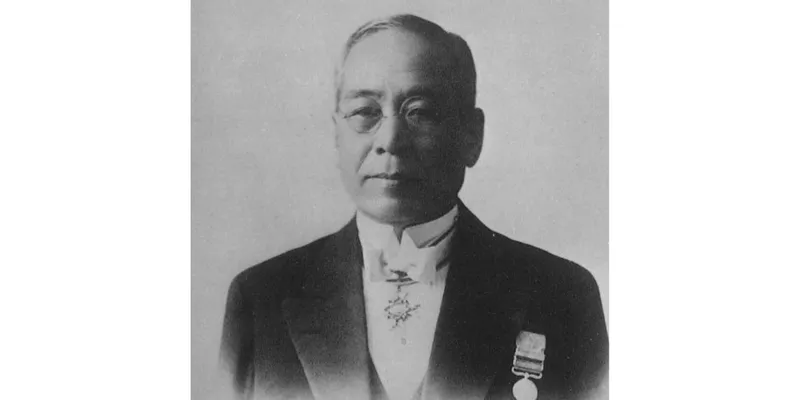
Toyoda Textile Machinery, Inc. was established in 1980 as the first subsidiary of Toyota Industries Corporation located in Japan. In 2016, the company was renamed Toyota Textile Machinery. The organization’s primary activities are developing and selling weaving and spinning machines. In addition, the company also offers technical support and maintenance, as well as spare parts for its machines.
Industry Overview
The textile machinery industry plays an important role in manufacturing equipment for spinning, weaving, and fabric production. Weaving machines, spinning machines, instruments used for yarn testing, and cotton classing are the primary offerings in the textile machinery category. There is an increasing need for automated and technologically advanced machines, keeping in view factors such as product quality and productivity. Toyota Industries is an established company that manufactures spinning and weaving machinery.
Financial Performance Analysis
Particulars | FY2024 (Million Yen) | FY2025 (Million Yen) |
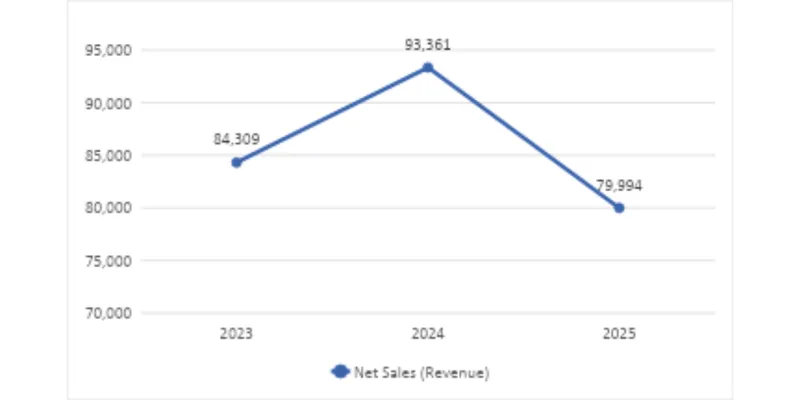
Net Sales (Revenue) | 93,361 | 79,994 |
Operating Profit | 8,066 | 2,513 |
Investment in Property, Plant & Equipment | 3,289 | 7,797 |
Only limited financial data is available because Textile Machinery is a business segment of Toyota Industries Corporation. Therefore, the analysis is based on the segment data presented in the annual report.
Key Financial YOY
Revenue Trend Over 3–5 Years
Interpretation
The textile machinery segment was challenged during FY2025 as net sales decreased by 14% due to weak industry demand. Moreover, the operating profit dropped significantly by 69% due to a decline in sales. On the other hand, the investment in property, plant, and equipment increased, indicating that the company is growing its manufacturing facilities for the long term.
Key Financial Ratio
The financial ratios are calculated using the limited segment information available in the annual report of Toyota Industries Corporation.
Ratio | Formula | FY2025 | Interpretation |
Operating Profit Margin | Operating Profit / Revenue × 100 | 3.14% | Low profit margin, showing reduced profitability in FY2025. |
Asset Turnover Ratio | Revenue / Segment Assets | 0.71 times | The company generated 0.71 yen of revenue for every 1 yen of assets, indicating moderate asset utilization. |
SWOT Analysis
Strengths | Weaknesses |
Strong brand reputation backed by Toyota Industries. | Revenue depends on the cyclical textile industry. |
High-quality and reliable spinning and weaving machines. | Declining sales and profitability in FY2025. |
Global presence with advanced technology and automation. | Major dependence on Asian markets. |
Opportunities | Threats |
Growing demand for automated and energy-efficient textile machinery. | Intense competition from global textile machinery manufacturers. |
Expansion in emerging textile markets. | Economic slowdown reducing investment in textile mills. |
Increasing adoption of smart manufacturing technologies. | Fluctuations in raw material costs and foreign exchange rates. |
Conclusion and Recommendations
From the analysis, Toyota Textile Machinery faced tough times during its FY2025 period because of low demand for the company's machinery in the textile industry, especially in Asia. There was a drop in sales and operating profits despite the company still spending on manufacturing capacity.
The company has strong fundamentals and continues to invest for future growth, but the recent decline in sales and profitability suggests a Hold recommendation until market conditions improve.
References & Sources
- Toyota Industries Corporation - Annual Report 2025
- Toyota Industries Corporation Official Website
- Microsoft Excel (Charts and Ratio Analysis)