Touching the Future: The Interactive Kiosk Market’s Rapid Boom
Walk into a modern airport, shopping mall, hospital, or even a fast-food restaurant, and chances are you’ll interact with a sleek, user-friendly digital screen that guides, assists, and transacts. That’s the power of interactive kiosks—digital, self-service touchpoints that are transforming how businesses engage with their customers.
Gone are the days when a kiosk meant a clunky screen with limited functionality. Today’s interactive kiosks are intelligent, connected, secure, and versatile. From buying movie tickets to checking in at a hotel, these systems are reshaping service delivery across industries.
What Are Interactive Kiosks?
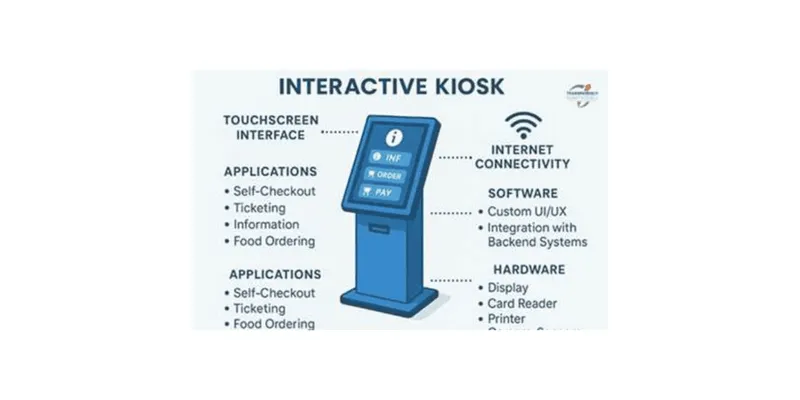
An interactive kiosk is a hardware-software system designed to provide users with digital access to information, products, or services. They often include a touchscreen interface, internet connectivity, and integrated peripherals like printers, barcode scanners, or payment terminals. The key feature? They empower users to complete tasks independently—quickly, efficiently, and without waiting in line.
These kiosks serve a multitude of purposes, including:
- Retail self-checkout stations
- Airport check-in terminals
- Wayfinding and directories
- Banking ATMs
- Healthcare registration
- Ticketing systems
- Food ordering kiosks
A Market on the Rise
In recent years, the adoption of interactive kiosks has surged, driven by the demand for contactless service, operational efficiency, and improved customer experience. As a result, the global interactive kiosk market has witnessed significant growth.
In 2022, the market stood at a substantial US$ 36.1 billion. Analysts project it to continue expanding robustly over the coming decade. With a projected CAGR of 6.2% from 2023 to 2031, the global interactive kiosk market is expected to reach US$ 62.1 billion by the end of 2031.
This steady growth underlines not just a passing trend but a profound transformation in how services are delivered and consumed in a digital-first world.
What's Driving the Demand?
- Customer Expectations for Self-Service
Modern consumers value speed, autonomy, and convenience. Whether grabbing coffee or buying a metro ticket, people prefer quick self-service options over waiting for staff assistance. Interactive kiosks meet this demand head-on, offering a frictionless experience that saves time and reduces human error.
- Post-Pandemic Push for Contactless Solutions
The COVID-19 pandemic drastically changed how businesses think about hygiene and customer interaction. Interactive kiosks emerged as essential tools in promoting contactless engagement, reducing physical contact and lowering transmission risks. Even in a post-pandemic world, the preference for touchless technology is here to stay.
- Operational Efficiency and Cost Savings
For businesses, kiosks present an opportunity to streamline operations. By automating routine tasks—like order-taking, check-ins, or bill payments—companies can cut down on labor costs, increase throughput, and reallocate staff to more strategic roles. Over time, the ROI on kiosks proves extremely favorable.
- Digital Transformation in Public Services
Governments and public institutions are increasingly deploying kiosks for services like license renewals, healthcare check-ins, and information dissemination. These kiosks reduce administrative overhead and make services more accessible, especially in remote or underserved areas.
Industry-Specific Use Cases
Retail & QSR (Quick Service Restaurants)
Retailers and fast-food chains are among the biggest adopters of kiosks. Brands like McDonald's, Walmart, and Target use kiosks for self-checkout, in-store navigation, and personalized promotions. Customers can scan, pay, and even arrange deliveries—all through a touchscreen interface.
Travel & Transportation
Airports, train stations, and bus terminals use kiosks for ticket booking, check-in, baggage tagging, and information services. These terminals enhance passenger experience while reducing congestion and staff workload.
Healthcare
In hospitals and clinics, interactive kiosks are used for patient registration, appointment scheduling, and wayfinding. Some advanced kiosks even conduct preliminary screenings or collect insurance details, helping to streamline administrative tasks in high-traffic environments.
Banking & Financial Services
ATMs were among the earliest forms of interactive kiosks. Today, financial institutions use updated versions for loan applications, account inquiries, bill payments, and even virtual consultations with banking advisors.
Hospitality
Hotels are increasingly using kiosks for self-check-in/check-out, room selection, and service requests. This not only enhances guest satisfaction but also allows 24/7 service without constant front desk staffing.
Technology Trends Shaping the Market
- AI and Personalization
AI-powered kiosks can adapt content based on user behavior, location, and preferences. For example, a returning customer at a fast-food kiosk might be greeted with their last order, speeding up the experience and adding a personal touch.
- Facial Recognition and Biometric Authentication
In high-security areas or for personalized services, facial recognition helps identify users quickly. It's being used in airports, banks, and some retail environments for secure and fast access.
- Cloud Integration and Remote Management
Modern kiosks can be remotely managed, with software updates, content changes, and diagnostics performed from centralized locations. This reduces maintenance costs and minimizes downtime.
- Voice Assistance and Multilingual Support
With voice-enabled interfaces and multilingual capabilities, kiosks are becoming more accessible to a wider demographic, including the elderly and those with disabilities.
Regional Outlook: Who’s Leading?
North America
The U.S. leads in kiosk deployment thanks to early digital adoption, high consumer expectations, and strong tech infrastructure. Industries like retail and healthcare are particularly active in this region.
Europe
European countries are heavily investing in smart city initiatives, integrating kiosks for transportation, public safety, and citizen services. Stringent privacy laws also push innovation in secure kiosk interfaces.
Asia-Pacific
Emerging economies like India and China are adopting kiosks to digitize public services and reduce administrative burdens. Coupled with booming retail and transit systems, Asia-Pacific is projected to be the fastest-growing region during the forecast period.
Market Challenges to Watch
Despite the strong growth trajectory, there are a few challenges to overcome:
- Initial Investment Costs
High-end kiosks with advanced features can be expensive to deploy at scale. For small businesses, the upfront cost can be a barrier—even if long-term savings are clear.
- Maintenance and Downtime
Like any technology, kiosks require regular updates and maintenance. A malfunctioning kiosk can frustrate users and harm brand reputation if not addressed quickly.
- Data Privacy Concerns
With more kiosks handling sensitive information—like health or financial data—ensuring security and privacy is essential. Businesses must comply with regulations like GDPR or HIPAA, depending on their region and industry.
The Road Ahead: Where Kiosks Are Going
The next generation of kiosks will not just be self-service terminals—they'll be intelligent digital agents capable of:
- Understanding natural language
- Learning from user interactions
- Connecting seamlessly to mobile devices
- Offering hyper-personalized recommendations
With the rise of smart cities, IoT ecosystems, and AI-driven customer experience, interactive kiosks are set to become even more integral to our daily lives.
Final Thoughts: The Human Touch in a Digital Form
Interactive kiosks are more than just machines—they represent a shift in how businesses and institutions interact with people. They bring together convenience, speed, and personalization in one touch-friendly package.
From the bustling terminals of Tokyo to the local DMV in Texas, kiosks are helping reduce queues, cut costs, and improve experiences. With the global market set to grow from US$ 36.1 billion in 2022 to US$ 62.1 billion by 2031, it's clear: the future of service is digital, interactive, and right at your fingertips.
These insights are based on a report on the Interactive kiosks Market by Transparency Market Research (TMR).