TO ANALYSE THE FINANCIAL PERFORMANCE OF PREMCO GLOBAL LIMITED.
1. Introduction
- Introduction of the company
Premco Global Limited makes textiles in India, focusing on stretchy ribbons that bend easily. These materials often go into clothes during production. Some items stay firm instead of stretching, built for structure. Others loop together using knitting methods, adding flexibility where needed. Garment makers across India rely on these supplies regularly. Big clothing names overseas also get shipments from this maker. Each product fits a role in how garments come together.
Ahead of its international push stands a factory floor in Vietnam, run by local staff but funded from afar. Palghar, tucked into Maharashtra, runs shifts without pause. Gujarat's stretch at Umbergaon hums alongside it, linked by supply routes rather than proximity. Then there is Dadra & Nagar Haveli - less spoken about, yet just as active. Each site feeds orders beyond borders, though none say so out loud.
Premco Global makes top-grade narrow fabrics, especially the kind found in underwear and workout gear. Medical uses matter here too, along with clothing that blends comfort and movement. Quality drives everything, shaping how each product turns out.
- Industry overview
Premco Global works where India's fabric industry pulses with activity. Though small in width, these specialized textiles hold weight across manufacturing stages. Each loop and stitch ties into a much larger network of production and trade.
Key industry characteristics:
- Fueled by vast output, India stands among the world's top textile makers. Its role in export earnings through fabric production remains strong.
- Ready-made clothes, underwear, athletic wear, plus casual fitness styles - they’re pushing up the need for stretchy tapes and slim textiles. Growth in these areas pulls demand along, quietly shaping what factories supply.
- Firms that make products around the world are finding value in buying more from India and Vietnam. Shifting procurement there opens new chances. Working with suppliers across these regions adds flexibility. Access to local materials plays a role too. Some manufacturers adjust their networks because of it. Sourcing changes slowly reshape where things get built. Growth in these countries supports different production needs.
- Facing pressure from budget producers in places like China, Bangladesh, and parts of Southeast Asia, firms in India find themselves pushed toward better craftsmanship and fresh ideas. While lower prices flood the market elsewhere, improvement and originality become key for staying relevant.
- Purpose of the Analysis
The main purpose of this study is to analyse the business operations and structure of Premco Global Ltd. and to understand the financial performance of the company.
2. Company Overview
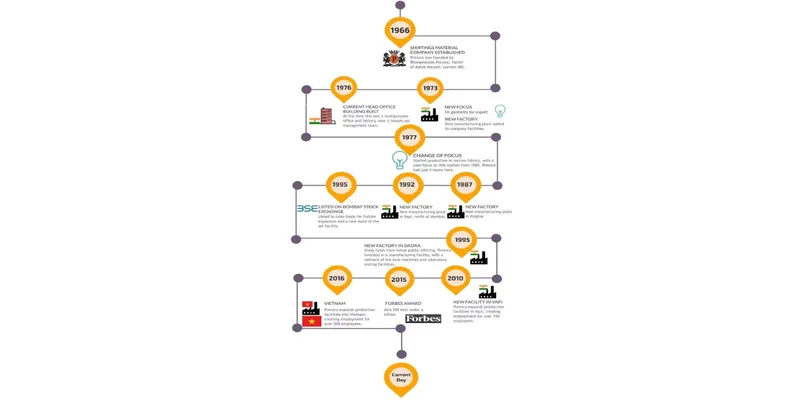
- Background and History
- Business Model
Premco Global follows a B2B manufacturing and supply model.
The key streams of revenue are:
- Manufacturing and sales of narrow fabrics and elastic taped
- Sales to manufacturers of garments and apparel brands
- Exports through the Vietnam subsidiary
Key revenue drivers:
- Apparel manufacturing growth
- Export demand from international brands
- Capacity expansion and operational efficiency
- Key Products / Services
Major product categories include:
- Elastic tapes
- Woven elastics
- Knitted elastics
- Rigid tapes
- Specialized tapes for lingerie and sportswear
These products are mainly used in:
- Innerwear
- Athleisure wear
- Sportswear
- Medical garments
- Market Position
Premco Global works in a particular segment of the textile industry – narrow fabrics with a market cap. of 140 Cr.
Competitive advantages include:
- Specialized manufacturing capability
- Presence in India and Vietnam manufacturing hubs
- Long-standing relationships with garment manufacturers
However, the company remains a mid-size textile manufacturer, competing with several domestic and international players.
3. Promoter /Founder Introduction
Name | Professional Background | Role in Company Growth |
Ashok Harjani | Chairman & Managing Director with decades of experience in textile manufacturing | Led the company’s strategic expansion, including international operations |
Lokesh Harjani | Whole-time Director involved in operational management | Responsible for production, plant operations, and business expansion |
Nisha Harjani | Director & Chief Financial Officer | Manages financial strategy, capital allocation, and corporate governance |
Sonia Harjani | Executive Director | Supports administrative and strategic management functions |
4. Financial Statement Analysis
- Income Statement Analysis
Metric | FY2025 | FY2024 | FY2023 |
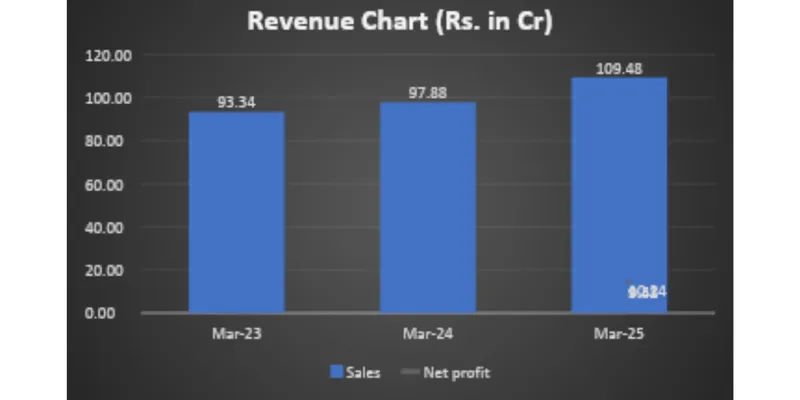
Net Sales Revenue | ₹109 Cr | ₹98 Cr | ₹93 Cr |
Net Profit After Tax | ₹10 Cr | ₹10 Cr | ₹9 Cr |
Key Observations of Income Statement:
- In FY 2025, Revenue was increased by 11% approx.
- Net profit was the same in FY 2025 as in previous year.
- Balance Sheet Analysis (Rs. In crore)
Narration | Mar-23 | Mar-24 | Mar-25 |
Equity Share Capital | 3.30 | 3.30 | 3.30 |
Total Liabilities | 21.72 | 17.24 | 22.19 |
Total Assets | 102.69 | 105.94 | 111.65 |
As of FY25:
- Borrowings: Went up sharply by 66% approx. from previous year.
- Investments: Went down by approx. 7% and Fixed Assets increased by 32% approx.
- Current Assets: Increased by 5 Cr from previous year.
- Cash Flow Statement Analysis (Rs. In crore)
FY25 highlights:
- Operating cash flow went down significantly from last year.
- Investing cash flow decreased sharply from previous year and turned negative.
- Financing cash flow also decreased substantially from last year.
- Key Financial Ratios (Indicative)
Ratio Type | Ratio | Interpretation |
Profitability | Return on Equity – 17.64% | Shows strong profitability |
Liquidity | Current Ratio – 3.45 | More than enough short-term assets |
Leverage | Debt-Equity – 0.12 | Very less borrowings |
Efficiency | Asset Turnover – 0.69 | Moderate utilization of assets |
- Year-on-Year Comparison (3 years)
Revenue Chart
5. Key Insights & Interpretation
- Strengths
- Specialized niche in narrow fabrics and elastic tapes, which have consistent demand in apparel manufacturing.
- International manufacturing presence in Vietnam, improving export competitiveness.
- Low debt structure, providing financial stability during textile market downturns.
- Strong promoter involvement and long industry experience.
- Weaknesses
- The revenue scale is relatively small compared with large textile companies.
- Profitability depends heavily on garment industry demand cycle
- Limited product diversification beyond narrow fabrics.
- Risk Factors
- Raw material price volatility (polyester, yarn, elastane).
- Dependence on global apparel manufacturing demand.
- Competition from low-cost Asian textile manufacturers.
- Currency fluctuation risk due to export exposure.
- Future Outlook
The future outlook for Premco Global is moderately positive due to:
- Growing demand for athleisure and innerwear globally.
- Increasing global sourcing from India and Vietnam.
- More space opens up in Gujarat factories along with changes elsewhere across production sites.
- Funds are secure, so room exists to move forward with new tools later. What backs this up is steady earnings helping cover coming tech changes.
- Facing ahead, how things go hinges on worldwide clothing trends along with handling expenses well.
6. Conclusion
Final Evaluation of Financial Health
Premco Global Limited stays on solid ground, growing income without strain, holding plenty of cash ready to use, carrying almost no borrowed money - clear signs of caution and tight financial habits. Cash flow comes mostly from what it earns itself, keeping outside borrowing low, cutting exposure to market jolts. Still, profit levels shift when material costs jump or worldwide clothing demand dips, so staying lean and sharp in daily work helps protect earnings. Profit depends heavily on how well the business handles supply swings and customer patterns across international markets.
Investment / Performance Perspective
Looking at things through an investor view, Premco Global Limited stands out as a focused player in textiles, building slow yet reliable progress thanks to its work with stretchy tapes and slim fabric trims across factories in India and Vietnam. Exports keep it moving, so does consistent need from clothing makers, though being smaller than major industry names puts pressure on sharpening how goods are made, reaching more buyers, and deepening overseas sales channels.
Data Sources
https://www.screener.in/company