TO ANALYSE THE FINANCIAL PERFORMANCE OF WEIZMANN LIMITED.
1. Introduction
- Introduction of the company
Weizmann Limited mainly deals in Textile Processing and Exports. They have a composite Textile Processing and Manufacturing Facility of 15,175 sq.mt. land at Vatva Road, Narol, Ahmedabad. The Manufacturing facility has an installed capacity to manufacture 24 million meters per annum.
The primary focus is the African market and the company has been exporting to the African continent for the last 25 years. The product range for Africa includes Cotton Voiles, Pracale and African Prints.
In order to continue to grow and innovate, the Company has invested in R&D and has successfully developed technology to emboss textiles after the printing process.
They have a rigorous manufacturing and quality control process which involves the procurement of Grey Cloth, Grey Fabric Inspection, Bleaching and Mercerizing, Dyeing, Printing, Fixation and Washing, Finishing and Calendering, Finish Product Inspection, Packing and Dispatch. The company also undertakes processing on a job work basis.
- Industry overview
- The textile industry in India is one of the largest in the world and helps majorly in employment, exports, and GDP. The sector includes spinning, weaving, processing, and manufacturing of garment. The companies like Weizmann play an important role in value addition through dyeing, finishing and fabric treatment.
- This industry has experienced instability due to raw material price volatility, global demand slowdown and competition from low-cost manufacturing countries. However, domestic consumption and infrastructure growth in India have supported the demand for processed textiles. Government policies encouraging exports and manufacturing under initiatives such as “Make in India” are also supporting long-term industry growth.
- Purpose of the Analysis
The main purpose of this study is to analyse the business operations and structure of Weizmann Ltd. and to understand the financial performance of the company.
2. Company Overview
- Background and History
- Weizmann Limited is the flagship company of the Weizmann Group, which has operated in textile processing, financial services, and renewable energy. It started with textile processing and later expanded into money changing (Weizmann Forex), money transfer with Western Union, housing finance, and wind and hydro power projects. Over time, the group kept reshaping its business by entering new areas and exciting others.
- The group exited wind turbine manufacturing in the early 2000s and sold its housing finance business in 2007. In 2009–10, it restructured by separating its forex and power businesses into two listed companies, rewarding shareholders. Later, it entered digital financial services like Jaldicash and Doorstepforex, but exited the forex business in 2019 and also sold its stake in Weizmann Impex in 2022.
- Today, Weizmann Limited focuses mainly on its core textile processing business, with its unit located in Naroda, Ahmedabad, operating in a more focused and streamlined manner.
- Business Model
The company’s business model primarily revolves around processing textile fabrics on a job-work basis for clients.
The key elements include:
- Processing fabrics supplied by customers
- Providing dyeing, printing, and finishing services
- Supplying processed fabrics for domestic consumption and export markets
- Key Products / Services
The company mainly provides:
- Textile fabric processing
- Dyeing and finishing services
- Job-work processing for export customers
- Limited sale of processed textile products
Revenue is largely generated from processing services rather than product sales. - Market Position
Within the textile value chain, Weizmann operates in the processing segment, which is highly competitive and dependent on operational efficiency. The company maintains long-standing relationships with several customers and continues to receive repeat orders due to its processing capability and consistent quality standards with a market cap of 131 Cr.
3. Promoter /Founder Introduction
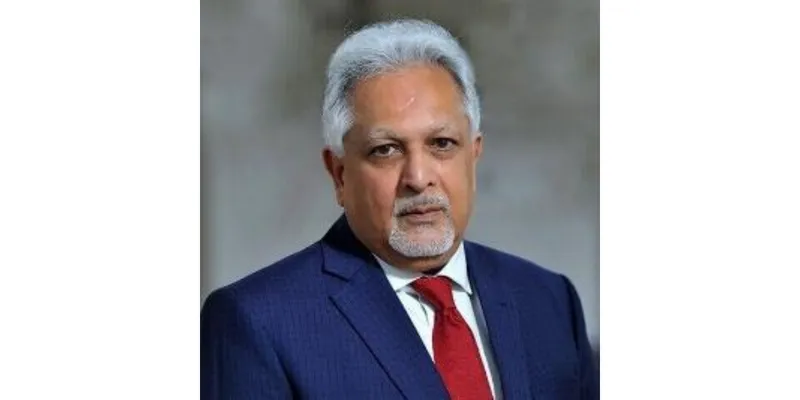
Dharmendra G. Siraj (Chairman)
Name | Professional Background | Role in Company Growth and Strategic Decisions |
Dharmendra G. Siraj | D. G. Siraj holds a Bachelor's degree in Business Management from Mumbai University and a Diploma in Management Studies from London, U. K. | Provides strategic leadership and governance as Chairman |
Neelkamal V. Siraj | Neelkamal Siraj is a Commerce graduate with over 40 years’ experience in the Textile industry, with a particular focus on manufacturing, export and marketing of textile products. | Key driver of operational strategy and expansion in textile processing business |
Hitesh V. Siraj | Hitesh Siraj is a Commerce graduate who has served for over 29 years in the Textile manufacturing and export sectors. | Supports management decisions and corporate development |
4. Financial Statement Analysis
- Income Statement Analysis
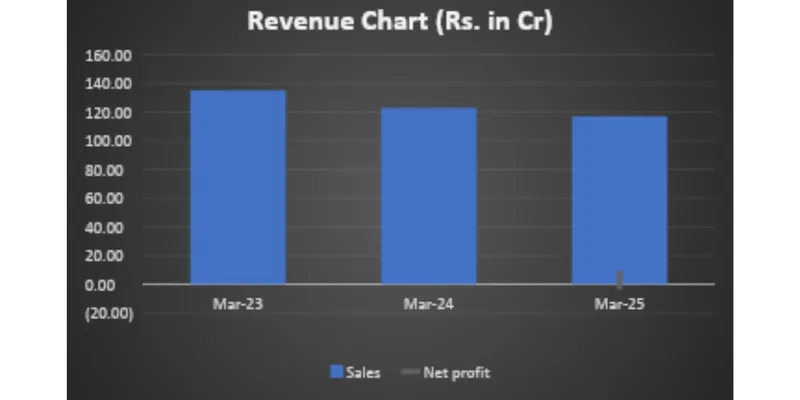
Metric | FY2023 | FY2024 | FY2025 |
Net Sales Revenue | ₹135.14 Cr | ₹122.90 Cr | ₹117.25 Cr |
Net Profit After Tax | ₹4.26 Cr | ₹8.96 Cr | ₹-3.60 Cr |
Key Observations of Income Statement:
- In FY 2025, Revenue was increased by 5.65% approx. YoY
- Net profit was turned negative in FY 2025.
- Balance Sheet Analysis (Rs. In crore)
Narration | Mar-23 | Mar-24 | Mar-25 |
Equity Share Capital | 15.86 | 15.86 | 15.49 |
Total Liabilities | 37.14 | 24.39 | 29.87 |
Total Assets | 66 | 61.3 | 68.56 |
As of FY25:
- Total liabilities increased by 22.46% approx. while Total assets increased by 11.84% approx. from previous year.
- Equity share capital decreased but not substantially.
- Cash Flow Statement Analysis (Rs. In crore)
FY25 highlights:
- Operating cash flow increased significantly from last year.
- Investing cash flow decreased sharply from the previous year.
- Financing cash flow also decreased substantially from last year.
- Key Financial Ratios (Indicative)
Category | Ratio | Value | Interpretation |
Profitability | Net Profit Margin | 6.83% | Indicates moderate profitability for a textile processing business |
Liquidity | Current Ratio | 0.96 | Slightly below ideal level, indicating tight working capital |
Leverage | Debt to Equity | 0.46 | Moderate leverage and manageable debt position |
Efficiency | Inventory Turnover | 11.30 | Efficient inventory utilization due to job-work model |
- Year-on-Year Comparison (3 years)
Revenue Chart
5. Key Insights & Interpretation
- Strengths
- Established presence in textile processing with long-term client relationships.
- The job-work based model reduces inventory and raw material price risk.
- Consistent profitability despite industry fluctuations.
- Promoters possess decades of industry experience in textiles and exports.
- Weaknesses
- Revenue concentration in processing services with limited product diversification.
- High dependency on textile industry demand cycles.
- The current ratio below 1 indicates a tight short-term liquidity position.
- Risk Factors
- Volatility in textile demand due to global trade slowdown and tariff issues.
- Increasing competition from low-cost textile processing units.
- Dependence on a limited number of customers could affect revenue stability.
- Rising energy and chemical costs, which are key inputs in textile processing.
- Future Outlook
The company’s future outlook largely depends on the growth of domestic textile demand and export markets. As textile processing capacity utilization improves and repeat customer orders continue, the company is expected to maintain stable revenues.
Government initiatives to boost manufacturing and textile exports could support the company’s long-term growth. However, management will need to focus on cost efficiency, modernization of processing facilities, and expansion of client base to sustain profitability.
6. Conclusion
Final Evaluation of Financial Health
A small drop in income marked fiscal year 2025, yet Weizmann Limited stayed profitable throughout. Profit stability shows up clearly when looking at yearly results over time. Management has been around for years, bringing steady guidance that supports daily operations. Customer ties built over time add another layer of reliability. Debt loads sit at manageable heights compared to industry peers. Still, cash available for short-term needs feels stretched thin lately. Most earnings continue coming from textile processing work, which creates imbalance. Heavy focus on one area increases exposure if demand shifts. Solid profits do not erase these underlying strains entirely.
Investment / Performance Perspective
A steady presence in fabric treatment, this business grows at a modest pace. Profit levels hold up well yet future gains hinge on broadening income streams while streamlining day-to-day operations. Should someone look for consistent returns within a specialized corner of textiles, the organization stands as a possible fit - despite exposure to shifts in sector demand
- Data Sources
https://www.screener.in/company/WEIZMANIND/