To analyse financial performance of Tuni Textile Mill Limited

INTRODUCTION
- Brief Introduction of the company
Tuni textile mill limited is Indian Textile Company. The company engaged with manufacturing and trading different types of fabric that were used in garment production. The company produces polyester fabric, blended fabric and other material which is mainly used for making skirts, uniforms, trousers and other fabric products.
- Industry Overview
India's textile sector is India’s one of the largest sectors in the economy contributing to increase employment, GDP. The industry includes spinning, wavering, processing and garment manufacturing with many textile traditional companies facing raw material price fluctuations in the market. Many textile companies now converted their business to other related businesses to sustain in the market.
- Purpose of the Analysis
The purpose of this report is to evaluate the financial health, operational performance, and strategic position of Tuni Textile Mill Limited while considering its background as a textile company transitioning into other business segments.
COMPANY OVERVIEW
- Background and History
Tuni Textile mill limited was established in 1987 in Mumbai. The company started their journey with small textile manufacturing and gradually expanded their operation in fabric production and textile trading. The company has gained a lot of experience in the textile industry. The company’s main office is located in Mumbai where the manufacturing plant is located in Murbad.
- Business model
The business model of Tuni textile mill limited is mainly based on production and supply of different types of textile products.
1) Manufacturing and selling fabrics
2) Trading of textile materials and yarn
3) Supplying fabrics to garment producers and exporters
- Key Product and Services
1) Polyester Fabric
2) Polyester Blended Fabric
3) Cotton Fabric
4) Shirting and Suiting Fabric
5) Grey Fabric for Garment Manufacturing
- Market Positioning
Tuni Textile Mills Limited operates in the Indian textile industry, which includes many small, medium, and large manufacturers. Within this industry, the company mainly focuses on supplying fabrics to garment manufacturers and textile traders. Although the company is smaller compared to large textile corporations, it has built a stable position by focusing on consistent quality and customer relationships
PROMOTERS / FOUNDER
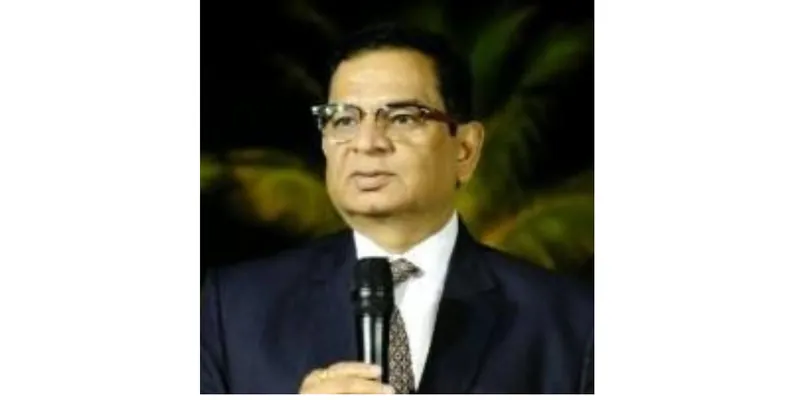
Name | Designation | Professional background | Role in company |
Mr. NARENDRA KUMAR SUREKA | Chairman and MD | Experienced entrepreneur in the textile industry | Deciding strategic Decision, Overall Management |
Mr. PRADEEP KUMAR SUREKA | Whole-Time Director | Background in textile production and operations | Day to Day Activities and Production Activity |
FINANCIAL ANALYSIS
- Income statement
(RS. In Cr)
Particular | FY2025 | FY2024 |
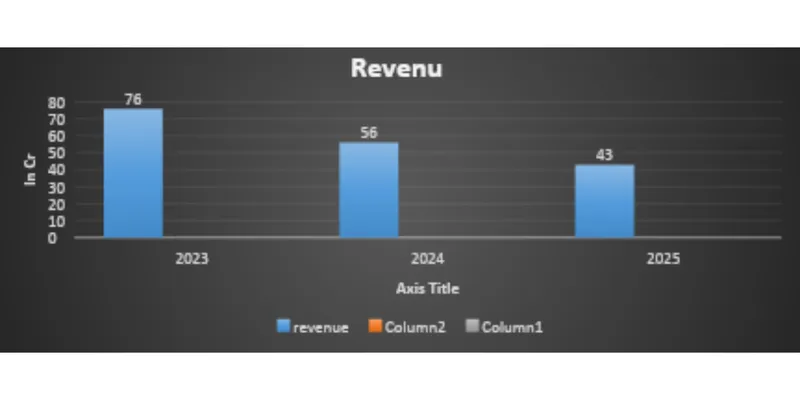
Income from operation | 76 | 56 |
Total Expenses | 74 | 54 |
Profit Before Tax | 0.80 | 0.44 |
Net Profit / Loss | 0.70 | 0.18 |
Key Observations of Income Statement:
1) Total revenue for the year stood at ₹ 76 Cr in comparison to last years’ revenue of ₹ 56 Cr.
2) In terms of Profit before taxation, the Company has earned a Profit of ₹ 0.80 Cr. in comparison to last years’ Profit of ₹ 0.44 Cr.
- Balance sheet analysis
Particular | FY2025 | FY2024 |
Equity share capital | 13 | 13 |
Total Current Assets | 41 | 42 |
Total Current Liability | 29 | 28 |
Total ( End of FY) | 43 | 44 |
(RS. In Cr)
End of the FY25 –
1) Equity share capital: There is no change in Equity share capital.
2) Total Current Assets: FY25 current assets is less as compared to FY24
3) Total Current liability: Increased in FY25 as compared to FY24.
- Cash Flow Statement
(RS. In Cr)
Cash / FY | FY2025 | FY2024 |
Operating | (1.07) | (1.07) |
Investing | (0.69) | (0.09) |
Financing | 1.8 | 1.17 |
Cash and Cash Equivalent (In the end ) | 07 | 0.3 |
Note –
Cash from operating and investing activity is negative in FY25 where cash from financing activity in FY25 is positive.
Key financial Ratio
1) Profit Ratio
ROE - Net profit / shareholder equity *100 = 0.02%
2) Liquidity Ratio
Current Ratio – current assets / current liability = 1.42
3) Leverage Ratio
Debt to equity ratio – Total Debt / Shareholder equity = 1.21
4) Efficiency Ratio
Net Profit Ratio ratio – NPAT / Net Sale = 0.74%
- Year on year comparison
5. KEY INSIGHTS AND INTERPRETATION
- Strengths
1) Variety of Textile Fabric Products.
2) Focused on consistent product quality. .
3) Established relations with industry retailers and suppliers.
- Weakness
1) Continuous changes in market trends.
2) Smaller scale as compared to other Textile industry companies.
- Risk factor
1) Change in Fashion Trend and Fabric Product Demand.
2) Increased cotton and other fabric raw material prices.
3) Competition from other textile companies.
- Future Outlook
Indian textile has a great future and demand for textile products in the market. If the company continues the production of good quality products as well as different varieties of products that will help the company to have good and emerging growth in future.
6. CONCLUSION
Final evaluation of financial condition
Tuni Textile Mill Limited shows moderate financial position in the textile industry. The company has been able to generate revenue through the manufacturing and trading of fabric used in the appeal sector. The company has operational stability and industrial experience because of working from a long year in the textile industry.
Investment / Performance Perceptive
From an investor’s point of view, Tuni Textile Mills Limited is a small-scale company. That operating in the textile sector with potential and opportunities in future. Investors generally look for financial ratios and reports which are good for this company. The financial report shows the company is at moderate level in financial condition and investors can invest because the company has a good future ahead.
Sources
https://www.screener.in/company/531411/
https://in.linkedin.com/in/narendra-kumar-820b265a