To Analyse Finanacial Performance Of Loyal TEXTILE MILLS LTD

Introduction
Loyal Textile Mills Limited stands firm among India's key fabric makers - known for tight control over every stage of cloth creation since 1956. Holding a “Four Star Export House” tag, it moves thread through weave into wearables plus specialized textiles. Through FY 2024-25, shifts took shape: less sprawl, more focus on profitable niches as worldwide demand wavered. Not expansion but refinement marked the rhythm that year. Performance review reveals steady steps amid uncertain trade winds. Instead of chasing volume, choices leaned toward quality output and smarter operations. Each part of the chain, from fiber to finished product, felt these adjustments. While markets shifted unpredictably, the mill held its line. Recognition stays strong, rooted in decades of controlled growth rather than sudden leaps. The story told here covers how one old name adapts without losing grip.
Company Overview
It operates out of Tamil Nadu, with factories spread through Andhra Pradesh, Telangana, and parts of its home state. Once centered on basic goods such as yarn, it now shifts toward making technical fabrics and PPE gear. Instead of sticking to old patterns, the company adjusts course - aiming to escape overcrowded markets where price wars drain profits. As margins shrink elsewhere, this pivot offers a way around heavy domestic rivalry.
Promoter / Founder Introduction

Mrs. Valli M. Ramaswami - Chairperson and Whole Time Director - the company finds steady direction amid restructuring. Under her guidance, progress takes shape slowly but steadily.
Ms. Vishala Ramaswami, part of the promoter group, contributes as a Non-Executive,Director. Her presence adds depth without stepping into daily management. During FY 2024–25, choices leaned toward freeing up capital, selling non-core assets here and cutting weak divisions there. With each move, stability grew stronger. Balance mattered more than speed
Financial Statement Analysis
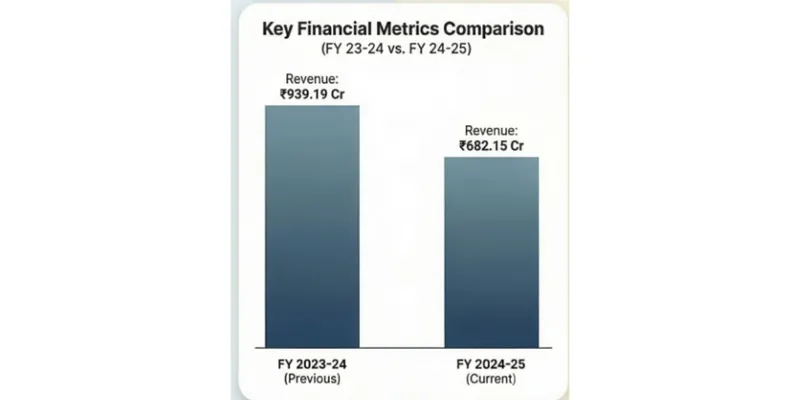
In an Income Statement,There we can see sharp drop in income performance over the past year. Operations brought in ₹682.15 crore, far below the ₹939.19 crore seen twelve months earlier, even as totals had reached ₹1,402.89 crore just two years before. Pulling back from slim-profit local offerings triggered the fall. Because of that shift, losses landed at ₹54.68 crore instead of gains. Heavy borrowing expenses - ₹50.96 crore - weighed on results. Idle factory space made margins worse.
BALANCE SHEET ANALYSIS:-
This year looks different because debt fell sharply.
Assets now stands at ₹807.70 crore, lower than last year’s ₹1,087.52 crore.
Borrowing - it dropped fast, going from ₹622.23 crore down to ₹413.30 crore. Equity ends at ₹234.98 crore, held back by years of accumulated losses that never recovered.
Looking closer at cash movement, even with ongoing operational losses, ₹147.98 crore came in from daily business operations, helped mostly by cutting inventory by ₹207.06 crore. Money also flowed in when old assets were sold, adding ₹109.67 crore from investment moves. Much of that money went toward paying off ₹208.93 crore in short-term loans, which made future financial choices easier.
Key Financial Ratios:-
Ratio | FY 2024-25 | FY 2023-24 | Analysis |
Current Ratio | 0.83 | 0.91 | Indicates constrained liquidity; current assets below liabilities. |
Debt-Equity Ratio | 1.76 | 2.14 | Improved significantly due to debt repayment efforts. |
Net Profit Margin | -8.02% | -4.57% | Reflects the impact of restructuring and lower price realization. |
Return on Equity | -20.81% | -13.77% | Impacted by sluggish global demand and negative operating margins. |
Key Insights & Interpretation
- Strengths:
Fresh momentum builds on overseas sales, lifting income to ₹383.89 crore. Moving deliberately into technical fabrics,LTL now taps a specialized market where steady orders come from established buyers. - Weaknesses:
Despite ongoing cash flow challenges, the firm faces tighter market conditions after its credit rating slipped to CARE BB+, though outlook remains stable. Worker gaps slow things down, especially among trained sewers needed in clothing production. Efficiency takes a hit when experienced hands are missing where they’re most required. - Risk Factors: Vulnerability to global macroeconomic shifts, including "uncertainties surrounding proposed U.S. trade tariffs" and the Red Sea shipping crisis.
Future Outlook:
In fiscal 2025/26,things are expected to shift noticeably. That outlook comes after selling off certain holdings, along with focusing more sharply on clothing lines - areas that stay clear of today’s U.S. trade taxes.Conclusion
Loyal Textile Mills Limited is currently in a high-stakes transition phase. While financial health is strained by recurring losses and tight liquidity, the management has demonstrated a disciplined approach to deleveraging, reducing total debt by over 30% in a single year. The shift from commodity yarn to value-added technical garments is a critical strategic move. For LTM to return to profitability, it must successfully stabilize production in its garment division and execute its remaining asset monetization plans to further fortify its balance sheet.
Conclusion
Right now, Loyal Textile Mills Limited finds itself deep in change. Even though money troubles linger - losses keep coming, cash runs thin - the team has stuck to a clear plan: pay down debt. In just twelve months, they slashed what they owe by more than 30%. Moving away from basic yarn toward specialized clothing marks a sharp turn in direction. Success hinges on steady output at the new garment unit, along with selling off assets still lined up for disposal. Without these steps landing firmly, stronger finances stay out of reach. Profit won’t come back unless both pieces fall into place.