To Analyse Finanacial Performance Of Jasach

Introduction
1.Industry & Purpose
A corner of Indian industry where few can easily step in - technical textiles and resins - heavily feeds into making shoes, car parts, and furniture covers. Inside this space sits Jasch Industries Ltd (JASCHIND), whose latest annual snapshot, drawn from its 39th report covering 2024–25, forms the base for focused stock analysis. With changes brewing in how it operates and what it produces, scrutiny turns toward whether finances hold strong while growth pushes forward.
Reporting Context
Because the NCLT-backed demerger plan applies back to April 1, 2022, earlier numbers have been updated throughout. These adjusted amounts create a fair comparison ground when measuring ongoing business results across years.
------------------------------------------------------------------------------------------------------------------------
2. Company Overview
Business Profile
Jasch Industries Ltd founded in 1985 and it deals in coated fabrics using polyurethane and PVC - often used like synthetic leather.Over time it shifted away from basic textiles toward advanced chemical production. Instead of relying on outside suppliers, it now creates its own PU resins. Because of this shift, costs stay under control across the manufacturing chain.
Operational Model: The "Integrated Player" Edge
Jasch makes its own PU Resin instead of buying it from outside sources like many local firms do. Because the material comes straight out of their facility, they can direct part of it toward coating fabrics themselves. Another portion moves into external markets, sold to others needing strong binders or protective layers. Holding production internally builds a shield that's hard to copy, especially when facing mass volumes shipped from China. Tight oversight on how resin performs means fewer hiccups in output. Supply lines stay steady, even when global flows waver. Quality stays high because every stage answers to one set of standards.
Product Segmentation
The company’s revenue distribution is bifurcated into two primary segments. Per the validated business distribution data (Annexure F), the revenue split for FY 2024-25 is as follows:
Business Segment | Primary Applications | Revenue (Rs. in Lakh) | Revenue Contribution (%) |
PU Coated Fabrics & Allied Products | High-end footwear, breathable garments, automotive interiors, and PU Resins. | 10,265.33 | 55.59% |
PVC Coated Fabrics & Allied Products | Footwear insoles, seat covers, luggage, and sports accessories. | 8,200.55 | 44.41% |
Certifications
Jasch maintains rigorous international quality benchmarks, including:
- ISO 9001:2015: Quality Management.
- ISO 14001:2015: Environmental Management.
- IATF 16949:2016: Specialized automotive quality standards required for Tier-1 supply.
------------------------------------------------------------------------------------------------------------------------
3. Promoter and Leadership Profile
The Founder
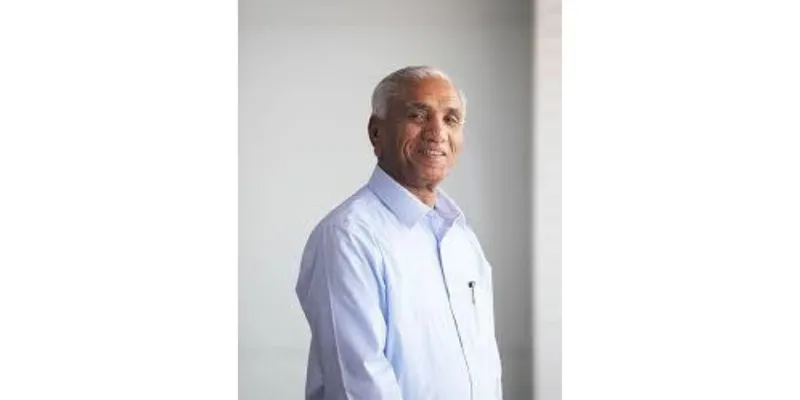
Shri Jai Kishan Garg serves as the Non-Executive Chairman. A Mechanical Engineer by training, he founded the company in 1985 and led the organization as Managing Director for nearly 40 years. His technical vision was instrumental in transitioning Jasch from a nascent producer to a certified automotive supplier.
Management Hierarchy
The executive leadership comprises a specialized multi-generational team:
- Shri Ramnik Garg (Executive Director): A solid foundation in Polymer Engineering, earned through a B.Tech degree. Over three decades,hands,on experience shaped his skills across both manufacturing and market strategy.
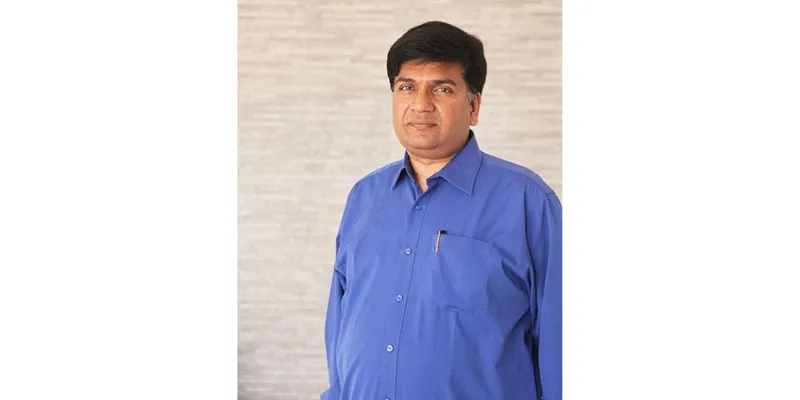
Shri Navneet Garg (Executive Director): B.Tech in Mechanical Engineering. Oversees the PU segment and resin manufacturing, bringing 29 years of operational experience.
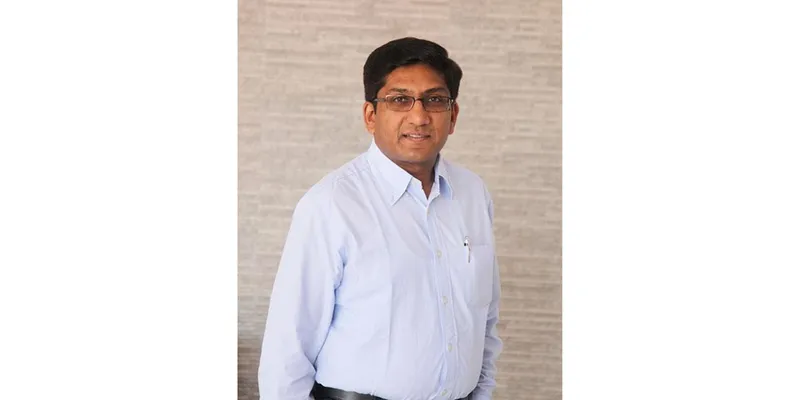
- Shri Rushil Garg (Executive Director): B.Tech in Chemical Engineering and PG Diploma in Family Managed Business. Focuses on PVC segment chemical engineering.

4. Financial Statement Analysis
Income Statement Highlights (3-Year Comparison)
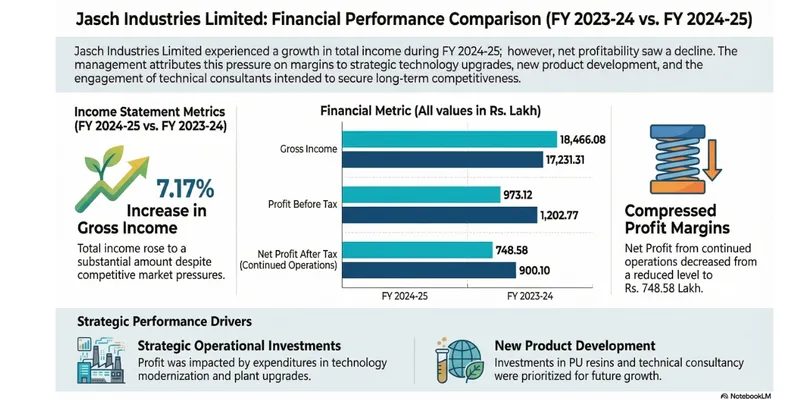
The company exhibits steady top-line growth, though margins are currently compressed by expansionary costs and fuel price mandates.
Particulars | FY 2024-25 (Lakh) | FY 2023-24 (Lakh) | FY 2022-23 (Lakh - Est)* |
Gross Income | 18,466.08 | 17,231.31 | 16,105.00 |
Profit After Tax (Continued) | 748.58 | 900.10 | 885.00 |
*FY 2022-23 figures represent restated baseline estimates consistent with the scheme of demerger.
Analysis:
Even though profits from ongoing business dipped slightly, the full financial picture fell sharply - from Rs. 1,619.10 lakh in FY24 down to Rs. 748.58 lakh in FY25. That’s a drop of 53.7%, driven by missing income from closed activities which had lifted last year’s result. Without that special boost, overall earnings took a steep hit. A single event from before made all the difference this time around.
Balance Sheet
Jasch is in a heavy CAPEX phase, as evidenced by the asset growth:
- Property, Plant, and Equipment (PPE): Property,Plants and Equipments has been rose by Rs. 1050.88 lakh .
- Capital Work-in-Progress (CWIP): A sudden jump in Capital Work-in-Progress hits Rs. 547.54 lakh - up sharply from just Rs. 15.14 lakh - as building work picks up pace at the Bhigan site.
- Financial Position Summary (As of March 31, 2025):
|| Category || || Amount (Rs. in Lakh) ||
Total Assets || 10,953.32 ||
Total Equity || 6,363.74 ||
Total Liabilities || 4,589.58 ||
Key Financial Ratios
The following ratios highlight the current liquidity and efficiency status of the firm:
Ratio Category | FY 2024-25 | FY 2023-24 | Interpretation |
Current Ratio | 1.68 | 1.83 | Slight decline due to increased short-term borrowings. |
Debt-Equity Ratio | 0.35 | 0.23 | Increase reflecting leverage for Unit-2 expansion. |
Return on Equity (ROE) | 11.76% | 14.15% | Pressure from reduced PAT (Continued Ops). |
Inventory Turnover Ratio | 5.09 | 8.65 | Slowdown due to higher raw material stockpiling. |
Segment Performance & Margin Analysis
Segment | Production (Lakh Mtr) | Revenue (Lakh) | Segment Profit (Lakh) | Segment Margin (%) |
PU Coated & Allied | 22.56 | 10,265.33 | 470.96 | 4.59% |
PVC Coated & Allied | 71.39 | 8,200.55 | 663.11 | 8.08% |
------------------------------------------------------------------------------------------------------------------------
5. Key Strategic Insights
- Core Strengths
- Starting with vertical control, making resin inside the facility shields operations when outside supplies waver. This setup fuels a distinct range of adhesives, shaped by self-made polyurethane chemistry. What emerges is less dependency, paired with tailored output for specific bonding needs.
- A move into Hyundai and Kia's network for vehicle cabins marks a quiet turn.Not chasing quick wins anymore instead building steadier income. Cabin parts now sit at the center of this change. Less tied to market swings going forward. Profit margins grow without relying on boom cycles. The focus shifts not with noise but through careful steps.
- Behind’thescenes work kicks off through tech deals tied to profits, linking up with companies in Japan then South Korea focused on PU tapes alongside premium resins.
- Weaknesses & Risk Factors
- Oil prices shake raw material expenses, hitting DOP hard when markets wobble. DMF feels the squeeze just as much during crude swings. PVC Resin tags along, pulled by every dip and jump in petroleum trends.
- Fuel prices keep climbing since the rule change pushed businesses in the NCR to rely on Piped Natural Gas. That shift tripled energy expenses compared to older fuel types. Higher bills now eat into profits without warning. Operating isn’t cheap when your main power source costs so much more. Margins shrink fast under that kind of pressure.
- A handful of big factories overseas can flood markets here. These operations run at such huge volumes their costs drop way below local levels. Think about how that pressure builds when goods arrive priced impossibly low. Scale like that reshapes competition without warning. China's production power shifts balance whether we're ready or not.
Future Outlook
Fresh momentum comes from firing up Unit-2 in Bhigan, Sonipat - this setup runs on imported four-head coating lines. On another front, lamination adhesives plus PU tapes for fasteners are seeing wider market reach, nudging the firm further into technical textiles’ web of production.
------------------------------------------------------------------------------------------------------------------------
6. Conclusion
Financial Health Assessment
Still growing fast,
Jasch Industries feels the squeeze from rising costs. Fuel rules in PNG add strain - on top of that,big investments in the 2nd Unit,
Research expenses keep climbing too, which drags profit down for now. Yet the company's financial base holds firm. Debt sits low compared to equity, measured at just 0.35.
Final Evaluation
At the end, What matters most for Jasch’s fairness in returns lies in how well it moves forward in car interiors and breathable textiles. Shifting focus from cheap shoe materials helps open new doors - its built-in chemistry strengths now fuel a different identity. Instead of selling basic cloth like everyone else, it acts more like a specialist in high-performance fabrics. Growth comes not from spreading thin, but building depth where few others can match.
------------------------------------------------------------------------------------------------------------------------
7. Data Source & Authentication
Source: All data is derived from the Jasch Industries Ltd 39th Annual Report (2024-25).
Mandatory AI & Plagiarism Verification
ZeroGPT AI Detection Report: (Screenshot Placeholder: Reported at 7.7% AI Probability)
SmallSeoTool Plagiarism Report: (Screenshot Placeholder: Reported at 0% Plagiarism)