TMMA's 65th Annual General Meeting: Charting the Future of India's Textile Machinery Sector
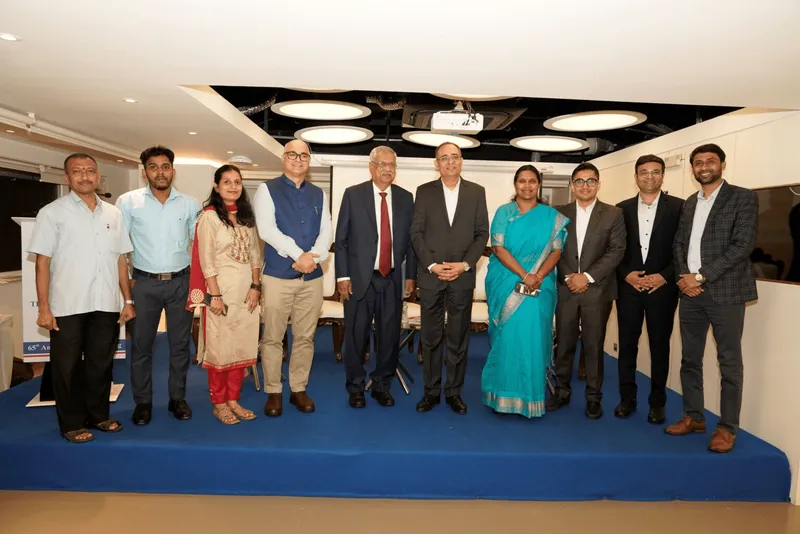
The Textile Machinery Manufacturers' Association (India) successfully organised its 65th Annual General Meeting (AGM), Export and R&D Awards Function, and a high-level stakeholder consultation at the India ITME Centre, Mumbai. The event brought together industry leaders, policymakers, and innovators to reflect on the current state of the textile machinery sector and chart the path forward.
Distinguished Gathering
Sankar of LMW welcoming the Chief Guest
Sankar of LMW welcoming the Guest of Honour
The event was graced by Mr Rohit Kansal, Additional Secretary, Ministry of Textiles, Government of India, as the Chief Guest, and Dr M. Beena, Textile Commissioner, as the Guest of Honour, along with senior dignitaries, past chairpersons, and members of the association.
New Leadership for 2025-27
Prashant Mangukia, Yamuna Machine Works, The new Chairman of TMMA
TMMA elected its office bearers for the biennium FY 2025–26 & 2026–27:
- Chairman: Mr Prashant Mangukia (Yamuna Machine Works)
- First Vice Chairman: Mr Chintan Thumar (Weavetech Engineers Ltd.)
- Second Vice Chairman: Mr N. K. Brahmachari (Amritlakshmi Machine Works)
- Honorary Treasurer: Mr Ganesh Shanoy (Tex-Fab Industries Pvt. Ltd.)
Industry Performance: Challenges and Resilience
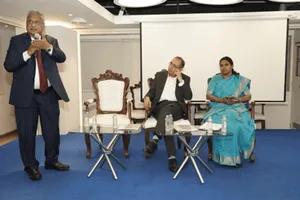
Mr M. Sankar (left) President, LMW Outgoing Chairman, TMMA
Global Economic Context
Outgoing Chairman Mr M. Sankar highlighted that FY 2024-25 was marked by considerable challenges globally. The global economy expanded at a modest 3.1%, with inflation moderating to 5.4% on average. However, India stood out with robust growth of 6.5% in real terms, powered by strong domestic demand, healthy investment, and a vibrant services sector, making it one of the fastest-growing large economies.
Textile Engineering Industry Performance
The Textile Engineering Industry (TEI) faced a demanding year with significant setbacks:
- Production declined by nearly 29%, reaching ₹10,461 crores compared to ₹14,639 crores in the preceding year
- Exports fell by almost 50%, severely impacted by international market conditions
- Capacity utilisation slipped from above 80% to closer to 60%
- Spinning, hosiery, and accessories segments experienced sharp downturns
- Some positive growth was recorded in synthetics, weaving preparatory, and processing equipment
Despite these challenges, domestic demand showed resilience through brownfield projects, and the industry's share in meeting domestic demand rose from 28% to 36% over the past five years, demonstrating growing indigenous manufacturing capabilities.
Critical Policy Recommendations
Mr Sankar emphasised three key policy reforms needed to accelerate growth toward a ₹28 lakh crore (USD 350 billion) Indian textile industry:
1. Quicker GST Refunds
The current delay in recovering 18% GST on input credits against the 5% paid by the user industry ties up significant capital. Substantially reduced turnaround time would unlock vital funds and improve cash flow.
2. Export Funding Reform
The industry urgently needs mechanisms for members to secure funding from international banks at lower interest rates to enhance export competitiveness. The Indian Development and Economic Assistance Scheme (IDEAS) requires streamlining through:
- A more proactive approach by collaborating with Indian industries to identify potential projects abroad
- Establishing "pre-approved" loans for specific sectors
- Creating a single joint task force as a "single window" for all project approvals
3. Incentives for Textile Exporters
To mitigate the burden of US reciprocal tariffs, targeted incentives are essential to ensure Indian textile exporters remain competitive.
Impact of US Reciprocal Tariffs
A pressing concern highlighted was the impact of reciprocal tariffs imposed by the United States. In August 2025, textile exports contracted by 2.73% year-on-year, with a sequential decline of 5.44% in exports to the US from July to August. Ready-made garments fell by 7.77%, directly affecting major textile clusters like Tirupur, Ludhiana, Panipat, and Karur. The home textiles segment has been especially vulnerable as US buyers seek alternative sourcing options.
Government's Vision: Path to $350 Billion
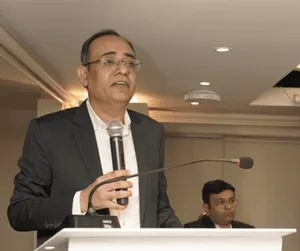
Mr Rohit Kansal Additional Secretary, Ministry of Textiles
Mr Rohit Kansal, Additional Secretary, Ministry of Textiles, outlined an ambitious and comprehensive vision for the sector:
India's Textile Strengths
India operates a $176 billion textile ecosystem, of which $35-40 billion is exports. Unlike many other textile markets, India's domestic market is almost three-and-a-half times the size of the export market. Key strengths include:
- Complete textile value chain and ecosystem at scale
- Leadership or second-largest producer status in all raw materials, including man-made fibres
- Largest producer of denim globally
- Third-largest exporter of garments
- World-class spinning capabilities
- Strong engineering capabilities at all levels
The Machinery Opportunity
Two years ago, India produced nearly ₹15,000 crore worth of machinery, including ₹4,500 crore of exports. However, ₹17,000 crore worth of machinery was imported, meaning the domestic sector caters to only 50% of requirements—representing both a challenge and an opportunity for growth.
Investment Requirements
To take the industry from $176 billion to $350 billion (including $100 billion of exports), an estimated $100 billion investment is required. Mr Kansal cited the recent launch of the largest integrated Textile Park in Dhar, Madhya Pradesh, by the Hon'ble Prime Minister, which was oversubscribed by 156% on the first day with an investment potential of ₹20,000 crore.
Three Pillars of Future Growth
The Ministry of Textiles outlined three critical pillars for stakeholder consultation:
1. Technology Roadmap
Driving success toward the $350 billion target through:
- Building digitisation, technology, and AI into MSME operations
- Integrating forecasting, efficiency, and AI technology across the value chain
- Developing technology for the future
2. Sustainability and Circularity
Starting from the machinery level, this includes:
- Machines with greater productivity
- Efficient power and water consumption
- Support for circular ecosystems and recycling
- Textile-to-textile, fibre-to-fibre, and cotton-to-fibre recycling capabilities
- Decarbonization across the value chain
- Knowledge sharing as a standard practice
Mr Kansal emphasised that sustainability is not optional but must be built into printing, designing, and execution, starting with machinery itself.
3. Manufacturing Support
Learning from the Amended Technology Upgradation Fund Scheme (ATUFS), which concluded in 2022, the Ministry is developing a National Textile Manufacturing Mission to:
- Create a green, competitive textile ecosystem
- Support the industry with policy, regulation, and direct physical incentives
- Address issues like power, logistics, and finance
Government Commitment
Mr Kansal assured the industry of the Ministry's commitment, stating, "India's textile growth story is linked to the story of progress of the textile machinery manufacturing ecosystem. We cannot achieve our Vision 2030 or Vision 2047 unless the machinery value chain rises to this occasion with a competitive, indigenous and comprehensive Indian textile machinery sector." He emphasised the symbiotic relationship between the user industry and the producer industry, noting that the Ministry of Textiles is the most important stakeholder as the primary user of textile machinery. The government is working with development partners to cover various aspects of decarbonising the value chain and supporting MSMEs in embracing sustainability. Mr Kansal also appealed to the industry to align with the BharatTex initiative to find greater synergy with customers and partners.
Export Excellence & R&D Awards 2024-25
TMMA presented its prestigious Export Excellence Awards and Research & Development Awards to outstanding member companies for their achievements in export performance and groundbreaking R&D for the year 2024-25.
Export Excellence Awards
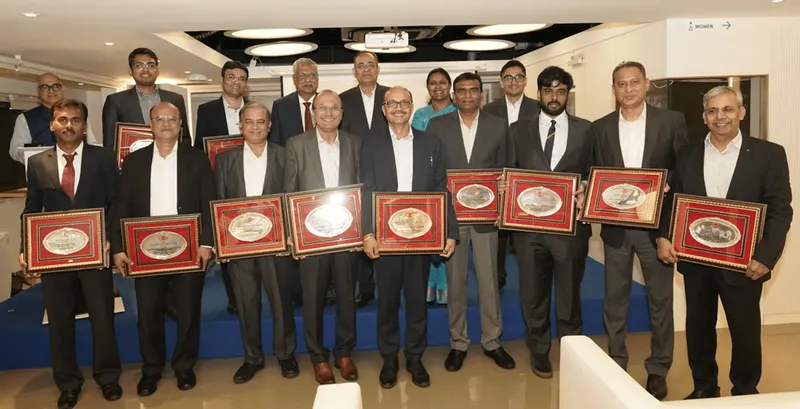
Winners of Export Excellence Awards for 2024-25
The Association received 35 nominations from 18 member companies across 3 categories and 11 sub-categories. After evaluation by the Awards Committee, 9 winners and 2 joint winners were declared.
Apex Export Award
Winner: Rieter India Pvt. Ltd., Pune
- Overall turnover: ₹970 crores
- Total weighted export (direct + indirect): ₹239 crores
- Recipient: Mr Pankaj Dangra, Head of Marketing Services
Segment Export Awards
Machinery Sector
- Winner: Kirloskar Toyota Textile Machinery Private Limited, Bangalore
- Overall turnover: ₹564 crores
- Total weighted export: ₹188 crores
- Recipients: Mr BGD Anandakumar (GM) and Mr Anil Shinde (Area Manager Sales)
Parts & Accessories Sector (Joint Winners)
- Lakshmi Card Clothing Mfg. Co. Pvt. Ltd., Coimbatore
- Overall turnover: ₹178 crores
- Total weighted export: ₹34 crores
- Recipient: Mr B. Anirudth, Whole Time Director
- Luwa India Pvt. Ltd., Bangalore
- Overall turnover: ₹167 crores
- Total weighted export: ₹34 crores
- Recipient: Mr P. K. Singh, Managing Director
Textile Testing, Monitoring & Controlling Instruments Sector
- Winner: Premier Evolvics Pvt. Ltd., Coimbatore
- Overall turnover: ₹61 crores
- Total weighted export: ₹32 crores
- Recipient: Mr Sanjay Gandhi, Vice President - Sales
Special Export Awards
Spinning Machinery Sector
- Winner: Truetzschler India Private Limited, Ahmedabad
- Overall turnover: ₹707 crores
- Total weighted export: ₹127 crores
- Recipient: Mr Sandeep Sharma, GM Sales
Synthetic Machinery Sector
- Winner: Aalidhra Textile Engineers Limited, Surat
- Overall turnover: ₹68 crores
- Total weighted export: ₹43 crores
- Recipient: Mr Chandrakant Gondalia, Director
Processing Machinery Sector
- Winner: Yamuna Machine Works Ltd., Mumbai
- Overall turnover: ₹155 crores
- Total weighted export: ₹50 crores
- Recipients: Mr Prashant Mangukia (Managing Director), Mrs Mangukia, and Mr G.V. Aras
Parts and Accessories Sector
- Winner: The Indian Card Clothing Co. Ltd., Pune
- Overall turnover: ₹61 crores
- Total weighted export: ₹32 crores
- Recipient: Mr Laxmikant Rathi, President-Sales
Small Scale Sector: Machinery
- Winner: Colorjet India Ltd., Noida
- Overall turnover: ₹97 crores
- Total weighted export: ₹43 crores
- Recipient: Mr Aditya Dadu, Director
Small Scale Sector: Parts & Accessories
- Winner: Sieger Spintech Equipments Private Limited, Coimbatore
- Overall turnover: ₹147 crores
- Total weighted export: ₹30 crores
- Recipient: Mr Viswanathan, DGM R&D
Research & Development Awards
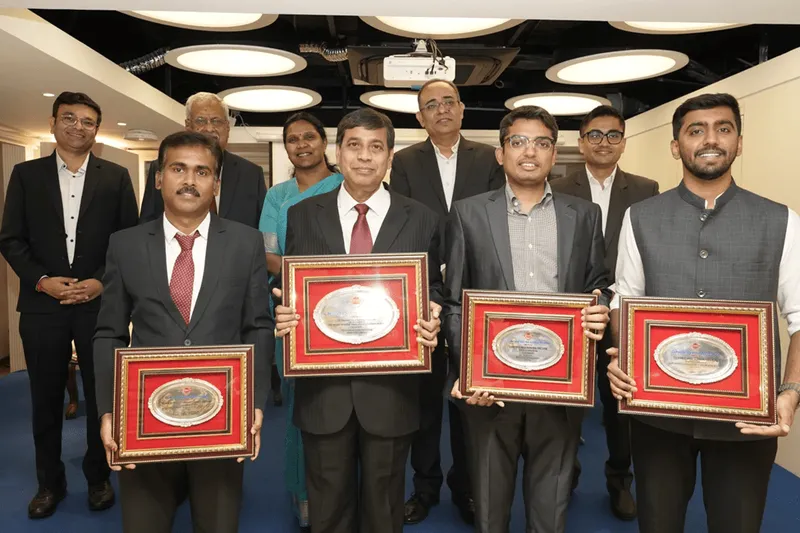
Winners of R&D Awards and recipients of Certificates of Appreciation for 2024-25
Eight member companies submitted nominations for 10 Product-R&D Awards. The Jury awarded 1 Innovation Award and 3 Certificates of Appreciation for outstanding R&D efforts during 2024-25.
Innovation Award
The Indian Card Clothing Co. Ltd., Pune
- Innovation: "Non-Metallic Card Wire for Jute Carding Process"
- USP: New design metallic card clothing developed to replace pinned staves on jute carding machines, improving working efficiency, productivity, and quality output
- Recipient: Mr Ashok Kumar Pal, VP (Product Development & Technical Support)
Certificates of Appreciation
- Colorjet India Limited, Noida
- Development: "EARTH NEXT – A Direct-to-Fabric Sustainable Digital Printing Machine with Inline Additives System"
- USP: Advanced Inline Additives System that integrates pre and post-treatment directly into the printing process, eliminating separate equipment and manual handling
- Key Benefits:
- Saves energy, water, time, chemicals, labour, and floor space
- Ensures consistent coating, enhanced colour vibrancy, sharper detail, and improved fabric durability
- No separate pre and post-treatment equipment required
- Reduced production time, labour, and operational footprint
- Recipient: Mr Aditya Dadu, Director
- Rabatex Industries, Ahmedabad
- Development: "Mono Mother Yarn Split Sectional Warping Machine"
- USP: Specialised warping system designed to handle multi-strand synthetic yarn packages (mother yarns), which are split into mono yarn. For example, 240 denier mother yarn is split into 12 strands of 20 denier mono filament yarn. The machine warps each yarn onto a large warping drum in sections, precisely controlling head weight and width as per weaving requirements
- Recipient: Mr Keyur Panchal, Director
- Sieger Spintech Equipments Private Limited, Coimbatore
- Development: "Automated Inline Package Inspection System" for rotor and yarn winding machines
- Recipient: Mr Viswanathan, DGM R&D
Acknowledgements
Outgoing Chairman Mr M. Sankar expressed profound gratitude to fellow office bearers Mr Prashant Mangukia, Mr Shailesh Wani, and Mr Chintan Thumar, the Executive Council members, and the entire Association membership. He congratulated the incoming Chairman, Mr Prashant Mangukia, and his team, thanked past chairmen for their guidance, and commended the TMMA Secretariat, led by Executive Director Mr Sachin Kumar, along with ITAMMA and the India ITME Society, for their unwavering support. The 65th AGM marked a significant milestone in TMMA's journey, bringing together government and industry stakeholders to address challenges and seize opportunities in India's textile machinery sector as the nation marches toward its ambitious textile industry targets.