TMAS Adds ReSpin as Sweden Expands Textile Recycling Innovation Network
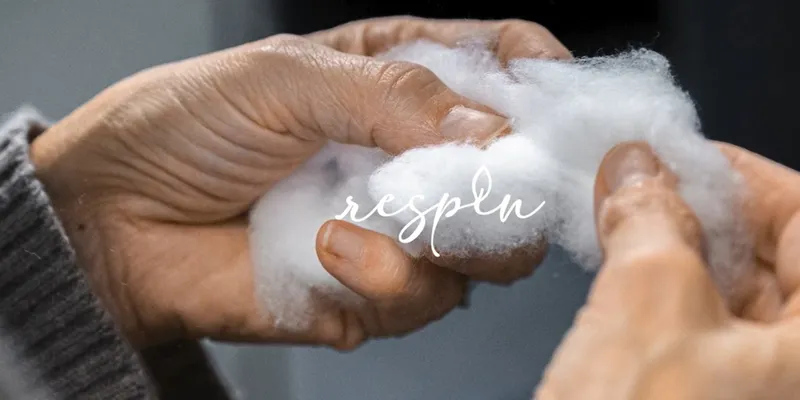
ReSpin’s patented RespinJenny technology supports fibre-to-fibre recycling efforts alongside new industrial spinning capacity in Sweden
TMAS – the Swedish Textile Machinery Association – has welcomed ReSpin as its latest member, highlighting continued developments in Sweden’s textile recycling sector. ReSpin has developed a patented mechanical recycling technology designed to transform textile waste into new fibres suitable for yarn production.
ReSpin, headquartered in Undersåker, northern Sweden’s Jämtland, has joined TMAS – the Swedish Textile Machinery Association as Sweden continues to develop technologies and infrastructure for circular textiles.
The company’s addition follows a series of Swedish initiatives aimed at advancing textile recycling. In May 2026, Holma Spinning Mill, located in Forsa just outside Hudiksvall, received SEK 77.3 million in funding through the Swedish Environmental Protection Agency to establish Sweden’s first industrial spinning line for recycled textile fibres.
Holma Spinning Mill is part of Holma Förvaltning, which is co-owned by ReSpin. Its sister company Holma Helsingland contributes more than a century of experience in spinning, twisting, dyeing and yarn production.
RespinJenny Technology Developed for Textile Fibre Recycling
ReSpin has developed and patented RespinJenny, a mechanical recycling technology that converts textile waste into fibres suitable for yarn manufacturing.
The company was founded in 2020 by Åsa Strandberg, who has more than 30 years of experience in the textile industry. For the past 15 years, she has focused on developing circular textile solutions.

ReSpin founder Åsa Strandberg.
After spending 17 years at H&M, Strandberg left the company as concerns about the environmental impact of the fashion industry increased. In 2010, she launched Saiboo, a company focused on B2B garment production, sales and take-back systems for reuse.
Research into Mechanical Recycling
Through Saiboo, Strandberg worked with controlled materials and design processes to address sorting challenges from the beginning. She later began collaborating with Mid Sweden University in Östersund on designing textiles for recycling.
During this work, she identified a broader challenge: available recycling methods were limited. While chemical recycling initiatives were developing and mechanical recycling existed, it was available only at a low level.
Strandberg said:
“While many believed chemistry was the solution, I saw untapped potential in mechanical methods and a remark from a machine researcher that anything which can be done by hand can be done mechanically became the spark that confirmed this direction. I then initiated several research projects together with industry and academia, including the Universities of Borås, Linköping and Luleå, to further explore this idea.”
Technology and Industrial Scaling
TMAS Secretary General Therese Premler-Andersson said:
“RespinJenny uses no water or chemicals, has low energy consumption and is based on preserving as much fibre quality as possible from waste textiles. It is designed to enable local, small scale and resource efficient recycling closer to where textile waste is generated. The the Swedish Environmental Protection Agency’s funding is an important step in scaling fibre-to-fibre recycling industrially and demonstrating that circular textile materials can be produced on a larger scale with low climate impact.
Mechanical recycling alone is not enough to achieve textile-to-textile recycling – without the ability to spin recycled fibres into yarn, it is impossible to weave or knit new fabrics, which is why Holma Spinning Mill represents a key part of building a complete circular textile value chain.”
Swedish Textile Recycling Value Chain
Swedish companies, including TMAS members, are developing capabilities across different stages of the textile recycling value chain, including:
- Collection
- Automated sorting
- Fibre-to-fibre recycling
- Testing
- Product development
- Policy research
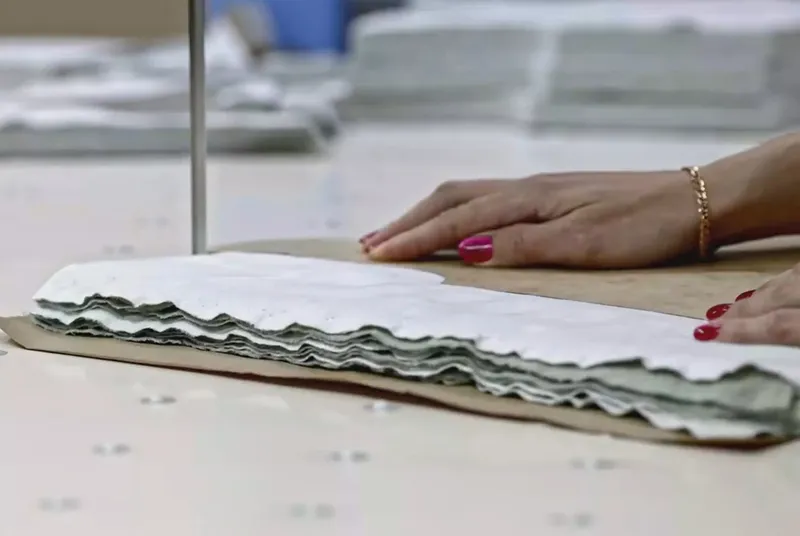
RespinJenny is based on preserving as much fibre quality as possible from waste textiles.
The development has been supported by collaboration between Swedish industry and academic institutions.
Role of Research and Industry Collaboration
Therese Premler-Andersson noted the role of The University of Borås, particularly the Swedish School of Textiles, in circular textile research.
Borås is also home to TMAS members including ACG Group and Eton Systems, which are involved in automation development and cooperative projects between industry and academia in Sweden.
ReSpin’s TMAS Membership
Åsa Strandberg highlighted the importance of joining a network focused on knowledge sharing, innovation and collaboration.
She said:
“TMAS brings together many of Sweden’s leading companies and experts, all playing an important role in shaping the future of textile production technology. As ReSpin moves towards industrialisation, we see great value in joining TMAS, because the transition to circular textile systems requires cooperation across the entire value chain, and the association provides an important platform for that dialogue.”