Threads of Transformation: Women Behind the Seams
Ashish Srivastava
Chief Executive Officer
Apparel Made-Ups & Home Furnishing Sector Skill Council (AMHSSC)
Introduction India’s textile and apparel industry is not just one of the oldest but also one of the most culturally significant and economically vital sectors in the country. From the looms of Varanasi to the garment factories of Tirupur and the embroidery lanes of Lucknow, women form the unseen yet indispensable workforce that has clothed generations and carried forward the country’s rich textile heritage. Today, even as the industry modernises and globalises, the role of women remains crucial—not only as workers but increasingly as entrepreneurs, designers, innovators, and change-makers. Their contribution, however, often goes under-acknowledged in public discourse. As the world marks a gradual shift towards inclusive growth and equitable labour rights, India’s textile and apparel sector stands at a crossroads—where the empowerment of women could determine both the sustainability of livelihoods and the industry’s global competitiveness. Historical Roots For centuries, handlooms and handicrafts have been family enterprises, with women playing essential roles in spinning yarn, dyeing fabric, hand-weaving, and intricate embroidery. In villages across Assam, Odisha, Gujarat, and Tamil Nadu, textile crafts are passed down from mothers to daughters, forming not just a skillset but a part of cultural identity. This legacy found powerful expression during Mahatma Gandhi’s Swadeshi movement, where the charkha, or spinning wheel, emerged as a symbol of self-reliance—with women playing a central role as its principal keepers and champions. From the charkha (spinning wheel) used during the freedom movement to handloom clusters in states like West Bengal, Assam, and Tamil Nadu, women have played a vital role in sustaining India’s textile identity. Modern Workforce: Women Behind the Seams Women form the backbone of India’s textile and apparel sector, accounting for 60–70% of the workforce—one of the highest rates of female participation across all Indian industries. In garment manufacturing specifically, women account for up to 80% of employment. The industry employs over 45 million people directly, with more than 27 million women working primarily in unorganised sectors such as handlooms and handicrafts. The sector contributes about 2% to India’s GDP, 7% to industrial output, and over 11% to export earnings, making it the second-largest employer after agriculture. Women’s participation is not only significant for the industry’s output but also for the socio-economic upliftment of families and communities. Today, women are engaged across the entire textile value chain:
- Garment Factories: Women make up 60–75% of the workforce in garment production units, especially in southern states like Tamil Nadu and Karnataka.
- Handloom and Handicraft Sectors: Predominantly home-based, women artisans engage in weaving, dyeing, embroidery, and embellishment.
- Self-Employed Tailors: Women in rural and peri-urban areas take up tailoring for local clientele or through micro-enterprises.
- Export Houses: Women are employed in finishing, ironing, inspection, and packing units.
- E-commerce and Boutique Enterprises: Increasingly, educated women are entering the fashion design and sustainable textiles space, launching their own brands or working as designers and merchandisers.
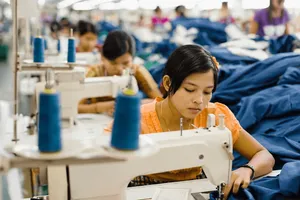
In export hubs like Tirupur, Bengaluru, and Noida, women operate the sewing machines that deliver “Made in India” labels to global brands. In rural areas, women artisans stitch and embroider for local markets, NGOs, and e-commerce platforms. Even women are also key drivers of consumer purchasing decisions, influencing market trends and product innovations. Socio-Economic Impact of Women’s Participation
- Financial Independence: Textile jobs give women, especially from rural or economically disadvantaged backgrounds, a steady source of income, which enhances their confidence, bargaining power at home, and access to health and education for their families.
- Rural Livelihoods and Migration: In many villages, weaving and tailoring are among the few non-agricultural livelihood options. In urban areas, textile work has been a pull factor for women’s migration, offering them relatively better-paid and consistent employment compared to agriculture or domestic work.
- Women-led Enterprises: Small-scale tailoring shops, embroidery units, and weaving clusters are often led by women entrepreneurs who train and employ other women, creating hyperlocal employment ecosystems.
- Skill Preservation and Innovation: Women play a critical role in preserving and passing down textile skills, such as chikankari from Lucknow, kantha from Bengal, or bandhani from Gujarat, while also adopting new technologies and designs for modern markets.
Rise of Women Entrepreneurs and Employment A quiet revolution is also underway among women leading from the front. More women are turning their skills into businesses—setting up boutiques, operating online saree reselling platforms, or leading cooperative societies. Government schemes like Mudra Yojana and Stand-Up India have enabled many first-time women entrepreneurs to access loans for sewing machines, raw material, and training. Young, educated women are also joining the creative side of the industry—launching their own fashion labels rooted in sustainable or handloom fashion, or working as merchandisers, designers, and e-commerce sellers. As per the Women in India’s Startup Ecosystem Report (WISER), the share of women-led startups has grown from 10% in 2017 to 18% in 2022, with fashion and apparel emerging as one of the prominent sectors driving this rise. A Bain & Company report notes that 20% of India’s 63 million micro, small, and medium enterprises (MSMEs) are women-owned, and these businesses are projected to grow by 90% in the next five years, outpacing growth in the US and UK. In the direct-to-consumer (D2C) fashion sector, women-led enterprises constitute 52% of companies as of May 2023, a 2700% increase since 2017. Textile employment also helps address rural distress and female migration. In regions with seasonal farming or limited industrial activity, tailoring and weaving serve as reliable sources of year-round income, often enabling women to earn a livelihood from within their homes. In states like Assam, women dominate the handloom sector. In West Bengal, Kantha embroidery has evolved into a vital livelihood activity, providing a primary source of income for thousands of women. In Tamil Nadu, government-supported clusters help women run small textile units or take up contract work. Role of Government and Skill Ecosystem To address these issues and promote women's participation, the Government of India has initiated several supportive schemes and skill-building efforts. Skill India Mission, through bodies like the Apparel Made-Ups and Home Furnishing Sector Skill Council (AMHSSC), plays a critical role in training women across the country. From basic tailoring and machine operations to embroidery and quality checking, AMHSSC-affiliated programs help women gain NSQF-certified skills and link them to employment or self-employment opportunities. Under the Deen Dayal Upadhyaya Grameen Kaushalya Yojana (DDU-GKY) and PMKVY, lakhs of women have been trained for job roles in the apparel industry. These programs also include life skills, digital literacy, and workplace readiness modules. Additionally, various state governments have introduced targeted schemes for women weavers and artisans—offering support ranging from raw materials and looms to marketing assistance and health insurance coverage. Conclusion Women form the backbone of India’s textiles and apparel industry, yet they continue to encounter systemic barriers that limit their growth and potential. The Apparel, Made-Ups & Home Furnishing Sector Skill Council (AMHSSC) is playing a transformative role by equipping women with industry-relevant skills, certifications, and meaningful employment opportunities. Through its targeted initiatives, AMHSSC is not only bridging gender gaps but also strengthening India’s position as a hub for skilled and responsible apparel manufacturing. As the industry embraces sustainability, innovation, and inclusivity, AMHSSC remains committed to fostering enduring livelihoods—enabling women to emerge not just as contributors but as changemakers and leaders shaping the future of the sector.