The Retail-Tech Merge: Inside Textile Commerce’s Biggest Shift Since the Barcode
Tanvi Munjal
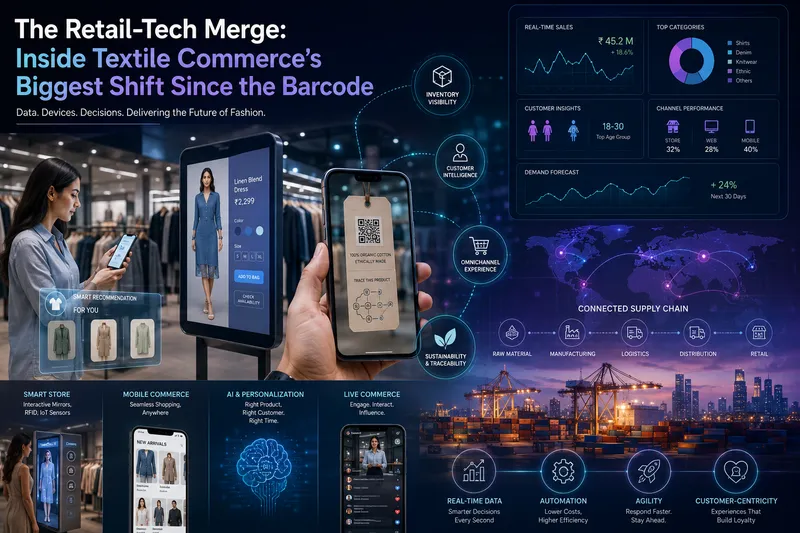
A shopper in Madrid opens the Zara app, uploads two photos, and watches an AI-generated avatar of herself model a dress before purchasing. A cotton T-shirt in a Berlin store carries a QR code that enables traceability of its fibre origins back to the specific farm or verified supply chain batch. A warehouse in Tokyo serving a major apparel retailer now operates with significantly fewer staff than five years ago, not because of layoffs, but because RFID chips (radio-frequency identification tags, often smaller than a fingernail) enable automated, bulk inventory tracking and handling.
This is textile retail in 2026. Not a future concept. A current one.
AI Has Left the Boardroom Slide and Entered the P&L
For years, “AI in fashion” meant a proof of concept that nobody scaled. That phase is over.
The numbers tell the story:
- AI-driven demand forecasting is cutting forecast errors by 20–50% and reducing lost sales by up to 65% [1].
- The global AI-in-fashion market is valued at $2.47 billion in 2026, projected to hit $9.45 billion by 2030 [2].
- Fashion retailers still overproduce by 30–40% industry-wide, which is the exact problem this technology targets [3].
Demand forecasting, in plain terms, is predicting how much of a specific size, colour, and style will sell in which markets and channels — a decision once left to a buyer’s instinct, now increasingly supported by models trained on sales history, social signals, macroeconomic data, and even weather patterns.
Inditex, Zara’s parent company, remains the industry’s reference case: its operating model integrates AI-driven inventory optimisation and rapid-response manufacturing. Paris-based Heuritech, meanwhile, scans over 3 million social images a day [6], tracking 2,000+ fashion attributes to help brands read demand before it peaks.
Worth watching: Business of Fashion and other industry reports note that shopping is starting to happen inside AI chatbots. Platforms like ChatGPT and Gemini now enable users to discover and purchase products directly, bypassing traditional brand sites in some flows. Transaction volumes remain small, but brand teams are already asking: does my product surface when someone asks an AI to shop for them?
Try Before You Buy — Minus the Fitting Room
If one technology defined 2026 for the shopper, it’s virtual try-on.
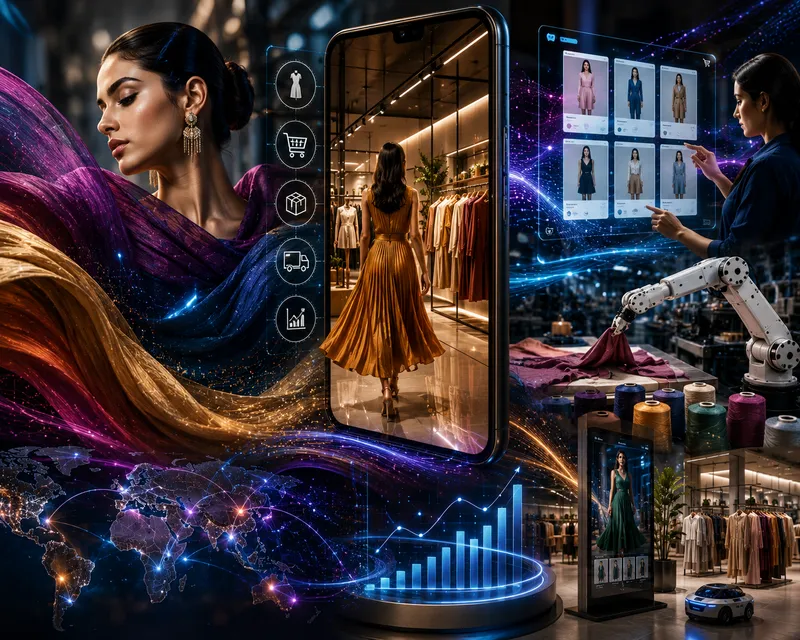
Zara rolled out its AI-powered fitting feature into its app in late 2025, starting in Mexico, the UK, Germany, the Netherlands, and Italy, with Spain following soon after. Shoppers upload a portrait and a full-body photo, and the app builds a 3D avatar wearing whatever they are browsing.
The results, per Inditex’s FY2025 report [5]:
- 7 million+ try-on sessions across 43 markets
- A double-digit drop in size-related returns
H&M is running its own pilots and reporting notable uplifts, including a 24% increase in click-through rates [7] in tested markets. This is not a Western-market story alone. Myntra has integrated Virtual Try-On (particularly strong for beauty and apparel) along with an AI Skin Analyser into its app, as part of a broader AR and AI push on India’s largest fashion e-commerce platform.
Why the urgency? Returns remain the industry’s quiet margin-killer. Fashion e-commerce orders still see return rates of 30–40% [4] in many markets, driven largely by fit and fabric uncertainty — the exact pain points a good avatar helps resolve.
RFID: The Unglamorous Technology Running the Whole Show
Behind the flashy AI headlines sits a much older, far less discussed technology doing most of the heavy lifting: RFID (Radio-Frequency Identification). These tiny chips, often embedded in price tags, let a reader scan an entire basket or rack at once, with no barcode and no line of sight required.
Why retailers are all-in on it:
Metric | Barcode | RFID |
Inventory accuracy | 65–75% | 95–99% |
Stockroom cycle count (Decathlon) | ~40 hours | ~90 minutes |
Over 80% of the world’s top 100 apparel retailers now tag at the item level. Uniqlo’s Fifth Avenue store lets shoppers drop clothes into a bin and pay. No individual scanning is needed because every price tag contains a radio chip. Fast Retailing’s RFID-enabled warehouse reduced staffing from around 100 people to 10, while shipment productivity rose nearly twentyfold. Lululemon’s global rollout across 300+ stores pushed inventory accuracy to 98% [9] and cut stockroom “SKU decay” — items stuck in the back room instead of the sales floor — by over 90%.
This is the least glamorous chapter of retail-tech. It is also arguably the one making everything else — omnichannel fulfilment, personalisation, and same-day delivery — actually work.
Trust Becomes Infrastructure: Blockchain and the Digital Product Passport
Textile supply chains are famously tangled. One garment can cross a dozen borders before it reaches a hanger. Blockchain, a shared and tamper-proof digital ledger, is being deployed to address exactly that. Platforms like TextileGenesis now trace certified fibres from source to retail shelf, while IBM-backed pilots help verify cotton origins for ethical-sourcing claims.
But the bigger story is regulatory, not voluntary.
In May 2026, the EU’s Joint Research Centre published the first full specification for the Digital Product Passport (DPP) for textiles: 49 data points across four categories — fibre composition, carbon footprint per unit, country of manufacture, and a recyclability score — all accessible via a simple QR scan. Under the EU’s Ecodesign for Sustainable Products Regulation (ESPR), any brand selling textiles into Europe, regardless of where it manufactures, will need a working DPP, with enforcement expected around 2027–2028.
For Indian exporters, this deadline matters more than most trade headlines. Liability sits with the manufacturer or EU-based importer, and claims like “made with 80% recycled cotton” stop being a marketing line and become a machine-checkable fact.
India’s Retail Floor Is Not Watching From the Sidelines
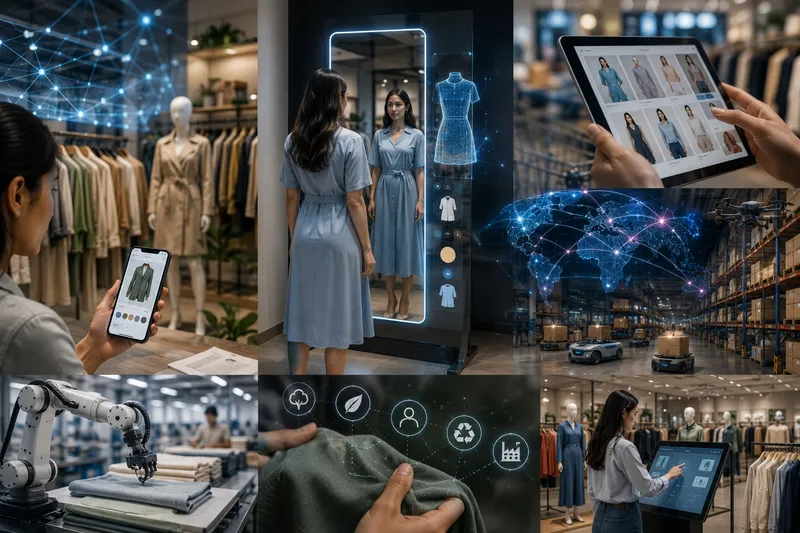
- Reliance Retail posted strong FY26 results and has stated publicly that it is betting on AI-led retail as hyperlocal and quick-commerce demand accelerates.
- Aditya Birla Fashion and Retail’s ethnic-wear label WforWoman used an AI-generated film and virtual try-ons to extend its Paris Fashion Week presence — one of the first such campaigns from an Indian fashion house.
- ABFRL has separately used AI-powered personalisation to lift average order value by double digits across several of its brands.
- Myntra remains India’s most active testing ground for AR and AI shopping features, from virtual try-on to AI-driven styling recommendations.
The pattern is consistent: Indian retailers are not inventing these technologies first, but they are adopting them fast enough to close the gap with global peers within a single fashion cycle.
What to Watch for the Rest of 2026
- Agentic shopping — AI assistants that do not just recommend, but actively curate and complete purchases on a shopper’s behalf.
- Reactive smart textiles — sensor-embedded or colour-shifting fabrics, still early but moving from lab to limited commercial pilots.
- AI-graded resale — computer vision automatically assessing wear-and-tear on second-hand garments, quietly powering growth in the circular fashion economy.
None of this replaces the industry’s oldest currencies: good design, good fit, and good fabric. What has changed is where the competitive edge now sits: increasingly in the data pipeline, not just the design studio. The brands treating AI, RFID, and traceability as infrastructure (not marketing flourishes) are the ones setting the pace for where textile commerce goes next.
Quick Glossary
- RFID (Radio-Frequency Identification) — Tiny radio tags, often embedded in price tags, that let retailers scan and track items in bulk without line-of-sight barcodes.
- Digital Product Passport (DPP) — An EU-mandated digital record of a garment’s materials, origin, carbon footprint, and other key attributes, accessible via a simple QR scan.
- Agentic AI — AI systems that go beyond recommendations to actively execute tasks on a shopper’s behalf (such as curating and completing purchases).
- Omnichannel — A unified shopping experience that seamlessly integrates physical stores, apps, websites, and social commerce channels.
References:
- AI-driven demand forecasting: https://www.mckinsey.com/capabilities/operations/our-insights/ai-driven-operations-forecasting-in-data-light-environments
- Global AI-in-fashion market: https://www.researchandmarkets.com/reports/5767217/ai-in-fashion-market-report
- Fashion industry overproduction: https://www.tommasomariaricci.com/blog/ai-for-fashion-industry-guide
- Fashion e-commerce return rates: https://www.richpanel.com/learn/ecommerce-return-rates
- Zara / Inditex Virtual Try-On: https://www.inditex.com/itxcomweb/gp/en/press/news-detail/b870d5ec-6b7e-491d-b38e-340cd69036df/fy2025-results
- Heuritech: https://heuritech.com/press/new-trend-forecasting-platform-fashion-industry/
- H&M virtual pilots: https://www.silkke.com/blog/virtual-fitting-to-boost-sustainability
- Uniqlo / Fast Retailing RFID: https://www.seikorfid.com/news/Uniqlo-RFID-tags.html
- Lululemon RFID: https://www.rfidjournal.com/news/rfid-brings-lululemons-inventory-accuracy-to-98-percent/71768/