The Reinvention of Textiles in 2026 Investing in the Upcoming Years of Fabric

Executive Overview
To begin with let’s start with, Transition of volume industry to value industry;
For decades, the textile sector was known for its size, ability to hire workers from other countries, and low prices. That era is ending.
The global textile market is at a key turning point in today’s challenging world. What used to be a labour-intensive field of manufacturing is now a global ecosystem that needs a lot of money, technology, and also a focus on sustainability. Executives are no longer arguing over how much they can make. Instead, they are looking at the return on investment for automation, access to ESG-linked finance, the strength of the supply chain, and the growth of high-margin technical textiles.
The industry is changing from a cycle of cheap goods to a cycle of valuable new ideas. Investors are moving money toward vertically integrated manufacturers, technological textile specialists, and ESG-aligned companies who can keep their margins in check even when the economy is unstable.
The people who win this decade won't just make more cloth; they'll also make it smarter, cleaner, and faster.
Key Types of Textiles Dominating the Global Market
Textiles vs. Fabrics
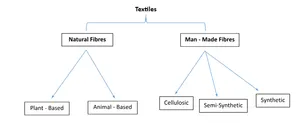
Textiles are a group of materials that are manufactured from either natural or synthetic fibres. This encompasses fibres, yarns, threads, and completed goods that are utilized in many fields, including as clothing, home furnishings, cars, healthcare, and technical applications. Textiles span the whole ecosystem, from making raw fibres to making finished goods.
For example; cotton harvested from farms is a textile raw material.
Fabrics on the other hand, are a subset of textiles. They are particularly made by weaving, knitting, gluing, or felting fibres or strands together. Fabrics are the finished sheets of material that are used to produce clothes, furniture, curtains, industrial goods, and more.
For example; when cotton is twisted into yarn and woven into denim cloth, it becomes fabric.
In Depth Study of Trending Segments & Consumer Insights
- Smart & Performance Textiles
- Smart fabrics which are textiles that have wearable electronics, conductive materials, and sensors built into them that changes the business in a big way. Smart textiles are still a minor part of the textile industry as a whole but they are expanding at double digit CAGR and are expected to grow a lot over the next 10 years as they are used more in sportswear, healthcare, and also military.
- Fashion & E-Commerce Shifts
- Fashion consumption in 2026 is deeply shaped by digital platforms. Across markets, direct-to-consumer brands, social commerce, as well as on - demand custom products are redefining how textiles reach end users. This shift emphasizes inventory efficiency, shorter lead times, and greater personalization.
- Traditional & Artisanal Revivals
- However, initiatives like India’s national Swadeshi Campaign, which aims to protect traditional crafts and generate market for local textiles, have increased public interest in traditional crafts and handcrafted textiles.
If you are Interested in More Related Informative & In-depth Insights, You’re just a click away:
Digital Textile Printing Equipment Market
A Quick Glance on Latest Acquisitions in 2025-2026:
- In March 2026, The International Textile Alliance (ITA) has confirmed the opening of its new Textile Hall of Fame, which honors outstanding leadership and lifelong achievements to the textile sector. The ITA board said that the Textile Hall of Fame is a strategic project of the International Textile Alliance. It was created under ITA's established board governance procedure and uses the word Hall of Fame as a common way to honor brilliance and achievement in many fields.
- In February 2026, Strata Geosystems announced the strategic purchase of Venus Interlinings, a prominent Indian company that develops high-tech non-woven geotextiles and technical textiles. This transaction formally places Strata in the non-woven Geotextiles market. This considerably increases its product range and makes its vertically integrated capabilities stronger. The purchase includes a state-of-the-art manufacturing facility, more technical knowledge, and the ability to speed up the development of new engineered textile and geosynthetic solutions.
- In January 2026, Alok Industries has reclaimed its position as the industry leader in home textiles with a wave of product developments that prioritize sustainability and performance at the yarn level. Alok's home textiles division is introducing a wide range of new technologies and ranges, including graphene-infused high thread-count sheets, PVA-free terry towels, dope-dyed microfibre sheeting, and premium Kasturi cotton products, at a time when consumers around the world are demanding traceability, reduced environmental impact, and improved functional performance.
- In February 2025, The European Union (EU) and the Ministry of Textiles has started seven new projects together to help India's textile and handicraft industries, on the side of Bharat Tex. Over the next three to five years, these seven projects will be carried out in nine Indian states: Assam, Andhra Pradesh, Telangana, Uttarakhand, Uttar Pradesh, Odisha, Jharkhand, Bihar, and Haryana. They will help 35,000 people directly, including 15,000 MSMEs, 5,000 artisans, and 15,000 farmer-producers.
Strategic Use of Scientific Methodologies
The mechanical developments in textile production associated with the Industrial Revolution resulted from the application of comparatively simple engineering and physical principles. Further progress required a clear understanding of the scientific principles of textile processing. Lack of basic information on the structure and properties of fibres limited understanding, delaying a scientific approach to textile processing.
In the late 19th century, however, increasing knowledge of the physical and chemical properties of fibres led to application of scientific methods. Applications of chemistry originally attracted the greatest attention, largely because of the production of new compounds and the realization that fibres could be considered the result of chemical activity.
In the 20th century, with the development of electronics and computers, new physical and engineering concepts were employed in textile research and development. An outstanding application of science to the textile industry was the development of synthetic fibres, providing new textile materials and leading to the application of new processes to traditional fibres, thereby providing faster processing methods and introducing a wider variety of new techniques.
The synthetic fibre industry originally employed textile expertise developed through years of experience with natural fibres, but the excellent results obtained by the scientific approach encouraged increased industrial use of applied science, and information was soon accumulated on the behaviour of fibres under a variety of conditions.
Let’s have a look at competitive analysis for Textile Market
The global textile market is fragmented and fiercely competitive. Large vertically integrated manufacturers, fiber producers, apparel companies, and technical textile specialists are all present. Large corporations compete by developing novel concepts for environmentally friendly materials, automated manufacturing, global supply chains, and a variety of goods.
These given below significant players are transforming the textile industry's competitive landscape:
- Toray Industries
- Hengli Group
- Raymond
- Shenzhou International Group Holdings
- Inditex
- Shandong Ruyi Technology Group
- Huafu Fashion
- Texhong International Group Limited
- Eclat Textile
- Teijin Limited
- Asahi Kasei
- Hyosung TNC
- Chargeurs SA
- PVH Corp.
- VF Corporation
Large companies are investing more in advanced textiles, recycled fibres, and smart materials to increase their profit margins and differentiate themselves in the global market.
Classification for Textile Industry Looks Like:
By Product:
- Yarn
- Fabrics
- Fibre
- Others
Fabrics are the biggest group of items in the textile business since they are the main raw material used to make clothes, furniture for the house, and technological textile products. A large part of the world's textile manufacturing output comes from woven and knitted fabrics.
By Raw Material:
- Natural Fibres
- Synthetic Fibres
- Cellulosic Fibres
- Others
Polyester and nylon are two examples of synthetic fibres that make up a large part of textile market because they are cheap, long-lasting, and flexible. Polyester is the most common fiber used to make textiles around the world. It is used a lot in clothing, household textiles, and industrial materials.
By Application:
- Home Textiles
- Technical Textiles
- Apparel Textiles
The apparel segment holds the largest share of the textile market, driven by continuous global demand for clothing, fashion products, and fast-changing consumer trends. Rising disposable incomes, expanding fashion industries, and increasing population growth continue to support strong demand for apparel textiles.
By Distribution Channel:
- Retail Stores
- Online & E-commerce
- Direct Sales
- Others
Retail Stores segment dominates the global textile market. Physical retail outlets such as textile showrooms, department stores, brand outlets, and specialty fabric stores remain the primary purchasing channels for a wide range of textile products, including apparel fabrics, home textiles, and fashion garments.
Top Investment Opportunities across the Textile Industry Value Chain;
Where Are the Best Investment Opportunities Coming From?
Due to changes in consumer expectations, sustainability rules, and the digital transition, several parts of the textile value chain are growing quickly.
One of them is making fibres in a way that is good for the environment where sustainability is becoming one of the most important investment themes in the textile business. Further, investments are going into:
- Growing organic cotton
- Making polyester from recycled materials
- Bamboo and hemp are examples of bio-based fibres
- Viscose and lyocell are examples of regenerated fibres
In order to meet environmental pledges and government rules, global fashion firms are actively looking for sources of sustainable raw materials. Because of this, investors are more interested in companies that make new types of fibres and companies that make raw materials in a way that is good for the environment.
Source: intelmarketresearch