The Impact of Textile Automation: Transforming an Industry Thread by Thread
Tanvi Munjal
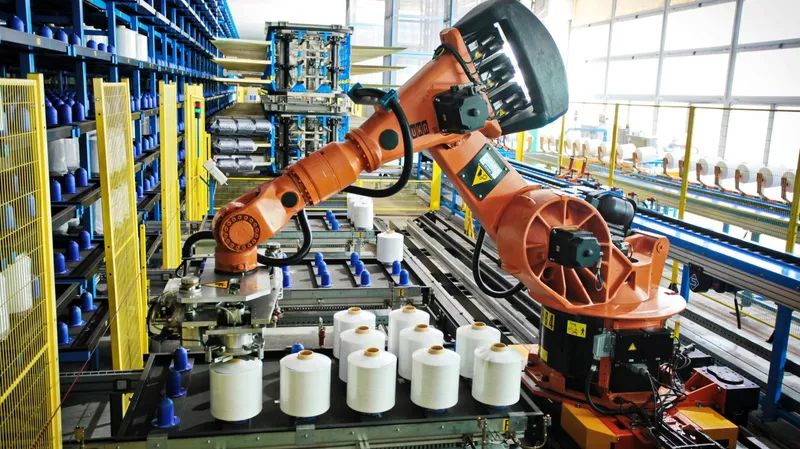
Walk into any modern textile factory today, and you'll witness something remarkable. Machines that once needed constant human guidance now hum along independently, making split-second decisions. Robots handle delicate fabrics with precision that would make veteran seamstresses nod in approval. This isn't science fiction; it's the reality reshaping the $31 billion textile machinery market right now.
The Numbers Tell a Story
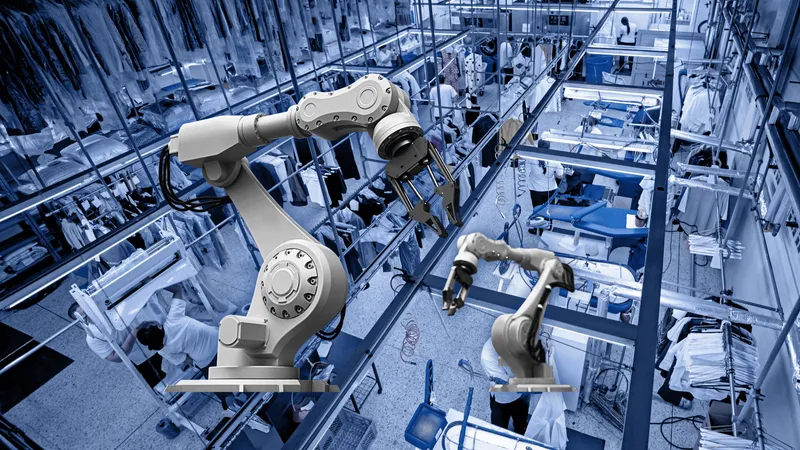
Let's start with what's actually happening. According to Mordor Intelligence, the global textile machinery market stood at USD 31.10 billion in 2025 and is forecast to reach USD 40.11 billion by 2030, advancing at a 5.22% CAGR. But here's what matters more: according to a Technavio estimate, the automation in the textile industry market is forecast to increase by USD 664 million at a CAGR of 3.2% between 2024 and 2029. What's driving this growth? Companies are tired of production bottlenecks, inconsistent quality, and margins that keep shrinking. They're looking at automation like a drowning person looks at a life raft.
Why Everyone's Racing to Automate
The reasons are straightforward, even if the solutions aren't simple.
- Labour shortages have become critical. For instance, in Germany, many training posts remain unfilled, pointing to a wider skills-gap issue. Young people aren't lining up for factory jobs like previous generations did. Meanwhile, experienced workers are retiring, taking decades of knowledge with them.
- Quality consistency is non-negotiable now. Consumers won't accept defects, and brands can't afford recalls. Automated inspection systems can detect defects in fabrics with minimal human intervention, and innovations such as automation, artificial intelligence, and IoT integration are streamlining operations, reducing labour costs, and minimising waste.
- Energy efficiency matters—to both profits and the planet. Textile manufacturers are increasingly financing automation technology, predictive maintenance, and AI-driven workflow management to optimise energy consumption and reduce costs. When machines can self-monitor and optimise their own energy use, savings compound quickly.
- The fast fashion model demands speed. Design to shelf in weeks, not months. That's only possible when your production line can pivot on a dime. Traditional manual processes simply can't keep up.
The Technologies Actually Making a Difference
Let's talk about what's real versus what's hype.
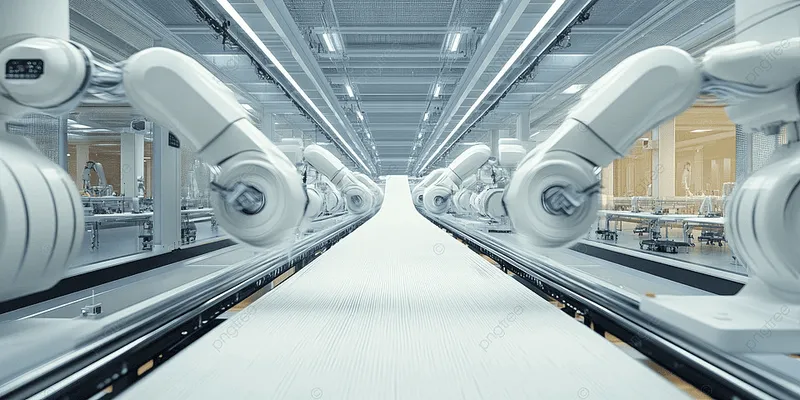
- AI-powered quality control is already here. Computer vision systems inspect fabrics in real-time, catching defects that human inspectors would miss. AI-driven computer vision systems inspect fabrics for weaving errors, stains, and defects in real time, reducing human error and ensuring higher product consistency across textile batches.
- Robotic sewing is gaining ground. Yes, robots sewing fabric; something many thought impossible a decade ago. The ARM Institute-funded Robotic Assembly of Garments Project developed a new robotic assembly process that stiffens garment pieces by laminating fabric with water-soluble thermoplastic polymer, allowing the robot to handle the previously limp fabric. The polymer washes away easily and can be recycled. It's innovative solutions like this that are breaking through old barriers.
- Predictive maintenance is saving millions. Predictive maintenance uses machine learning models to analyse machine performance and anticipate failures, minimising unexpected breakdowns of looms, dyeing machines, and sewing lines. Instead of waiting for machines to break, factories fix problems before they happen.
- Digital printing and pattern optimisation are cutting waste dramatically. AI optimises cutting layouts to minimise fabric wastage in garment manufacturing, with automated cutting machines using advanced algorithms to align patterns precisely. Fabric cost is often the largest single cost in garment manufacturing, so reducing waste via AI-driven cutting/optimisation can significantly impact margins.
India: A Market in Transition
India presents a fascinating case study. India is the sixth-largest exporter of textiles globally, contributing 8.21% to the country's total exports in 2023-2024. The sector employs over 45 million people directly and supports millions of livelihoods indirectly. Here's the reality: While textile industries in other countries have adopted and accepted automation & robotics, Indian textile industries are slow in initiating automation & robotics. But change is coming fast. In the Union Budget 2025-26, a 19% increase in allocation of funds occurred, reflecting the government's commitment to unlock new opportunities for the growth of the textile industry. The government understands what's at stake. With these government initiatives, apart from the conventional segment, automation demand will be seen from very specific and niche segments within the textile sector. In the coming years, widespread adoption of technologies like smart textiles, digital printing, and automated stitching machines is expected, with the implementation of data analytics for real-time decision-making playing a crucial role in optimising supply chains and improving product quality.
The Global Picture: Who's Leading, Who's Following
- Asia-Pacific dominates: Asia-Pacific accounted for 55.56% of 2024 revenue. China and India are the manufacturing powerhouses, but here's what's interesting: Countries such as China and India are witnessing increased investments in industrial robots, automated cutting technology, and smart factories.
- Europe is innovating out of necessity: Germany, the UK, and France are embracing textile industry innovation, with manufacturers focusing on automated textile machinery, digital textile printing, and AI-based production monitoring, with the shortage of skilled workers driving further adoption of automation solutions.
- North America is focusing on reshoring: A staggering 97% of the apparel sold and worn in the U.S. is made overseas. The COVID-19 pandemic exposed dangerous supply chain vulnerabilities. Now robotics and automation are seen as the key to bringing manufacturing back. It's not about competing on labour costs; it's about competing on efficiency and flexibility.
The AI Revolution Within Automation
According to Cervicorn Consulting, the global AI in textile market was valued at USD 2.64 billion in 2024 and is anticipated to reach USD 43.77 billion by 2034, growing at a CAGR of 32.42%. That's not gradual adoption; that's transformation. Generative AI tools create new fabric designs by learning from trend data, enabling textile factories to produce customised designs at scale. AI tracks energy usage across machinery, identifying areas where energy is wasted and suggesting optimisation, leading to reduced electricity bills and smaller carbon footprints.
The Real Challenges Nobody Wants to Talk About
Automation isn't a magic wand.
- The skilled labour paradox is real.
The lack of trained professionals in digital textile printing, industrial robotics, and textile machinery operation is slowing down automation implementation. You need skilled people to implement and maintain automation systems. Where do you find them when the whole point of automation is addressing labour shortages? Providing extensive training to existing staff is time-consuming and costly, potentially leading to production downtime. Companies are addressing this through reskilling and upskilling programs, but it's a chicken-and-egg problem.
- Initial investment is brutal.
High initial investment remains a challenge. A fully automated cutting system might cost hundreds of thousands of dollars. For small and medium enterprises—which represent the bulk of the textile industry globally—that's often impossible without financing.
- Job displacement is happening.
It was estimated that by 2025, 22% of jobs in the textiles industry will be automated through AI technologies. That's millions of jobs worldwide. The industry needs to be honest about this and invest seriously in workforce transition programs.
- Integration complexity is underestimated.
You can't just drop robots into a 30-year-old factory and expect magic. Legacy equipment, incompatible software systems, and outdated infrastructure create nightmares. Partnerships multiply as no single firm owns the full digital stack, with machine builders allying with AI-vision startups for real-time defect maps and with chemical firms to co-develop solvent recycling.
What This Means for Different Players
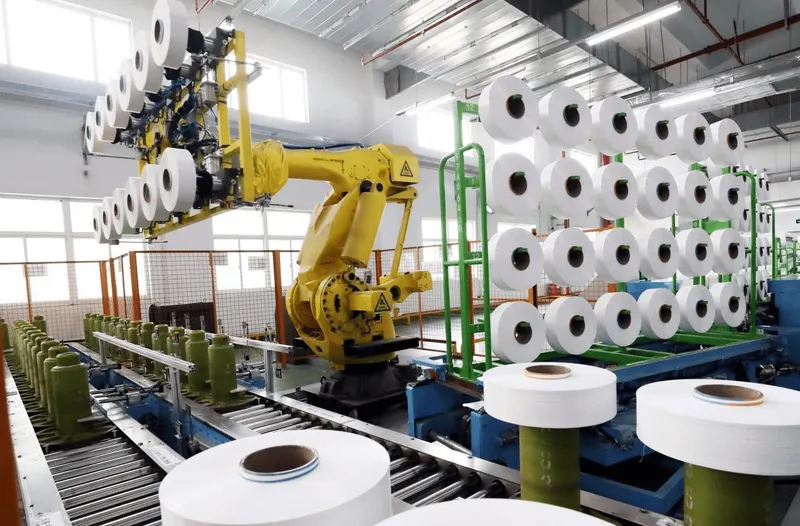
- For manufacturers: Automate or get left behind. That's not hyperbole. Your competitors are already doing it, and the gap will only widen. But be smart about it, start with high-impact areas, train your workforce, and don't try to transform everything overnight.
- For workers: The nature of textile work is changing permanently. By equipping workers with the skills to operate automated systems, companies can make sure that their workforce remains relevant in an evolving industry. If you're in this industry, upskilling is no longer optional.
- For brands: Automation enables what consumers are demanding: customisation, sustainability, speed, and quality. AI and machine learning models will become more sophisticated, enabling even better demand forecasting and customisation. Meanwhile, robotics and automation are expected to increase in response to labour shortages.
- For investors: The opportunity is massive but not uniform. According to a Mordor Intelligence report, semi-automatic platforms accounted for 43.45% of the textile machinery market in 2024, while fully automatic, Industry 4.0-ready lines are tracking a 6.91% CAGR to 2030. The fully automated segment is where the growth is.
The Road Ahead
Where is this all going? A few things seem certain.
- Smart textiles will merge with automation. The smart textile manufacturing market is expanding rapidly as AI, IoT, and robotics become standard tools in production. Fabrics with embedded sensors, adaptive properties, and electronic capabilities will move from labs to mass production.
- Sustainability will drive automation adoption. Regulations are getting stricter worldwide. Both government mandates and consumer expectations are demanding circularity, with the EU leading the charge on textile waste and recycling requirements. For many manufacturers, automation isn't optional anymore; it's the only path to compliance that doesn't kill profitability.
- Regional shifts will accelerate. Automated systems are changing the economics of location. When robots reduce labour cost advantages, producing near your customers starts making financial sense. The geography of textile production is being rewritten.
- Human-machine collaboration will define success. Robots are collaborative in nature and designed to work alongside human operators, with improving overall productivity and simplifying repetitive tasks being the job of robots, while the fashion industry still needs a human touch, problem-solving skills, and creativity.
Conclusion
Textile automation isn't coming; it's here. The question isn't whether to automate but how fast and how smartly you can do it. The impact is already visible: factories producing more with less, quality improving, waste dropping, and entirely new capabilities emerging. But it's also creating real challenges around jobs, skills, and investment that can't be ignored. This transformation will define which companies, regions, and workers thrive over the next decade. The textile industry has reinvented itself before, from hand looms to power looms, from natural to synthetic fibres. This is just the next chapter. But this time, the changes are happening faster and reaching deeper than ever before. The thread running through all of this? Adapt or become obsolete. That's not a threat; it's just reality in an industry where automation is no longer optional.
Sources: