The Fabric as the Foundation: Importance of the Right Fabric Selection
-800x400.webp?2026-06-16T05:40:22.220Z)
Part 4 of the Series: The Evolving World of Men’s Tailored Wear
 (1)-300x200.webp?2026-06-16T05:39:47.684Z)
Vivek Mehta
CEO and Managing Director,
TextilesBazaar.com
In men’s tailored wear, discussions often revolve around fit, styling, or craftsmanship. Yet, beneath all of these lies a far more decisive element, the fabric itself. It is no exaggeration to state that fabric determines nearly 70% of a garment’s success, influencing not just how it looks, but how it feels, performs, ages, and ultimately, how it is valued by the consumer.
For mills, brands, and retailers, fabric is not merely a raw material; it is the foundation of product differentiation. In an increasingly competitive and informed market, the ability to select, develop, and position the right fabric can define the success or failure of an entire collection.
Why Fabric Determines the Success of a Garment
A well-constructed garment cannot compensate for a poor fabric choice. Conversely, even a relatively simple construction can appear elevated when executed in the right fabric.
Fabric dictates the fall, drape, hand feel, breathability, and overall comfort of a garment. It influences how a jacket maintains its shape through the day, how a trouser responds to movement, and how a suit performs across seasons. Over time, it also determines durability, resistance to creasing, pilling, shine, and wear.
From a consumer’s perspective, fabric is often the first point of sensory interaction. The touch, weight, and visual texture create an immediate impression of quality. In many cases, the perception of a brand is directly linked to the consistency and reliability of its fabrics.
For this reason, leading global tailoring brands often adopt a “fabric first approach” to product development, building collections around carefully curated materials rather than treating fabric as a secondary input.
Choosing Between Wool, Blends, and Synthetics
The choice of fibre and composition must be driven by end use rather than convention.
Wool continues to remain the benchmark for tailored clothing due to its natural breathability, resilience, and ability to regulate temperature. It performs across climates when engineered correctly and offers a premium aesthetic that is difficult to replicate. Fine worsteds, high-twist yarns, and lightweight constructions have further expanded wool’s relevance in modern wardrobes.
Blended fabrics have gained strong acceptance, particularly in markets like India. Wool-polyester, wool-viscose, and wool-elastane blends provide enhanced durability, crease resistance, and affordability. When developed thoughtfully, blends can deliver a balanced proposition of performance and value without significantly compromising on appearance.
Synthetics and performance-led fabrics are increasingly relevant in specific use cases, such as travel wear, uniforms, high-frequency usage garments, and climates where maintenance convenience is critical. However, their success depends on how well they are engineered and positioned. Poorly designed synthetics can quickly undermine brand perception, while well-developed performance fabrics can create strong differentiation.
The key lies in aligning fabric selection with the intended use, target consumer, and price positioning, rather than following a one-size-fits-all approach.
What Performance Parameters Truly Matter
While technical specifications are often discussed within the industry, the parameters that truly matter are those experienced by the end consumer.
Comfort remains the most important factor, driven by breathability, softness, and adaptability to different environments. Closely linked to this is ease of wear, including stretch, flexibility, and weight. Wrinkle resistance and recovery have become increasingly important in modern lifestyles, especially for professionals and travellers. Fabrics that maintain a clean appearance through long hours of wear offer a clear advantage.
Durability is another critical factor, though often underestimated at the point of purchase. Resistance to pilling, abrasion, and colour fading directly impacts long-term satisfaction.
Equally important is consistency. A fabric that performs well once but varies across batches can damage trust. For brands and retailers, reliability of supply and uniformity in production are as important as the inherent quality of the fabric itself.
Ultimately, the most successful fabrics are those that deliver a balanced combination of comfort, performance, and visual appeal, aligned with real-life usage.
Seasonality and Climate-Driven Fabric Choices
Fabric selection must also respond to climate and seasonal realities, particularly in diverse markets like India.
Lightweight, breathable fabrics are essential for warmer climates. Tropical worsteds, linen blends, and lightweight wool constructions are increasingly relevant, offering both comfort and structure. The traditional perception of wool as a winter fabric is gradually changing as consumers experience its versatility in lighter forms.
In contrast, colder regions and winter seasons demand fabrics with higher insulation and body. Flannels, tweeds, and heavier worsteds continue to play a strong role in such markets, particularly in Europe and parts of Asia.
Transitional fabrics, those that perform across multiple seasons, are gaining importance, especially in urban markets where consumers seek versatility and value.
For mills and brands, this highlights the importance of climate-specific product development, rather than uniform collections across geographies.
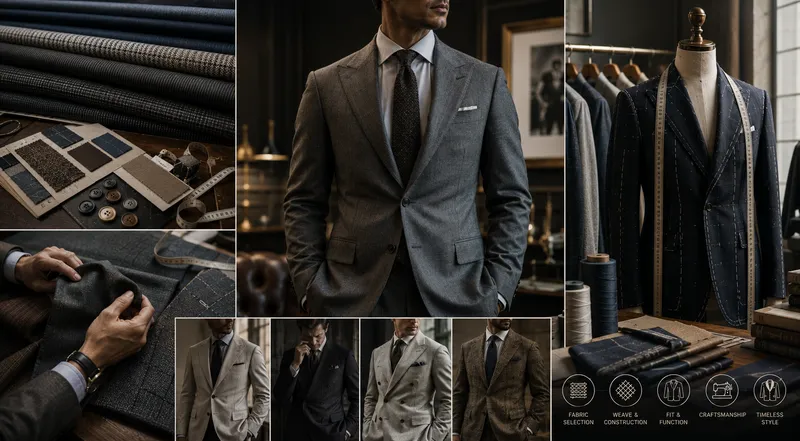
The Role of Mills in Educating the Market
One of the most significant gaps in the tailoring ecosystem today is the limited understanding of fabric among end consumers. This creates both a challenge and an opportunity for mills.
Traditionally, mills have focused on supplying fabrics, leaving communication largely to brands and retailers. However, as markets become more competitive, mills must take a more proactive role in educating stakeholders across the value chain.
This includes:
- simplifying technical information into practical benefits
- guiding brands on application-based fabric selection
- supporting retailers with training and selling tools
- aligning product development with market needs rather than internal capabilities
Mills that position themselves as knowledge partners, rather than just suppliers, will build stronger and more sustainable relationships with brands and retailers.
Fabric Storytelling as a Powerful Sales Tool
In premium and value-added segments, fabric is not just a technical component; it is a story.
Consumers today respond strongly to narratives around origin, craftsmanship, innovation, and purpose. Whether it is fine merino wool, heritage weaving techniques, performance enhancements, or sustainable sourcing, these elements add depth to the product.
Effective storytelling transforms fabric from a commodity into a differentiated offering. It helps justify pricing, enhances perceived value, and builds emotional connection.
However, authenticity is critical. Overstated claims or vague narratives can quickly erode trust. The most effective stories are those that are clear, credible, and relevant to the consumer’s experience.
Conclusion: Fabric as the True Differentiator
As tailoring continues to evolve, the importance of fabric will only increase. Fit, styling, and construction can be replicated or improved over time, but fabric remains the most fundamental and defining element of a garment.
For industry stakeholders, the message is clear: fabric selection must move from being a routine decision to a strategic one. Those who understand its impact, invest in its development, and communicate its value effectively will be best positioned to succeed in an increasingly competitive and discerning market.
In the end, every great tailored garment begins not with a pattern or a stitch, but with the right fabric.
Series Introduction Note
This article is the fourth in a 12-part editorial series exploring the evolving world of men’s tailored wear. The series examines market dynamics, product development, fabric innovation, quality benchmarks, sustainability, technology, branding, and India’s growing role in the global tailoring ecosystem.