Textiles, Lighting and Airflow for Living Rooms
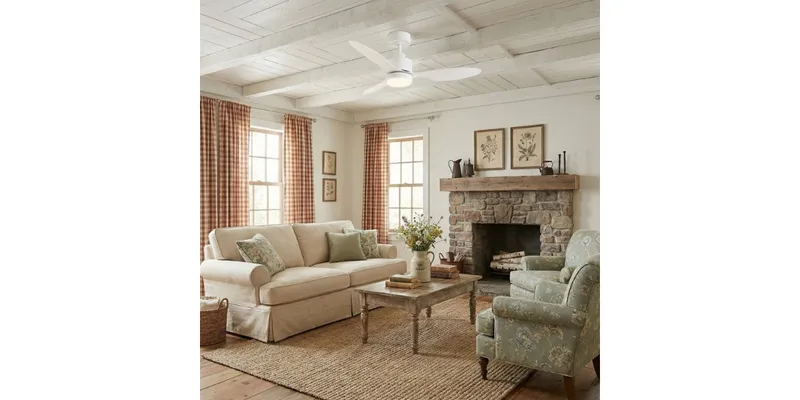
Layering Textiles, Lighting and Airflow in a Comfortable Living Room
A comfortable living room is experienced through several layers at once: the fabric against a seat, daylight at the window, light beside a book and air movement around the occupants. These choices work better when they are considered together. For the operating layer, AirSurferHome's seasonal ceiling fan guide explains how to review supported fan settings and check the resulting airflow. The aim is a room that works in use, not simply a coordinated collection of upholstery swatches and fixture photographs.
Upholstery, curtains, light and air movement contribute different layers of comfort. Image: AirSurferHome.
Start with the occupied positions
Map where people spend time before selecting decorative layers. A reading chair near a bright window, a sofa facing a television and an occasional seat by a doorway create different conditions.
For each position, record the task, the usual time of use and the current complaint. Glare on a page, an uncomfortable draft and a surface that is difficult to maintain are different problems. Changing the cushion color will not resolve all three.
This simple map helps the textile and lighting decisions stay connected to use. It also gives the household a way to evaluate the completed room from actual seats rather than from a staged photograph.
Select upholstery by more than its showroom appearance
Compare texture, color, maintenance guidance and suitability for the intended application. Ask for the relevant supplier information where durability or performance matters; do not infer those properties from a fabric's visual weight.
View a meaningful sample beside the actual furniture and flooring. Small swatches can conceal the effect of a large repeat, an irregular weave or a strong directional texture. If the sofa is the largest upholstered object, its surface will carry considerably more visual weight than a scatter cushion.
Keep maintenance realistic for the household. A preferred appearance is only one part of a suitable specification. Record the approved care method and any relevant limitations instead of applying the same cleaning routine to every fabric.
Give window treatments a defined role
Decide whether a treatment is primarily managing direct sunlight, privacy, glare or the visual scale of the window. Several roles may be combined, but they should be named rather than assumed.
Consider when the treatment will be open and closed. A room photographed with open curtains may be used mainly in the evening with them closed, creating a different balance of color and texture.
Use the actual installation and movement of the treatment when checking nearby fixtures. Keep loose textiles away from moving fan parts and preserve required clearances. A curtain that moves into an unsafe position is not something to accept as part of a relaxed interior style.
Review fabric and lighting together
A textile selected under showroom lighting may look different in the room. Compare samples in daylight and under the lights occupants normally use, including evening task lights.
Directional light can make a weave or raised texture more visible. A strong pattern may become more dominant when it is illuminated while nearby surfaces remain subdued. Assess the combination before finalizing all the layers.
If the ceiling fan includes a light, check its actual specification. Color-temperature selection, brightness and dimming are separate characteristics. Do not assume that one adjustable setting implies all the others. Maintain local lighting where the task needs it rather than asking one overhead source to resolve the entire room.
Set airflow for the seating experience
After arranging the main textiles and furniture, assess air movement from the occupied seats. Use the fan's supported settings and the manufacturer's direction-change procedure. A comfortable setting should suit the activity and the person rather than simply produce the strongest breeze.
Different positions may feel different. If the reading chair receives an excessive draft, first consider a supported speed adjustment or a modest seating change that preserves a useful layout. Do not respond by placing fabric close to the fan to alter the airflow.
A ceiling fan is not a dehumidifier, air purifier or treatment for textile deterioration. Problems involving moisture, persistent odors or material damage need their own assessment. Air circulation should not be presented as protection for upholstery or wood finishes.
Build a coordinated materials review
Layer | Decision to make | Check in the finished room |
Main upholstery | Surface, pattern scale and care requirements | Appearance and usability at the actual seating position |
Curtains or shades | Sunlight, glare and privacy functions | Operation at the times the room is occupied |
Rugs and smaller textiles | Texture and visual relationship to the furniture | Whether the layers compete or create a clear hierarchy |
Task and general light | Which source serves each activity | Reading visibility, glare and evening appearance |
Fan operation | Supported direction and useful speed | Comfort from the occupied seats |
Keep the review focused. A successful decision does not require every layer to change. Sometimes the upholstery is suitable and the improvement comes from the lighting arrangement or operating routine.
Test an afternoon-to-evening sequence
Consider an illustrative living room used for afternoon reading and evening conversation. In the afternoon, direct sun reaches the reading chair. Later, the same room relies on lamps and a ceiling light.
First evaluate the existing window treatment at the time of direct sun. Then check the reading light, the upholstery sample and the fan setting from the chair. In the evening, repeat the review with the window treatment closed and the normal lighting in use.
Record what changes between the two periods. A texture that feels visually busy under a strong directional lamp may be quiet in daylight. A fan setting suitable during active daytime use may be too noticeable during a quiet conversation. These observations create a practical specification and operating plan.
Finish with a room routine
Leave the household with clear care information and a simple explanation of the lighting and fan controls. Identify which window treatment is used for which condition, where the remote is kept and how the selected fabrics should be maintained.
The result should feel coherent without demanding constant adjustment. Textiles establish much of the room's tactile and visual character; lighting and airflow shape how that character is experienced. Coordinating them means each layer has a clear purpose and none is asked to solve a problem outside its role.