Textile Waste Is a Design Failure: Archit Varshney Explains Why Recycling Alone Isn't Enough
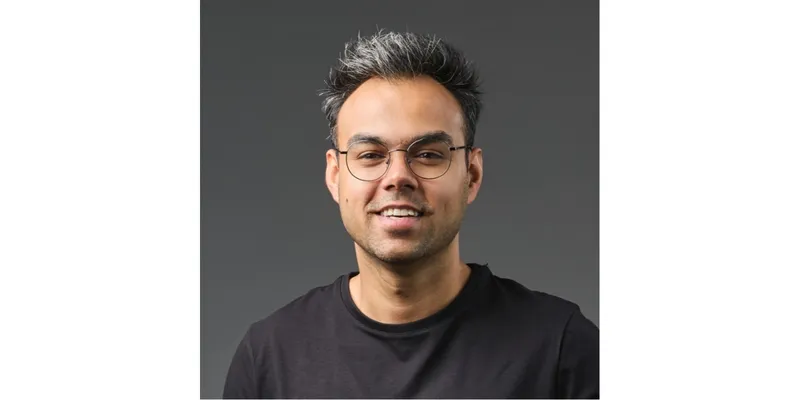
An Exclusive Conversation with , Archit Varshney, Co- founder & CEO, Second Spin By ENVIU
Textile waste is one of the industry's most pressing challenges, but what happens to our clothes after we stop using them? Can discarded textiles find a second life, and how can brands design products with recovery in mind from the very beginning?
In this episode of Textile Value Chain's Recycling and Sustainability series, Ritika Kanojia speaks with Mr. Archit Varshney, Co- founder and CEO of Second Spin, a venture working to transform institutional textile waste into valuable recycled materials.
The conversation explores the gaps in textile recovery, the impact of fibre blends and chemical finishes on recyclability, the importance of collaboration between brands and recycling facilities, and why circularity must become an integral part of textile product design.
Q1. People often ask what happens to the clothes we wear once we stop using them. What is the actual journey of discarded clothing, and what options are available for consumers?
Archit Varshney: This is a common question for many of us. Even in my own home, there is often a carton full of old clothes, and every time we have to decide what to do with them. This is where the textile circularity chain is currently hampered or broken.
However, solutions are gradually emerging. Several textile recovery facilities are coming up across India. My suggestion to consumers would be to look for a textile recovery facility in their city and send their unwanted clothes there. These facilities can assess the material and determine the most appropriate next step.
Q2. What actually happens to clothes once they reach a textile recovery facility? Are they reused, recycled, or converted into other products?
Archit Varshney: That is essentially the core function of a textile recovery facility. Every piece of clothing that arrives is assessed to determine what can be done with it.
The first option is reuse or repair, where the garment can be restored and returned to consumers. If its physical properties no longer allow reuse, it may be sent for recycling. If it cannot be recycled into new textiles, it may be downcycled into construction- related products or other industrial applications, such as wraps and wipes.
Unfortunately, when none of these options are possible, the material is often incinerated. A large proportion of textile waste still ends up this way because of several gaps in the existing system.
Q3. We often think of textile waste as a problem that needs to be solved after a product is discarded. From your experience at Second Spin, what can the waste stream tell us about the way textiles are designed, and why should designers and brands pay attention?
Archit Varshney: I came into the textile industry as an outsider, with a background in analytics. I tend to look at information and understand what it is telling us.
When we started examining textile waste, we looked at the fibre composition, blends, trims and finishes of discarded garments. We realised that the grading process at a textile recovery facility provides valuable information about a material's recoverability.
It is almost like a report card for the material, but that information is not necessarily being shared with designers to help them improve their next product.
We often think that the problem begins when consumers do not know what to do with their old clothes. However, the problem may have originated much earlier, when the product was designed and sold without considering what would happen after its useful life.
If information from waste streams can be communicated back to designers, it can help create simpler recovery processes. We need to design products not only for use but also for reuse.
Q4. Designers and brands must balance aesthetics, comfort, durability, cost and performance. How can they incorporate end- of- life recovery into these decisions without compromising a product's desirability or commercial viability?
Archit Varshney: Aesthetics and functionality do not need to be separate from recovery. At the design stage, if we can create something that looks good and performs well, we can also consider how it will be reused.
These decisions do not necessarily have to compete with one another. Recovery can become part of the same design process rather than something considered only after a product is discarded.
Q5. How do decisions around fibre blends, dyes, finishes, prints and fabric construction affect a textile's potential for reuse, repair or recycling? What should designers and sourcing teams understand?
Archit Varshney: Each of these factors determines which recovery options are available once a product reaches the end of its useful life. They influence whether it can be reused, recycled, downcycled or, in the worst case, incinerated.
Fibre blends are among the biggest challenges. Various reports on consumer clothing suggest that around 60– 70% of clothes in people's homes contain some form of fibre blend. Separating these different fibres can be difficult, making recovery more complicated.
Dyes and finishes are also important because some may have chemical impacts, including effects on the environment when materials are discarded or processed again.
Therefore, fibre blends, dyes and finishes are important considerations that designers should address while developing products.
Q6. Second Spin works within the textile recovery ecosystem. How are you approaching partnerships with brands and other organisations to improve textile recycling and recovery?
Archit Varshney: Our approach at Second Spin has been to build trust, which is often missing in the circularity ecosystem.
We have consistently focused on connecting with waste streams that are readily available but are often sent to landfills or incineration because there are no other suitable options.
Our aim is to take these challenging waste materials and understand whether textile brands would be interested in reusing them.
We have chosen to build an end- to- end pipeline and establish trust within the ecosystem. As this develops, we would also like to explore other types of waste, including textiles discarded by individuals like you and me.
Q7. What insights from Second Spin's work with textile recovery could be useful to brands and designers when developing their next products or collections?
Archit Varshney: One of the biggest gaps in textile recovery is the lack of information about material composition. Often, we do not know whether a discarded garment is made from 100% cotton or a blend of nylon, elastane and other fibres.
That information can make a significant difference to the value of the recovered material. Depending on what the material is made from and what can be done with it, its recovery value can vary considerably.
For brands, the lesson is to look beyond the immediate use of a product and consider its downstream possibilities. Keeping fibre compositions simpler can make the recovery process much easier and help ensure that materials can be reused or recycled.
Q8. Many brands are exploring recycled materials and circularity initiatives. Beyond the percentage of recycled content in a product, what else should brands consider when assessing how well a product can retain value and move into its next life?
Archit Varshney: Recycled content generally tells consumers where a material comes from. For example, a product may contain 20% recycled cotton. However, this does not tell consumers where that product can go after its own useful life.
Along with recycled content, brands should consider communicating a product's recoverability. Can it realistically be reused or recycled? That is important information.
The second consideration is product retention: how long is the product actually intended to remain in use? For example, if a garment has a useful life of around two years, it may be more appropriate to send it into the recycling value chain afterwards rather than turn it into a rag for which the material may not be suitable.
Recoverability and the expected duration of use are two important aspects brands should consider.
Q9. Product design and textile recovery often operate separately. How can brands, designers, manufacturers and recovery enterprises work together so that what we learn at the end of a product's life informs what gets made next?
Archit Varshney: The key is to close the loop, not only in terms of textiles but also in terms of information.
In any complex system, the feedback loop is extremely important because it helps us understand what is working and what needs improvement.
There needs to be a shared language between recovery facilities and brands. Recovery facilities should be able to grade materials and communicate what is available and what can be done with it. At the same time, information should flow back to brands about which materials were successfully reused or recycled.
Policy intervention can also support this process. For example, the European Union is introducing Extended Producer Responsibility (EPR) for textiles, making brands responsible for what happens to the clothing they place in the consumer market.
India is also discussing its own approach to textile EPR. As such policies develop and encourage collaboration, they can create the conditions needed for better information sharing across the value chain.
Q10. If a fashion or home textile brand wanted to start incorporating recovery insights into its design and sourcing decisions, what is one practical step it could take today?
Archit Varshney: One of the easiest steps is to visit the nearest textile recovery facility.
A brand can identify its ten best- selling products and check whether samples of those same materials are available at the recovery facility a few years later.
By examining these samples, the brand can understand what happened to the materials. Were they recyclable? Did the trims create problems? Did the finishes affect recovery?
This is a relatively inexpensive and quick experiment that can generate valuable insights.
Recovery partners can also identify patterns in the textile waste coming from a particular brand and help establish a circular process, including the collection and recovery of old products.
Q11. What would change if every designer could see where last season's products ended up? What role can brands play in making that connection a reality?
Archit Varshney: I think we should focus on making simpler, fewer and longer- lasting products. When we begin designing with the next life of a product in mind, many of the decisions become more natural.
Designers need to understand the consequences of their choices. Brands should pay greater attention to what better product design means. It should not be limited to aesthetics and functionality but should also include recoverability and redesign.
That shift in thinking can help bring meaningful changes across the complex textile supply chain.
Rapid- Fire Round
Is recycling being used to compensate for poor product design?
Archit Varshney: Yes.
Which is harder to solve: textile waste or the economics of recycling it?
Archit Varshney: The economics of recycling are quite challenging.
Can a fabric be called sustainable if it cannot be recovered at the end of its life?
Archit Varshney: Yes, I think it can. Sustainability can mean many things done right. If cotton is grown responsibly, natural dyes and finishes are used, and the product is designed with the planet in mind, these are also important aspects of sustainability. End- of- life recovery is one part of the larger picture.
What is the biggest misconception textile manufacturers have about recycling?
Archit Varshney: The biggest misconception is that recycling is a one- stop solution to all our problems. It is not. As the scale of the linear textile industry grows and we continue making more complex products, recycling systems also need to innovate to handle what is happening upstream.
Will circular textile design become a business necessity or remain a sustainable choice?
Archit Varshney: I am optimistic that textile recycling will become mainstream. Humans may take time to listen, but eventually they do. We can also learn from other industries, such as plastics, where Extended Producer Responsibility has helped materials return to reuse and recirculation.
I believe designers will eventually accept circularity as a permanent part of the design brief.
Advice for Emerging Entrepreneurs and the Future of Second Spin
Q12. What advice would you give young entrepreneurs and Gen Z professionals who want to enter the textile recycling and sustainability space? Also, what is one mistake from your entrepreneurial journey that you would approach differently if you were starting again?
Archit Varshney: Anyone starting a business in circularity, textiles or any impact- focused sector should really understand the purpose behind what they are trying to build.
As an entrepreneur, you can build only for profit, but when you choose to build for both purpose and profit, that purpose can guide you through a complicated but exciting journey.
One mistake I made was not building trust early enough. The textile ecosystem is enormous, with millions of people involved. India's textile waste workers' economy alone employs approximately 4.5 million people, representing around 40– 45 lakh jobs.
Textiles are also deeply connected to our civilisation and heritage. There is so much to learn by connecting with the right people.
I spent a lot of time trying to figure things out on my own. Later, I realised that there were many people I could have spoken to and learned from. I have been fortunate to find good partners along the way, but my advice would be to lead with trust.
Q13. Finally, what is the future vision and plan for Second Spin?
Archit Varshney: Our focus at Second Spin is to make recovered materials trustworthy so that they can return to the supply chain at the highest possible value.
We believe that achieving this will naturally help make textile circularity mainstream. Anything that contributes to this larger vision is what we want to work towards.
Watch the full interview with Mr. Archit Varshney, Co- founder and CEO of Second Spin.
Interview conducted by Ritika Kanojia, Journalist, Textile Value Chain.