Textile Tourism Market Expected to Reach USD 95.4 Billion by 2032 Amid Rising Demand for Cultural and Heritage Travel
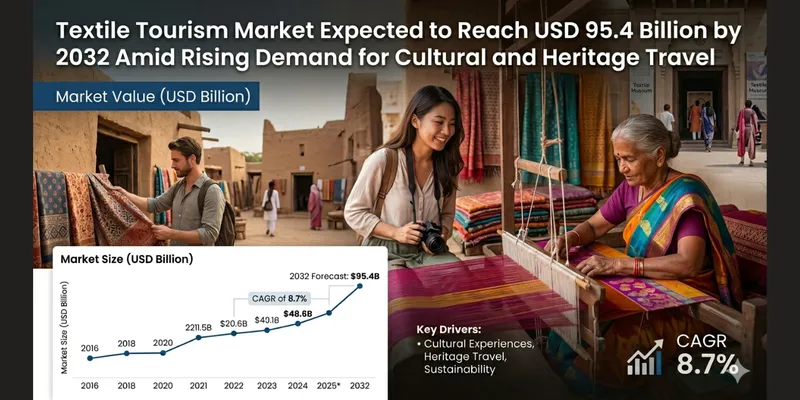
The global Textile Tourism market is gaining remarkable momentum as travelers increasingly seek authentic cultural experiences, traditional craftsmanship, and heritage-based destinations. According to Marketintelo analysis, the global textile tourism market was valued at approximately USD 48.6 billion in 2024 and is projected to reach USD 95.4 billion by 2032, expanding at a robust CAGR of 8.7% during the forecast period.
Textile tourism combines travel with textile heritage experiences, including visits to weaving villages, artisan workshops, textile museums, fashion heritage centers, and traditional craft destinations.
In 2025, more than 145 million travelers worldwide participated in cultural tourism activities, with nearly 18% specifically engaging in textile-related experiences. Growing consumer interest in sustainability, handmade products, and local culture is accelerating demand across both developed and emerging tourism markets.
Textile Tourism Market Shows Strong Historical Growth
Over the past decade, textile tourism has evolved from a niche travel segment into a significant contributor to cultural tourism revenues. The market expanded from approximately USD 24.8 billion in 2016 to USD 48.6 billion in 2024, representing an overall increase of nearly 96%.
Although international tourism faced disruptions during 2020, the textile tourism sector demonstrated strong resilience. Market value declined to approximately USD 22.7 billion in 2020, but recovered quickly to USD 27.1 billion in 2021, followed by USD 35.6 billion in 2022 and USD 42.3 billion in 2023. By 2025, the market is estimated to reach USD 52.9 billion, highlighting the continued recovery of global travel and cultural tourism.
Textile Tourism Market Value (USD Billion)
Year | Market Size |
2016 | 24.8 |
2018 | 29.5 |
2020 | 22.7 |
2021 | 27.1 |
2022 | 35.6 |
2023 | 42.3 |
2024 | 48.6 |
2025 | 52.9 |
Year-Over-Year Market Expansion Remains Strong
The textile tourism industry has recorded impressive annual growth rates over recent years. Market value increased by 19.4% between 2020 and 2021, followed by a substantial 31.4% growth rate in 2022. Growth remained strong at 18.8% in 2023 and 14.9% in 2024. The market is expected to grow another 8.8% during 2025, supported by rising international tourist arrivals and increased spending on experiential travel.
Global surveys indicate that approximately 67% of cultural travelers now prioritize hands-on experiences over traditional sightseeing. Additionally, 54% of tourists purchasing cultural souvenirs prefer locally produced textiles and handicrafts, creating direct economic benefits for artisan communities.
Asia-Pacific Leads Global Textile Tourism Revenue
Asia-Pacific remains the largest regional market for textile tourism, accounting for approximately 42% of global revenue in 2024. Regional revenue exceeded USD 20.4 billion, supported by strong tourist demand in India, China, Japan, Indonesia, Thailand, and Vietnam.
India has emerged as one of the world's most significant textile tourism destinations, attracting more than 12 million visitors annually to weaving centers, handicraft villages, textile museums, and artisan workshops. The country's textile industry generated over USD 165 billion in economic activity during 2024, creating strong opportunities for tourism integration.
Europe represented approximately 31% of global textile tourism revenue, generating nearly USD 15.1 billion in 2024. Countries such as Italy, France, Spain, and the United Kingdom continue to attract visitors interested in fashion heritage, luxury textiles, and historic manufacturing traditions.
North America accounted for approximately USD 8.7 billion in textile tourism revenue during 2024, while Latin America contributed USD 2.7 billion. The Middle East and Africa generated approximately USD 1.7 billion, with regional growth projected to exceed 9.4% annually through 2032.
Government Investments Strengthen Textile Tourism Infrastructure
Public-sector investment has become a critical growth driver for textile tourism worldwide. Global heritage preservation spending surpassed USD 12 billion in 2024, while UNESCO supported textile heritage programs received approximately USD 850 million in funding.
India allocated nearly USD 420 million toward handicraft promotion, artisan support, and cultural tourism initiatives. Across Europe, cultural tourism and heritage development programs attracted more than USD 2.1 billion in funding during 2024. Meanwhile, Japan increased support for traditional craft tourism projects by approximately 15% year-over-year.
Today, more than 3,500 protected textile heritage sites worldwide receive government backed conservation and tourism development support.
Rising Visitor Spending Creates Economic Opportunities
Consumer spending associated with textile tourism continues to increase. The average textile tourism visitor spent approximately USD 620 per trip in 2025, which is nearly 22% higher than average spending by conventional leisure tourists.
Artisan craft tourism generated more than USD 18.5 billion in visitor spending during 2025, while digital bookings for textile-focused travel experiences increased by 41% between 2023 and 2025. Participation in weaving workshops and craft demonstrations rose by 33% compared with 2022 levels, demonstrating growing demand for immersive experiences.
Textile museums also remain important attractions within the sector. More than 4,800 textile museums and heritage centers operate globally, attracting over 72 million visitors annually and generating approximately USD 9.5 billion in tourism-related revenue.
Future Outlook Through 2032
The long-term outlook for textile tourism remains highly positive. Market forecasts indicate that global participation in textile-related tourism activities could surpass 220 million travelers by 2032. Asia-Pacific revenue is expected to exceed USD 40 billion, while sustainable textile tourism could account for nearly 38% of all bookings worldwide.
Digital heritage experiences are projected to grow at a 12.5% CAGR, and artisan workshop tourism could generate more than USD 35 billion annually by 2032. Continued government investment, expanding cultural tourism programs, and growing consumer preference for authentic travel experiences are expected to support sustained market expansion.
Conclusion
The global Textile Tourism market has transformed into a major segment of the cultural tourism industry, growing from USD 24.8 billion in 2016 to USD 48.6 billion in 2024. With a projected market size of USD 95.4 billion by 2032 and an expected CAGR of 8.7%, the sector is positioned for substantial long-term growth. Rising visitor spending, increasing heritage preservation investments, expanding museum networks, and growing demand for experiential travel are expected to make textile tourism one of the most dynamic cultural tourism segments over the next decade.
Read A Full Report: https://marketintelo.com/report/textile-tourism-market