Textile Rubber Rolls Gain Importance in 2026 Production Systems
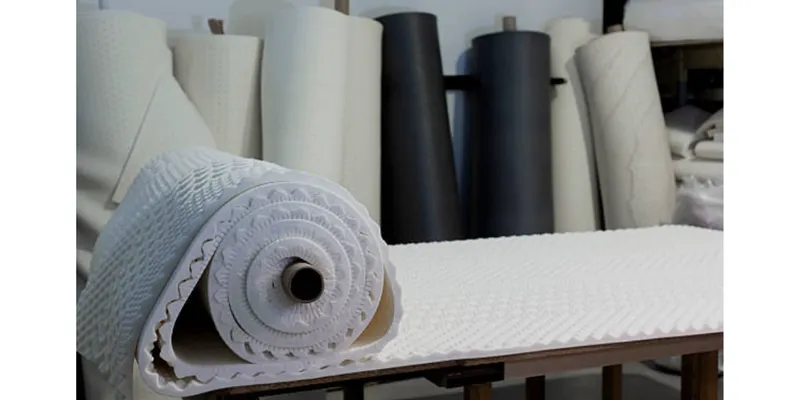
Textile rubber rolls continue to play a critical role in modern textile manufacturing systems, supporting precision and consistency across multiple production stages. These components, typically made with a metal core and elastomer coating, are widely used in spinning, weaving, dyeing, printing, and finishing operations.
As textile processes become more advanced, the demand for uniform pressure, controlled friction, and chemical resistance has increased, placing greater emphasis on the performance of rubber rolls.
Additionally, you may get the whole report insights by clicking the following link: https://www.24chemicalresearch.com/reports/286380/global-textile-rubber-roll-market
Where Textile Rubber Rolls Are Used?
[Spinning] → Fiber Drafting Rolls
[Weaving] → Tension Control Rolls
[Dyeing] → Chemical Application Rolls
[Printing] → Ink Transfer Rolls
[Finishing] → Calendaring & Polishing Rolls
Modern Processing Solutions for Textile Rubber Rollers
The manufacturing of rubber rollers for the textile industry involves several rubber fabrication techniques and can be carried out through methods such as plying, extrusion, casting, and die pressing. These rollers are valued for their high coefficient of friction, which supports better grip and performance during textile operations.
They also have the ability to quickly return to their original shape and dimensions even after deformation during production. In addition, rubber rollers offer strong resistance to chemical substances, help protect the roller core and shaft, and prevent damage caused by scratching or impact. Their adaptability also allows them to compensate for minor variations in machine precision, making them a reliable component in textile machinery.
Application-Based Usage;
Textile Process | Role of Rubber Roll | Key Benefit |
Spinning | Fiber drafting | Uniform yarn quality |
Weaving | Tension control | Reduced breakage |
Dyeing | Chemical transfer | Even coloration |
Printing | Ink transfer | High pattern accuracy |
Finishing | Surface smoothing | Enhanced fabric feel |
Insights from Segmentation where demand is focused
By Type:
- Synthetic Rubber (Leads the target market share)
- Special Rubber
- Others
By Application:
- Dyeing Rubber Roll (Expected to Grow Fast)
- Sizing Machine Rubber Roll
- Others
By End User:
- Textile Dyeing Plants (Anticipated to dominate aimed market at highest)
- Sizing Facilities
- Printing and Finishing Units
By Core Material:
- Steel (Boosts the growth for target market)
- Aluminum Alloys
- Others
By Distribution Channel:
- OEM Supply (Fuels at highest share)
- Aftermarket Replacement
- Others
Hurdles in Harsh Environments
Dyes and excessive humidity can quickly damage ordinary rolls through chemical corrosion, hence CSM or NBR mixtures are needed to make them more resistant. High-speed weaving produces uneven wear because of vibrations, which balanced polymer innovation fixes.
Natural rubber supply in India was 875,000 tonnes in 2024-25, a 2.1% increase that led to shifts in synthetic rubber. Innovations that last longer can save expenses for rural mills that require a lot of labor for maintenance.
"A few millimetres of rubber can make the difference between a premium fabric and a rejected batch."
Siva Rollers Technical Guide, April 2025
Regional Perspective:
North America | Europe | Asia Pacific | Latin America | Middle East Africa
Textile industry is dominated by the Asia Pacific area, with nations like Bangladesh, Vietnam, China, and India serving as global industrial hubs.
According to the World Trade Organization (WTO), Asia accounts for a major share of global textile exports, driven by:
- Cost-effective labor
- Strong supply chains
- Government support policies
India, in particular, is witnessing increased investment in textile parks and integrated manufacturing clusters under schemes like:
- PM MITRA Parks (Mega Integrated Textile Region and Apparel Parks)
- Production Linked Incentive (PLI) Scheme
These developments are expected to significantly boost demand for textile machinery components, including rubber rolls.
Browse the latest related reports through the given links below:
Textiles and Dye-Sublimation Printer Market
Competitive market focused on quality over size
- American Roller
- Felix Böttcher GmbH & Co. KG
- Egberts Rubber GmbH
- Rol-Tec, Inc.
- Advance Rubtech (I) Private Limited
- HEXPOL Compounding
- KinyoSha Co., Ltd.
- Rapid Pacific Roll Covering
- Mid-American Rubber
- Hebei Chunfeng Yinxing Rubber Roller Co., Ltd.
Where Rubber Rolls Sit in the Textile Chain?
Rubber rolls are not extras that go with something else. They are the contact surface between mechanical force and raw fibre in spinning and weaving. They are the line between a good run and a bad batch.
A textile rubber roll is a carefully made cylinder, usually with a steel or aluminum core covered in a special rubber compound. It controls the movement, tension, and pressure of fibres during spinning, weaving, dyeing, printing, and finishing.
The rubber cot on the top drafting roll in ring spinning must stay within very tight Shore A hardness tolerances: rear rolls run at 80° to 85°. Shore A is used to regulate higher fibre quantities, while front rolls decrease to 65°-70° Shore A for a softer grip during final drafting. Any damage to or hardening of the surface directly causes yarn unevenness (U%) faults that spread downstream.
In weaving sheds, take-up and let-off rolls handle fabric that isn't finished yet. They need to be able to bear sizing chemicals and wear and tear without leaving marks on the fabric. When the roll is used for chemical processing, such bleaching, mercerizing, or dyeing, it becomes a chemical fortress that needs to be able to handle the specific bath chemistry being used.
Reconditioning vs. replacement economics
Extending the life of industrial rollers through reconditioning (regrinding, resurfacing, re-covering) reduces demand for raw steel, rubber compounds, and fabrication energy. For textile mills, a reconditioned roll typically costs 30-60% less than a new unit, while restoring 85-95% of original performance characteristics. The practice also aligns with India's growing embrace of circular rubber reclaimed, devulcanised, and crumb rubber gaining broader acceptance in 2025.
- Reduced Raw Material Dependency
Reconditioning minimizes the need for fresh inputs such as steel cores, virgin rubber compounds, and synthetic polymers, easing pressure on raw material supply chains.
- Energy Efficiency Gains
Compared to manufacturing new rolls, reconditioning requires significantly lower fabrication energy, contributing to reduced overall production costs and carbon footprint.
- Faster Turnaround Time
Reconditioning cycles are generally shorter than new manufacturing lead times, helping mills reduce downtime and maintain continuous production flow.
- Alignment with Circular Economy Trends
The practice supports the shift toward a circular rubber economy, where materials are reused and recycled instead of discarded.
Top Development Opportunities in the Value Chain of Textile Rubber Roll Business;
The textile rubber roll market is changing beyond just making things. There are new ways to grow in design, services, and technological integration.
High-Performance Materials → Process-Specific Customization → Aftermarket & Refurbishment Services → Smart & Connected Rolls → Sustainable Manufacturing → Technical Textile Expansion
- There is a growing need for advanced elastomers that can handle chemicals, heat, and high-speed operations, especially in modern textile processing units.
- Mills are increasingly choosing custom rubber rolls made for specific tasks like dyeing, printing, or spinning. This opens up opportunities for specialized engineering solutions.
- Recoating and maintenance services are becoming more popular as cheaper options to replacement, providing steady income streams.
- Adding sensors for real-time monitoring and predictive maintenance is creating a new tech-driven part of the value chain.
- Using eco-friendly materials and making things with low emissions are becoming important factors that set companies apart, especially for exporters who want to meet global standards.
- The demand for precision-engineered rubber rolls with special features is rising as high-performance textile segments grow.
The biggest chance is to move away from standard product supply and toward customized, technology-enabled, and service-driven solutions that fit with the future of textile manufacturing.