Textile Prices Likely to Remain Stable for Now as Global Cotton Supply Risks Persist
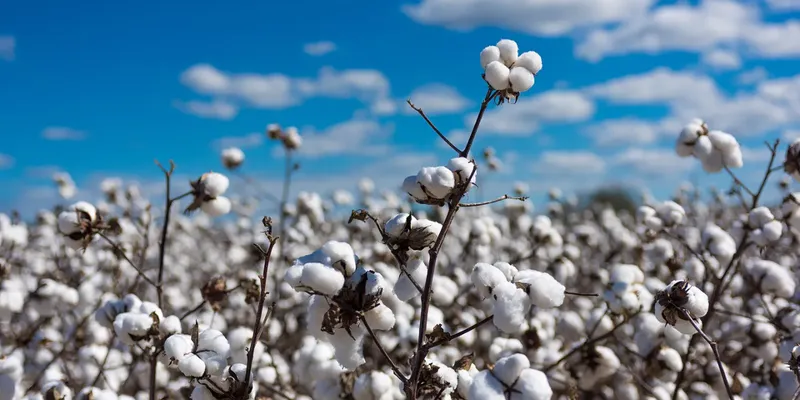
Below-Normal Rainfall Affects Cotton Sowing While Industry Monitors Domestic Supply and Import Trends
Textile prices are expected to remain stable in the near term despite concerns over global cotton supply, according to industry executives and officials. Lower cotton sowing due to below-normal rainfall in some states and geopolitical tensions remain key factors being monitored, while domestic production and policy measures are expected to support supply.
Below-normal rainfall in several cotton-growing regions has reduced cotton sowing this season, prompting concerns over domestic production. However, officials and industry executives said they do not expect any immediate impact on textile prices, as adequate raw material availability is likely to continue for the sector.
Cotton is the dominant raw material used by India's textile and apparel industry, accounting for about 80% of fibre consumption and nearly 65% of apparel production. A normal cotton crop is considered important for maintaining raw material supplies and limiting cost pressures arising from imported cotton amid ongoing geopolitical tensions.
According to the agriculture ministry's latest weekly sowing data, cotton has been sown over 9.253 million hectares as of 17 July, down 5.96% from 9.839 million hectares during the corresponding period last year.
The sowing data also reflected varying trends across major cotton-producing states. Maharashtra, the country's largest cotton producer, recorded a 6.82% decline in acreage to 3.421 million hectares, while Gujarat's cotton sowing fell 9.76% to 1.675 million hectares.
In contrast, Telangana reported a 6.62% increase to 1.664 million hectares, while Andhra Pradesh registered a 34.2% rise to 275,000 hectares.
The final cotton production figures for the current season are expected to be released after the textile industry. Cotton acreage has remained around 11.5 million hectares over the past two years, while production declined from 33.66 million bales in FY23 to 29.024 million bales in FY26, increasing pressure on domestic supplies and reducing reliance on imports.
The import duty of around 11% on cotton has been waived until October 2026. After that period, the arrival of the new domestic cotton crop is expected to improve supplies.
"There is no need to worry for textile manufacturers with respect to the availability of domestic cotton. The acreage is expected to improve, given that El Nino may encourage farmers in cotton-growing areas to shift to cotton in the event of deficient rainfall," said L.K. Gupta, chairman-cum-managing director, Cotton Corporation of India, the public sector undertaking under the ministry of textiles.
"There is a reason for this. Other crops may not yield well under deficient rainfall, but in the case of cotton, there is always a good chance of getting a reasonable yield even if rainfall is deficient."
Gupta further said CCI is working closely with textile mills and making concerted efforts to supply cotton directly to manufacturers rather than traders to help keep textile prices under control while ensuring farmers receive better prices for their produce.
Industry executives also echoed the assessment, saying current sowing trends do not indicate any major risk to cotton output.