Textile Industry Welcomes Temporary Duty Relief on Cotton Imports
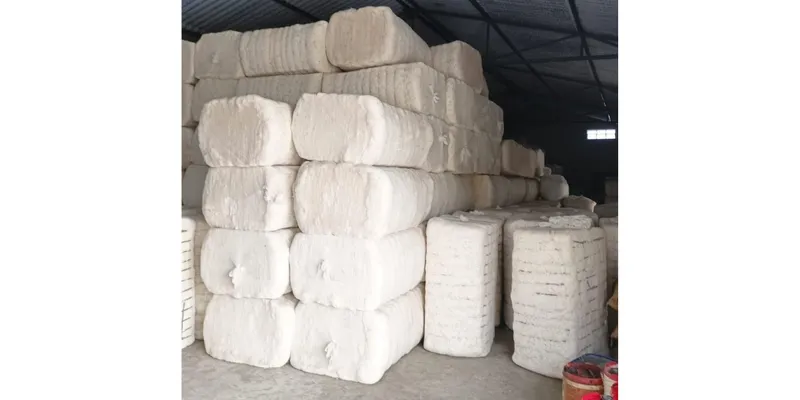
Industry bodies say measure will help address cotton shortages and ease input cost pressures
India’s textile industry has welcomed the Centre’s decision to exempt raw cotton imports from customs duty and cess for a limited period, citing ongoing supply shortages and rising domestic cotton prices. Industry representatives said the move is expected to improve access to competitively priced cotton and support the sector’s export competitiveness.
The textile industry has expressed its appreciation to Prime Minister Narendra Modi and Union Ministers Nirmala Sitharaman, Shivraj Singh Chouhan, Piyush Goyal, and Giriraj Singh following the exemption of cotton imports from the 11% customs duty and agriculture cess. The exemption applies to raw cotton imports from June 1 to October 31, 2026.
The Ministry of Finance issued a notification on May 30, 2026, exempting the 5% Basic Customs Duty, 5% Agriculture Infrastructure and Development Cess (AIDC), and 10% Social Welfare Cess on both, amounting to a total relief of 11%. The measure is intended to help manufacturers address supply concerns and rising input costs.
According to industry representatives, India’s textile sector is witnessing growing export opportunities while continuing to face challenges related to cotton shortages and elevated domestic cotton prices. They stated that the temporary duty exemption would provide access to competitively priced quality cotton from global markets, helping to reduce costs and strengthen industry competitiveness.
Industry representatives noted that the stabilisation of cotton supplies is expected to support Indian exporters as they seek to benefit from emerging Free Trade Agreements (FTAs). Cotton accounts for nearly 65% of yarn manufacturing costs and between 25% and 30% of garment and home textiles manufacturing costs, making availability and pricing of the fibre a key factor affecting competitiveness.
They further stated that stable and affordable cotton supplies are particularly important for exporters operating under long-term contracts and supply arrangements, where fluctuations in raw material prices can significantly affect profitability and delivery commitments.
The industry also highlighted a domestic cotton shortage estimated at 40–50 lakh bales. Domestic production is currently around 290 lakh bales, compared with an annual requirement of 330–350 lakh bales. Representatives pointed out that although India accounts for 38% of the world’s cotton cultivation area, it contributes only 19% of global cotton production due to lower productivity levels.
Industry representatives said India may require 7–10 years to achieve self-sufficiency in cotton production through the ₹5,659-crore Mission for Cotton Productivity. They noted that technological adoption, regulatory approvals, mechanisation, and improved farming practices are essential to improving productivity and quality.
Chairman of CITI Ashwin Chandran, Vice-Chairman of TEXPROCIL Ravi Sam, Chairman of SIMA Durai Palanisamy, Deputy Chairman of SIMA S. Krishnakumar, and Secretary General of SIMA K. Selvaraju also appreciated Tamil Nadu Chief Minister C. Joseph Vijay for urging the Centre to remove the 11 per cent cotton import duty.
They stated that an uninterrupted supply of quality and customer-specified cotton is essential for the predominantly cotton-based textile industry, which supports the livelihoods of nearly 8 crore rural workers, particularly women.
Industry representatives also observed that competing textile-exporting countries such as Bangladesh, Vietnam, Pakistan, Indonesia and Turkey permit duty-free cotton imports.