Textile Commissioner Vrunda Desai Receives Lord Vithal Murti Honouring India–EU Free Trade Agreement
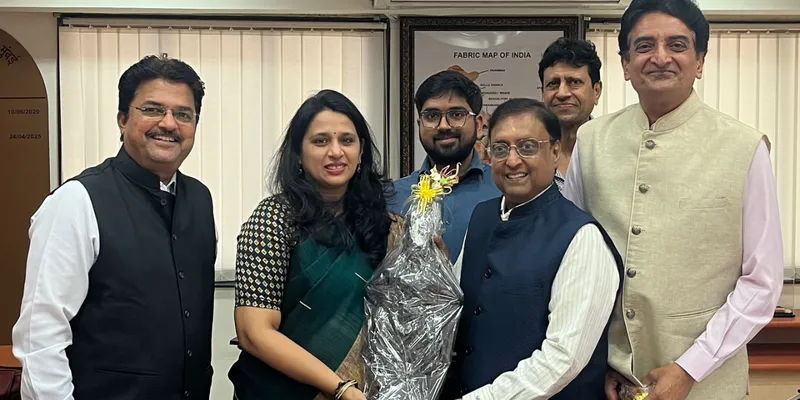
Textile Commissioner Vrunda Desai received a traditional Maharashtrian offering from industry representatives in Mumbai, marking industry response to the recently concluded India–EU Free Trade Agreement.
In a symbolic gesture rooted in Maharashtrian tradition, Ms. Vrunda Desai, Hon’ble Textile Commissioner of India, accepted a Murti of Lord Vithal as a mark of appreciation for the conclusion of the India–European Union Free Trade Agreement (FTA), often described by stakeholders as a landmark trade accord.
The offering was presented on behalf of representatives from Kalbadevi, historically regarded as one of Asia’s largest textile trading markets. The delegation included Shri Narendra Podar, Trustee and Immediate Past President of the Bharat Merchants’ Chamber; Shri Shiv Kanodia, President of the Textile Association of Badlapur; Shri Dilip Maheshwari, President of the International Vaish Federation (Mumbai); Shri Ganpat Kothari, President of Rajasthan Foundation; and Shri Praveen and Shri Pratik Churiwal, representing the Bhiwandi textile association.
-800x566.webp?2026-02-25T09:05:56.299Z)
The India–EU FTA is being viewed by industry participants as a significant development for India’s textile sector and broader trade relations. According to those present, the agreement is expected to influence future export pathways and reinforce India’s long-standing role in global textile commerce.
While accepting the offering, the Textile Commissioner attributed the outcome of the agreement to the collective efforts of the Government of India, including the Ministry of Textiles, the Ministry of Commerce and Industry, and the Ministry of External Affairs, under the leadership of the Prime Minister.
In her remarks, Ms. Desai emphasized the responsibility of the textile industry to translate this agreement into measurable growth. She expressed her commitment to working closely with stakeholders to strengthen India’s international competitiveness in textiles.
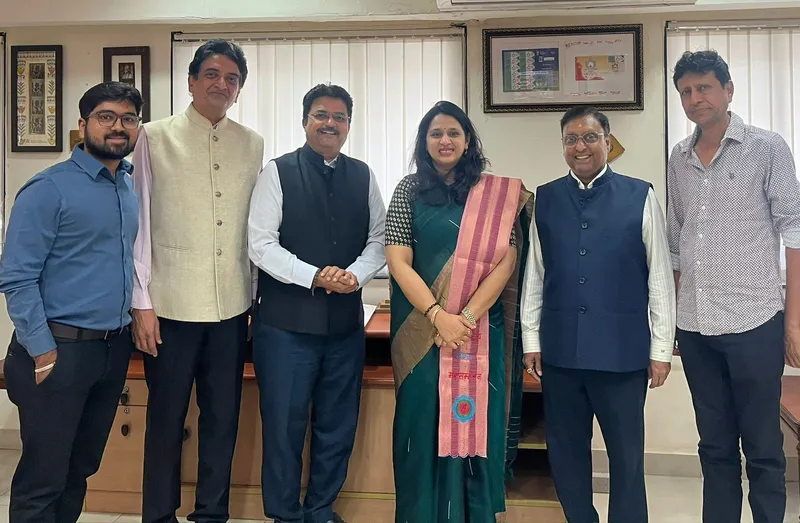
Highlighting her engagement with industry clusters, she conveyed her intention to visit Kalbadevi, along with the Bhiwandi and Badlapur textile hubs, at the earliest opportunity. The interaction also marked her first official day in office, during which participants noted her focus on industry outreach and implementation priorities.
Addressing younger stakeholders, she stressed the importance of active participation from the next generation in shaping India’s textile exports and global presence. She stated her resolve to work continuously with industry representatives to convert the agreement into tangible outcomes.
The meeting concluded with a shared sentiment that the India–EU FTA represents a renewed phase for India’s textile trade, with expectations of long-term impact on manufacturing, exports, and global positioning.