Technical Textiles in a Connected World: The Need for a Dedicated Digital Ecosystem

Karthik Kumar Sundararaj
Founder & Director,
TechTextileHub – Global B2B Portal for Technical Textiles
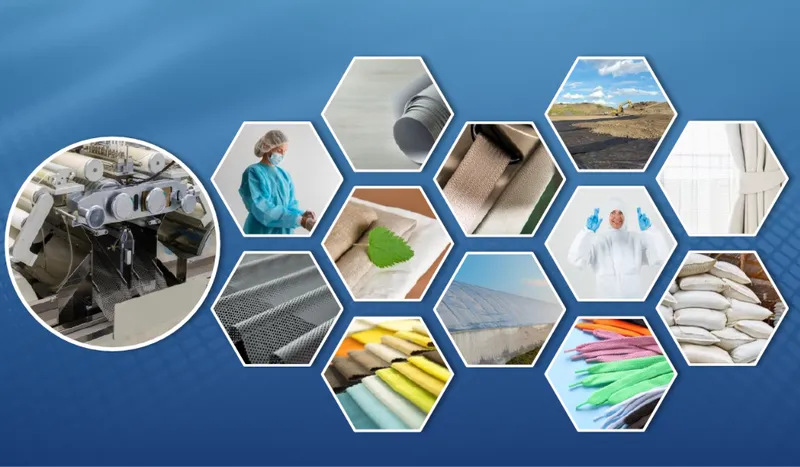
Technical Textiles is one of the most diverse segments of the textile industry. From medical and protective textiles to geotextiles, automotive applications, filtration, agriculture, construction and sports, the sector cuts across industries that may otherwise have very little in common.
This diversity is also one of its challenges.
The Technical Textiles value chain extends across specialised fibres and yarns, functional fabrics, nonwovens, coatings, membranes, composites, chemicals, machinery, testing, certification, research and finished products. Manufacturers and buyers are spread across different geographies and application sectors, making the discovery of the right product, supplier, technology or business partner considerably more complex.
From Periodic Networking to Continuous Connectivity:
Trade exhibitions, conferences, industry associations and personal networks continue to play an important role in Technical Textiles. However, business discovery is increasingly becoming a continuous process rather than an activity limited to a few events during the year.
A buyer searching for a specialised material may need to identify manufacturers across several countries. A manufacturer developing a new application may require a particular fibre, coating technology, testing facility or machinery supplier. Similarly, an SME with a highly specialised product may possess strong technical capabilities but remain relatively invisible outside its existing network.
This creates an opportunity for digital platforms to complement the physical industry ecosystem with year-round connectivity.
But Technical Textiles requires something more specialised than a conventional online business directory. Search and discovery need to recognise applications, materials, performance requirements, technologies and the relationships between different parts of the value chain.
Structured Industry Data Will Become Increasingly Important:
The next phase of B2B digitalisation is likely to move beyond simply displaying company names and contact details.
Structured information about companies, products, applications, manufacturing capabilities and technologies can make industry discovery considerably more relevant. Over time, developments in artificial intelligence and semantic search could further enable buyers to identify appropriate products and suppliers based on technical requirements rather than relying only on conventional keyword searches.
RFQ-based digital sourcing can add another dimension by allowing a business requirement to reach relevant industry participants more efficiently.
The real value, therefore, lies not merely in digitising a directory, but in creating a connected and increasingly intelligent industry ecosystem.
An Initiative Emerging from India:
It was against this background that TechTextileHub (www.techtextilehub.com), an initiative of DPIIT approved Start-up, Nexio Infotech Private Limited, was conceived.
The B2B platform is focussed exclusively on Technical Textiles and is structured around all 12 recognised application segments—Agrotech, Buildtech, Clothtech, Geotech, Hometech, Indutech, Meditech, Mobiltech, Oekotech, Packtech, Protech and Sportech.
Rather than restricting itself to finished products, the ecosystem brings together Raw Materials, Finished Products, Machinery & Technologies, and Specialised Services, enabling different participants in the value chain to discover and connect with one another.
The initiative is also gradually extending beyond company and product discovery through RFQ-based connectivity, webinars and industry knowledge initiatives. TechTextileHub has entered into an MoU with the Indian Technical Textile Association (ITTA) as part of its industry-engagement efforts.
Its longer-term roadmap envisages the use of structured industry data and AI to improve product discovery, supplier identification and business matching.
The Opportunity Ahead:
No digital platform can replace the importance of exhibitions, technical institutions, associations or direct business relationships in an industry as specialised as Technical Textiles—and nor should it attempt to.
The larger opportunity lies in connecting these different elements more effectively.
For Indian Technical Textile companies in particular, greater digital discoverability can help specialised manufacturers and SMEs present their capabilities beyond their traditional geographic and business networks. Equally, international companies seeking products, technologies or partnerships in India require easier ways of identifying relevant and credible industry participants.
As Technical Textiles becomes increasingly global, application-driven and technology-intensive, digital connectivity will become another layer of industry infrastructure alongside manufacturing capability, research, standards and physical industry networks.
The challenge is to make that connectivity more structured, specialised and useful.