TANTU to Organise 9th Annual Seminar on Indian Textile and Apparel Industry on 22 November
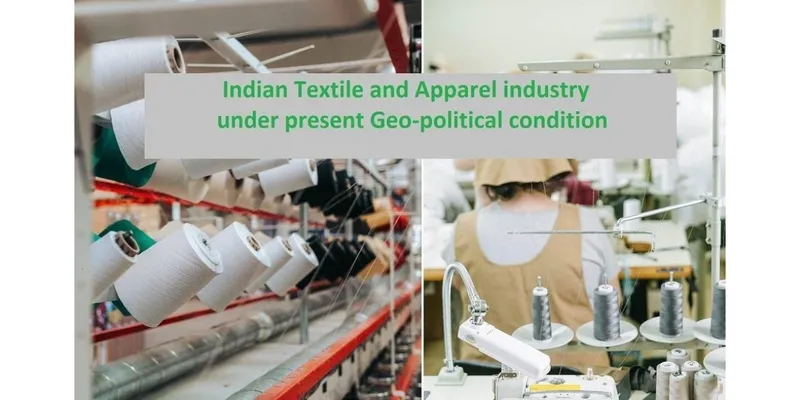
IIT Delhi event to examine the impact of global geopolitical developments on India's textile manufacturing, exports and international market position.
The 9th annual TANTU seminar will take place on 22 November 2026 at IIT Delhi, bringing together industry experts, manufacturers and other stakeholders to discuss the challenges and opportunities facing India's textile and apparel sector amid changing global geopolitical conditions.
The seminar will focus on the theme, “Indian Textile and Apparel Industry Under Present Geo-Political Conditions,” with discussions covering manufacturing, textile and apparel exports, and India's efforts to increase its share of global markets.
Industry Experts to Address Key Sectoral Issues
The seminar will feature the following speakers:
- Shri Amit Jain – Managing Director, Shinghora Textiles (P) Ltd and Past Chairman, CII Punjab State Council
- Shri Rahul Kumar Garg – Regional Lab Manager (North), SGS Pvt. Ltd (Retd)
- Dr. Nupur Bahadur – Managing Director & CEO, Nuhorizon Water and Environment Consultancy Pvt Ltd., and former Senior Scientist at TERI
Textile and Apparel Sector's Economic Contribution
India's textile and apparel industry is a significant contributor to the country's economy and employment. It is the second-largest employer after agriculture, directly engaging more than 45 million people. The sector accounts for about 7% of industrial output and approximately 2.5% of GDP.
With its market size projected to reach US$350 billion by 2030, the industry continues to support livelihoods across the textile value chain, from agriculture and fibre production to fashion.
Geopolitical Developments and Export Challenges
The industry's dependence on exports makes it particularly sensitive to international developments. Political disruptions, changing global alliances and evolving trade policies can influence export orders, raw material costs, logistics and buyer sentiment.
As a result, understanding geopolitical developments has become an important consideration for businesses planning their operations and international trade strategies.
India has expanded its network of preferential trade agreements with Australia, New Zealand, Mauritius, the UAE, Oman and the EFTA bloc, followed more recently by the United Kingdom and the European Union. A free trade agreement with the United States is also under negotiation.
These markets are important destinations for Indian textile and apparel products. Improved market access could help Indian businesses diversify their customer base and move towards higher-value products, provided they maintain the required standards of compliance, quality and delivery reliability.
The Government has also introduced various schemes to strengthen the textile and apparel industry, including measures aimed at attracting foreign direct investment.
The 9th TANTU seminar will provide a platform to discuss how the industry can respond to these changing international conditions and strengthen its position in global markets.