Tamil Nadu Leads India’s Textile Exports with 21.84% Share in FY 2024–25
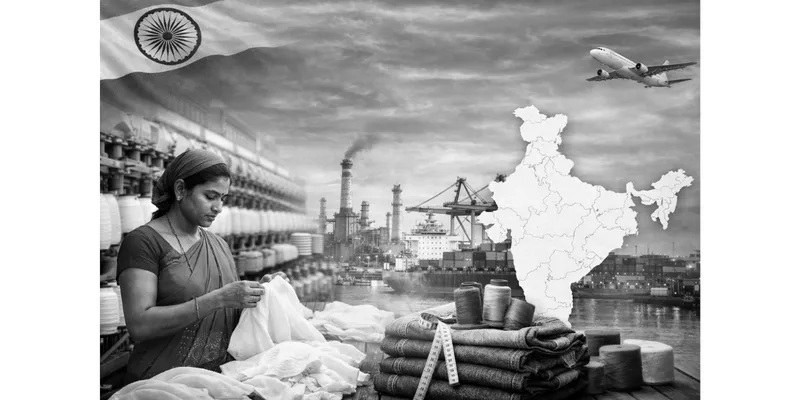
State records USD 7,997.17 million in exports, marking steady growth over four years
Tamil Nadu has recorded the highest textile exports in India for FY 2024–25, according to government data. The state achieved exports worth USD 7,997.17 million, accounting for 21.84% of the country’s total textile exports of USD 36.61 billion. The performance reflects consistent growth over recent years.
Tamil Nadu has emerged as the leading textile-exporting state in India for FY 2024–25, with exports valued at USD 7,997.17 million. This represents a 21.84% share of India’s total textile exports of USD 36.61 billion, placing the state ahead of Gujarat and Maharashtra.
The state’s export performance has increased by 29% over the past four years, rising from USD 6.19 billion in 2020–21. The growth reflects ongoing expansion within the textile sector.
Tamil Nadu’s textile industry operates through an integrated ecosystem comprising spinning, weaving, dyeing, and garment manufacturing units. These segments function in coordination across established clusters. Tiruppur, identified as a key knitwear hub, contributes significantly to export volumes by supporting scale, cost efficiency, and production timelines.
Government measures have supported sector development through capital subsidies for machinery, textile-specific policies, and initiatives aimed at strengthening industrial clusters. The textile sector also contributes to employment and supports associated industries across the value chain.
At the international level, changes in global sourcing strategies, including the “China Plus One” approach, have influenced demand patterns. Markets such as Europe, the UAE, and Asia continue to present export opportunities, supported by potential trade agreements.
The sector also faces competition from countries including Bangladesh and Vietnam, along with factors such as input costs, logistics expenses, and supply-related challenges.
Future growth is expected to depend on developments in technical textiles and man-made fibres, along with improvements in infrastructure and competitiveness in global markets.