Tamil Nadu Handlooms Make Historic Debut at Heimtextil 2026
-3-800x400.webp?2026-02-24T20:40:01.086Z)
An Exclusive Interview with Mageswari Ravikumar, IAS
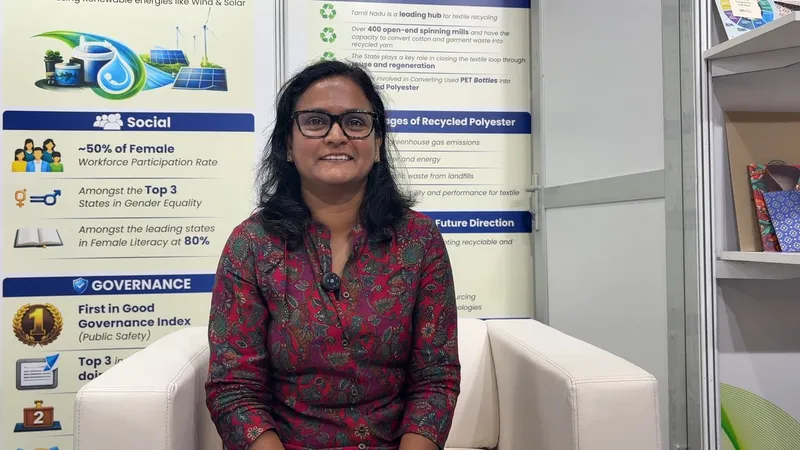
Ms Mageswari Ravikumar
IAS, Director of Handlooms,
Government of Tamil Nadu
The TVC Media Team had the privilege to speak with Ms Mageswari Ravikumar, IAS, Director of Handlooms, Government of Tamil Nadu, at Heimtextil 2026. In this exclusive conversation, Ms Ravikumar discusses the Tamil Nadu Handloom Department's historic first-time participation in the world's largest trade fair for home and contract textiles, the opportunities for handloom weavers in the international market, and the unique niche products that set handlooms apart in the global home textile industry.
Could you tell us about the Handloom Department's participation in Heimtextil and its significance?
This is the first time ever that the Government of Tamil Nadu has sent our Handloom Department directly to this show. We have 1,114 handloom societies in Tamil Nadu, which is one of its kind in India. Handloom forms a major chunk of our textile sector, and we have more than 2.4 lakh handloom weavers in our state.
We contribute significantly, especially from the Erode and Karur areas, in home furnishings. Heimtextil is the biggest opportunity for us to develop export business in home textiles. We produce a lot of home furnishing materials in Erode and Karur, and we also export through Co-Optex, which is our marketing agency.
Every year, Co-Optex participates in various exhibitions. Now, two weaver societies from Erode are participating in Heimtextil. This gives them an opportunity to see what products are being developed and explore the huge opportunities available for our exports. Thanks to our government, our weavers and weaver societies have participated through the Tamil Nadu Pavilion and the Department of Textiles. It's really a big eye-opener for us.
How can handloom products be positioned internationally to compete with mass-produced powerloom and mill-made goods?
We have our own handloom products, which we consider niche products. The durability and lifespan of handloom products is actually many years, and we have exclusive products as well.
We have created new products like mummy bags and introduced innovative materials such as bamboo fibre. We've produced bamboo towels, bamboo bed sheets, and bamboo quilts—all manufactured on our handlooms, which we have exhibited here. We usually receive traditional orders from South African countries, and we do exports accordingly. When there are requirements for traditional clothing or specific custom orders, we are definitely able to fulfill them.
We also have two exporters in Germany already, and we are looking forward to expanding our network of exporters through this Heimtextil show. Additionally, our GI products like Kanchipuram silk have been converted into handbags, pouches, laptop bags, and cushions. We have made a display of all these products here. If there is demand for silk products in any form, we can definitely supply, and they look quite appealing. Handlooms have their own charm in the international market.
Regarding pricing, do you feel that handloom products command a premium price in the international market compared to powerloom products?
We have niche products. Because of the handloom nature, there is a slightly higher price point. But since the products are exclusive, we believe we will have opportunities to sell them successfully. We already have customers in Germany who buy our products.
Some exclusive products can only be hand-woven. As I mentioned, we have orders from South Africa. If we receive more such orders, it will be a tremendous help for our handloom sector. Through these exhibition stalls, where numerous fabrics are displayed, we are able to observe and learn. Our weavers themselves have visited various stalls and gained ideas on value addition, which will help us improve our products much more.
How can handloom products be effectively positioned within the home textile category?
That's exactly what I'm highlighting. Through Co-Optex, we regularly export our handloom products from Erode. We have the Co-Optex chain and various societies that are traditionally involved in exporting. We have established exports, and we are continuously designing new products.
For example, with Bhavani Jamakkalam, we traditionally had one pattern of colours. Now we are weaving them in different colours and have exhibited these variations here. These are niche products—exclusive items like yoga mats, which we have woven. All these are our own products, which we are designing and developing through our cluster development programs and various initiatives by the Government of India and the Government of Tamil Nadu.
Is there anything you would like to say to visitors or exhibitors who were not able to attend Heimtextil 2026?
Definitely. We have many new products and innovations on display. Even if visitors have not been able to come to Heimtextil, they can visit our website and browse through our offerings. They can contact our department directly to view products, and if they wish to place orders, we will be able to supply them.
We produce quality, customer-satisfied products that we are confident will meet their requirements and expectations.
Are you planning to bring more weavers and participants next year?
Yes, definitely. This is the first time we have had this opportunity. Co-Optex is our marketing agency in Tamil Nadu for handloom, and they have been participating in various exhibitions. This Heimtextil participation is an additional opportunity for us because our weavers and society members are here.
They now have a broader idea of what is happening in the international market, where we need to concentrate our efforts, and where we need to advance. All these insights are invaluable. It's a great opportunity for the handloom sector.