Sustainable Brands Preview: The Textile Industry's New Leaders
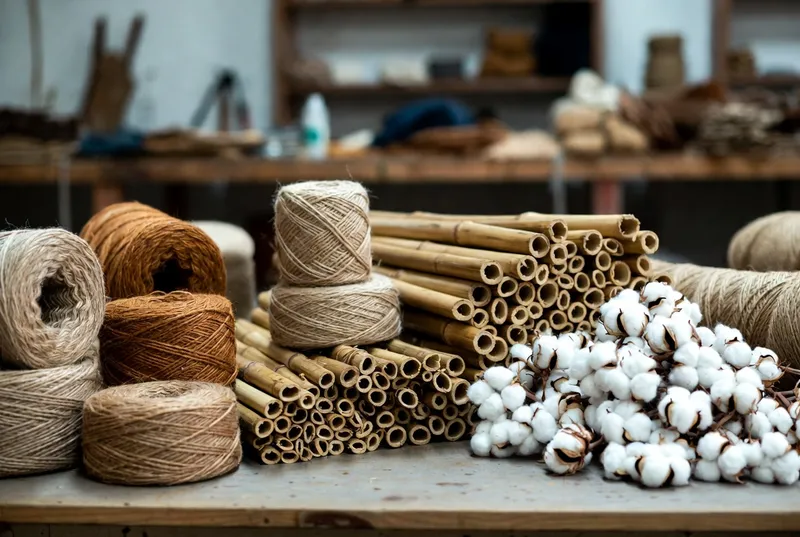
The textile industry is changing. It has to. With 92 million tons of clothing hitting landfills every year and the sector responsible for up to 10% of global carbon emissions, brands are being forced to rethink everything, from the cotton fields to the checkout counter. But here's the good news: some companies aren't just talking about sustainability. They're actually doing it.
This isn't about perfect brands (spoiler: they don't exist). It's about the ones making real moves toward a better system. The ones investing in recycled materials, circular business models, and transparent supply chains. The ones you should know about, whether you're a buyer, designer, or just someone who cares about where your clothes come from.
The Outdoor Pioneer Still Leading the Pack
Patagonia released something unusual in November 2025: their first comprehensive sustainability report with a blunt headline that read "Nothing We Do Is Sustainable[1]." For a brand often held up as the gold standard, this was refreshingly honest.
The numbers tell the story. In fiscal year 2025, Patagonia's carbon footprint[2] actually rose 2% to 182,646 metric tons of CO2 equivalent, largely due to more carbon-intensive materials in new product lines. But here's what they got right: 86% of their Fall 2025 line uses preferred materials by weight, and over 90% of products are made in Fair Trade Certified factories, benefiting more than 85,000 workers.
Their recycled polyester stands at 93%, recycled nylon at 89%. By early 2025, they completed their phase-out of PFAS "forever chemicals" from all fabrics. They're not perfect, but they're transparent about it, and that matters.
What sets Patagonia apart is its Worn Wear program, which repairs and resells used gear, and its investment in textile-to-textile recycling technologies through companies like Circ and Evrnu. They're building the infrastructure for true circularity, not just talking about it.
The Fast Fashion Disruptor
Reformation[3] calls itself a walking contradiction, and they're right. They release two new collections every week, which sounds like fast fashion. But their sell-through rate? 80% at full price, compared to the industry's massive overproduction problem, where nearly one-third of clothing made never lands in someone's closet.
Their Los Angeles factory runs on 100% wind-powered electricity. They track every product's carbon and water footprint through their RefScale system. And they're working toward being climate positive by 2025, meaning they remove more carbon than they emit.
Their first-ever 100% recycled sweaters, made from 95% recycled cashmere and 5% recycled wool, produce 96% less carbon and require 89% less water compared to conventional cashmere. The brand introduced MWool (70% recycled wool) and partnered with Renewcell to use Circulose material in upcoming collections.
Reformation's agile supply chain is its secret weapon. Instead of forecasting trends 18 months out, they make small batches and scale up only if demand is there. It's profitable sustainability, as they've hit $350 million in revenue in 2023 while staying true to their mission.
"Sustainability, for me, means moving towards a circular system where everything is transparent—from the farm all the way to fashion. It’s about adopting green energy and ensuring every step in the supply chain is accountable and eco-friendly. At RSB Group, we have embraced sustainability for years through ethically sourced cotton, certified cotton yarns, and we believe certifications are vital to building trust and driving industry-wide change. This summit brings together all stakeholders under one roof to push the boundaries of sustainable and circular textile production, which is the future of our industry."
Pranav Rathi
Director of Business Development,
RSB Group
India brings something unique to the sustainable textile conversation: a 65-year heritage of connecting rural artisans with global markets while preserving traditional crafts. FabIndia isn't a newcomer to sustainability; they were doing it before it had a name.
Founded in 1960 by John Bissell, FabIndia now works with over 55,000 rural artisans across India, creating handwoven textiles using natural dyes and organic materials. In 2025, they're focusing on adding new stores annually, with a focus on Tier 2 and Tier 3 cities[5], bringing sustainable fashion closer to smaller towns.
Over 350 stores domestically, 12 internationally, and 95-100% of their products use natural-origin fibres, with 30-40% certified organic or sustainable. Their SHUNYA collection transforms 260-300 plastic bottles[4] into a single GRS-certified rug. They've also moved away from plastic bubble wrap entirely, replacing it with shredded cardboard from their own supply chain. Over 2 million wooden hangers circulate in their stores, preventing 100 metric tons of plastic waste from landfills.
But what's impressive is the depth of their commitment. FabIndia's partnership with Chetna Organic, a farmer-owned cooperative, ensures cotton farmers receive fair prices while transitioning to organic farming. Their Niyama range of incense sticks repurposes temple flower waste from Uttar Pradesh. And they've partnered with the Indian government's PM Vishwakarma Scheme to expand artisan marketing development.
The Upcycling Revolutionaries
While others talk about waste reduction, Doodlage makes it their entire business model. Founded in Delhi in 2012 by designer Kriti Tula, the brand transforms factory-rejected fabric, surplus stock, and textile waste into limited-edition clothing where no two pieces are identical.
In 2025, founder Kriti Tula received the NextGen Trendsetter Award[6] at the Her Zindagi Womenpreneur Awards and was honoured by the Indian National Bar Association for championing circular fashion.
The impact is tangible. In a recent corporate collaboration[7] with Allied Blenders, Doodlage created handcrafted packaging from upcycled fabric waste, diverting over 2,500 kg of fabric from landfills. Their gender-fluid designs challenge both waste and traditional fashion norms simultaneously.
Each garment at Doodlage is handcrafted with a zero-waste mindset; surplus material from one design becomes accessories, stationery, laptop sleeves, and home goods. Nothing is wasted. It's the ultimate realisation of circular fashion, and it's happening right now in India.
The Textile Recycling Revolution
The biggest game-changer? Companies turning old clothes back into new fabric. This is where the real innovation is happening.
Circ is the only textile-to-textile recycler that can take polycotton blends, the stuff that usually ends up in landfills, and fully recover both polyester and cotton. In March 2025, they secured $25 million in funding[8] from investors, including Inditex and Avery Dennison. They've partnered with brands to commercialise textile-to-textile recycled fibres, including in footwear.
Ambercycle breaks down post-consumer textile waste into high-quality fibres. Their proprietary technology creates virgin-equivalent materials that can be sold at the same cost as virgin inputs. That's crucial—if recycled materials cost more, most brands won't use them at scale.
Infinited Fibre Company is building their first commercial plant[9] with 30,000 metric tons of annual capacity, enough for around 100 million T-shirts. Their technology transforms cotton-rich into a new high-quality cellulose fibre called Infinna™, with most future production already sold out as they target 500,000 metric tons by 2030.
The challenge? Right now, less than 1% of textiles get recycled into new clothing. But with Extended Producer Responsibility (EPR) regulations kicking in across the EU and parts of the US, brands are finally being held accountable for what happens to their products after customers are done with them.
"Circularity in textiles is not just a responsibility for recyclers alone; it is a shared goal that unites the entire value chain—from waste collectors to brands. This collaborative effort can turn the challenge of circularity into a real opportunity. At Alliance Fibres, we believe circularity starts with thoughtful product design, selecting raw materials that can be recycled efficiently, minimising waste, and ensuring products can be reused, repaired, or regenerated into new fibres. Mechanical recycling has its limits, but with innovations in chemical recycling, we are moving towards 100% circular textiles without compromising quality. Circularity is not a pain, it’s an opportunity—please grab it."
Kuldeep Sangani,
Director,
Alliance Fibres Ltd.
The Materials Science Innovators
“True progress in textile machinery demands a revolution. The future of textiles is woven with the thread of sustainability. Machinery must now be designed not just for speed and output, but for minimal water, energy, and waste. We must pioneer closed-loop systems, minimising the carbon footprint of synthesis. Eco-efficiency in every machine cycle is not an option; it is our blueprint for the legacy.”
Sudipto Mandal
Regional Sales Director,
Oerlikon Barmag
PANGAIA isn't just a clothing brand; it's a materials lab that happens to make clothes. In May 2025, they launched what might be the most advanced plant-based activewear on the market.
Their 365 Seamless Activewear collection[10] uses 100% bio-based EVO Nylon from castor beans and industrial corn, combined with Hyosung's regen BIO Max elastane made from 98% renewable resources, including corn-based feedstock. PANGAIA is the first brand globally to use this elastane commercially.
It has a 27% lower carbon footprint than traditional spandex and reduces ozone depletion by 82%. It's finished with PPRMINT treatment from natural peppermint oil that neutralises bacteria and extends freshness between washes.
PANGAIA's material portfolio includes FLWRDWN (insulation made from wildflowers), C-FIBER (from eucalyptus pulp and seaweed), and PANettle denim featuring wild Himalayan nettle. They're proving that high-performance and sustainability aren't mutually exclusive.
Smaller Brands Making Noise
Harvest & Mill produces naturally dyed clothing using organic fibres in California. MagicLinen in Lithuania produces sustainable linen in small batches using the full flax plant. Pact makes organic cotton essentials using Fair Trade practices at accessible price points.
In India, Anita Dongre's Grassroot employs female village artisans preserving ancient crafts. The Summer House partners with 17 craft clusters using organic fabrics and natural dyes. Okhai, backed by Tata Chemicals, promotes handcrafted apparel by rural women artisans.
Why You Should Care
If you work in textiles (designing, buying, manufacturing), these brands are setting the standards everyone else will have to follow. The regulatory environment is shifting fast, and what's innovative today will be baseline tomorrow.
If you're buying clothes, knowing these brands helps you vote with your wallet. Every purchase is a signal about what kind of industry you want to exist.
The textile industry produces 132 million tons of fibre annually, up from 125 million tons just two years ago. India's textile industry contributes 10% of the global industry's carbon footprint. That growth is colliding with climate limits. Something has to give. These brands are betting that what gives is the old way of doing things.
They're probably right.
Citations:
[1] Patagonia’s First Sustainability Report Reveals Stark Truth: “Our Actions Aren’t Sustainable”
[2] Patagonia's carbon footprint
[3] Reformation
[4] Fabindia launches rugs made from recycled PET yarn
[5] Fabindia Plans to Scale Presence in Tier II & III Markets, Eyes Global Growth
[6] Kriti Tula received the NextGen Trendsetter Award
[7] Doodlage launches collaborative ceramics line, holds eco clean-up operation
[9] Infinited Fiber Company accelerates scaling plans amid turbulence
[10] 365 Seamless Activewear collection