Sustainability: A Business Choice to Market Necessity
The next phase of Apparel leadership will belong to businesses that do not simply promise sustainability, but deliver measurable, actionable, and consistent sustainability results.

Arvind Gaur
Introduction: Sustainability at the Centre of Business Strategy
Sustainability, what was once viewed primarily as a corporate social responsibility initiative or a tool for brand positioning, has evolved into an important business requirement. Today, sustainability increasingly influences sourcing decisions, supplier selection, investment evaluations, regulatory compliance, and access to international markets.
The global textile and apparel industry operates within a complex value chain, encompassing agriculture, fibre production, spinning, weaving, knitting, dyeing, processing, garment manufacturing, distribution, and retail. Each stage has a distinct environmental footprint, from water consumption and energy use to chemical discharge, greenhouse gas emissions, and textile waste.
As international brands, retailers, investors, regulators, and consumers become more conscious of these impacts, textile manufacturers face growing expectations to demonstrate measurable progress towards responsible production. Sustainability is no longer simply about making commitments; it is about translating those commitments into operational performance, transparent reporting, and commercially viable solutions.
For textile manufacturers, the central question has therefore changed. It is no longer whether sustainability deserves attention, but how effectively it can be integrated into business strategy while maintaining quality, productivity, profitability, and competitiveness.
1. The Changing Dynamics of Global Sourcing
Global sourcing is undergoing a significant transformation. Traditionally, purchasing decisions were driven largely by price, quality, delivery timelines, production capacity, and reliability. These fundamentals remain essential, but sustainability performance is becoming an additional and very important factor in evaluating suppliers.
International buyers increasingly seek visibility into the environmental and social practices of their supply chains. Depending on the customer and market, expectations may include traceable raw materials, responsible chemical management, water and energy efficiency, carbon emissions data, and credible third-party certifications.
This shift creates both opportunities and challenges for manufacturers. Suppliers that can demonstrate responsible production practices, maintain accurate records, and provide reliable sustainability data may be better positioned to retain existing customers and develop new business relationships.
Conversely, manufacturers that cannot meet evolving buyer requirements may face additional audits, corrective action requests, restricted sourcing opportunities, or exclusion from certain supply chains.
Sustainability is consequently becoming a component of commercial competitiveness. It must be embedded in procurement, manufacturing, quality management, and customer engagement rather than treated as a separate departmental activity.
2. Low-Impact Fibres: Rethinking Raw-Material Choices
Raw materials are among the most important considerations in the environmental performance of textiles. The selection of fibres influences agricultural inputs, water requirements, processing characteristics, durability, recyclability, and the overall footprint of the finished product.
Low-impact fibres are attracting increasing attention as manufacturers and brands explore ways to reduce environmental pressures without compromising product performance.
These materials include responsibly sourced natural fibres, recycled fibres, and innovative alternatives derived from renewable resources. However, the term “low-impact” must be evaluated carefully. The environmental benefits of a fibre depend on its origin, production method, processing requirements, durability, transportation, and end-of-life options.
For manufacturers, fibre selection must also consider practical requirements such as strength, colour consistency, handle, shrinkage, dyeability, availability, and cost. A sustainable material can only become commercially successful when it meets the functional and aesthetic expectations of the market.
The industry therefore needs a balanced approach that combines environmental assessment with technical performance and economic feasibility.
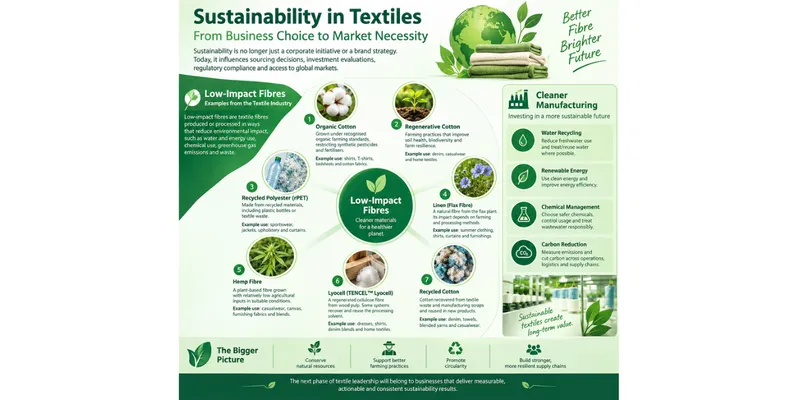
Low-impact fibres are textile fibres that are produced or processed in ways that aim to reduce environmental impact, such as water consumption, energy use, chemical use, greenhouse gas emissions, and waste.
Here are some examples relevant to the textile industry.
Examples of low-impact fibres
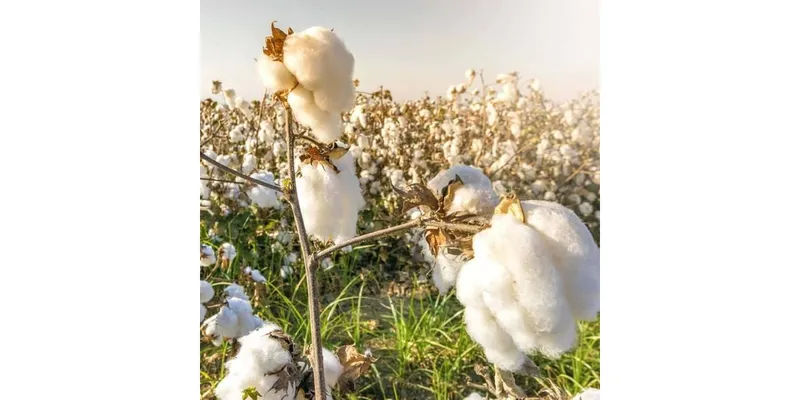
2.1. Organic cotton
Cotton grown according to recognised organic farming standards, which restrict specified synthetic pesticides and fertilisers.
Example use: shirts, T-shirts, bedsheets and other cotton fabrics.

2.1. Regenerative cotton
Cotton produced using farming practices intended to improve soil health, biodiversity and farm resilience.
Example use: denim, casualwear and home textiles.
2.3. Recycled polyester (rPET)
Polyester made from recycled materials, including suitable plastic bottles or recovered textile waste.
Example use: sportswear, jackets, upholstery and curtains.
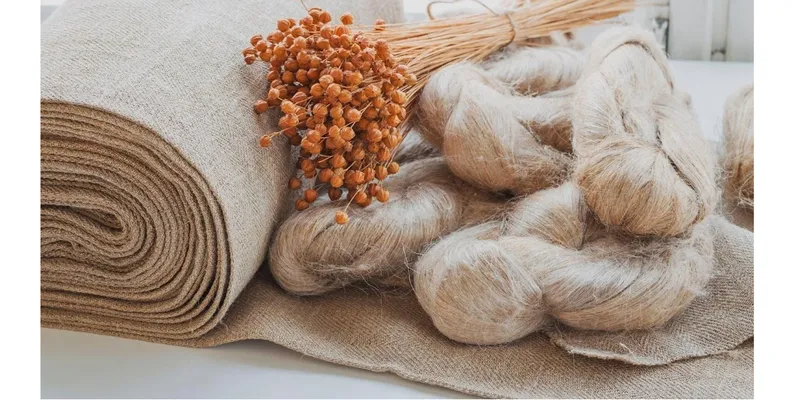
2.4. Linen (flax fibre)
A natural fibre obtained from the flax plant. Its environmental impact depends on farming practices, processing and local conditions.
Example use: summer clothing, shirts, curtains and furnishings.
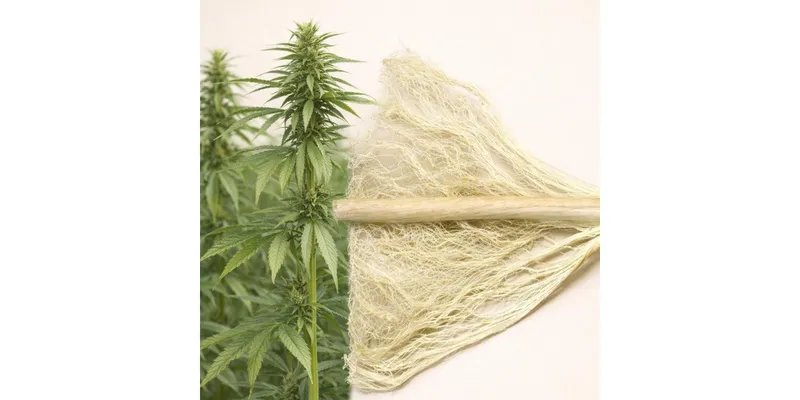
2.5. Hemp fibre
A plant-based fibre that can be grown with relatively low agricultural inputs in suitable conditions.
Example use: casualwear, canvas, furnishing fabrics and blended textiles.

2.6. Lyocell (such as TENCEL™ Lyocell)
A regenerated cellulose fibre generally made from wood pulp. Some production systems recover and reuse most of the processing solvent.
Example use: dresses, shirts, denim blends and soft home textiles.
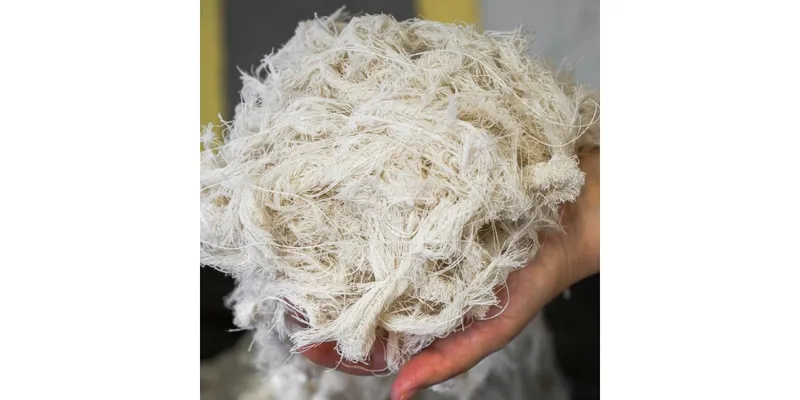
2.7. Recycled cotton
Cotton recovered from textile waste or manufacturing scraps and converted into fibre for reuse.
Example use: denim, towels, blended yarns and casualwear.
3. Bio-Based Fibres: Innovation in Raw-Material Sourcing
Bio-based fibres are opening new possibilities for textile innovation. Derived partly or wholly from renewable biological resources, these materials include certain plant-based fibres, regenerated cellulosic fibres, and emerging materials developed from biological feedstocks.
Their potential advantages vary according to the raw material and manufacturing process. Some may offer opportunities to reduce reliance on fossil-based resources, while others may introduce new challenges involving land use, chemical inputs, energy consumption, or end-of-life performance.
Commercial adoption will depend on consistent quality, scalable production, competitive pricing, reliable supply, and compatibility with existing textile machinery.
Manufacturers must evaluate these materials through technical trials and credible lifecycle assessments. Innovation should be encouraged, but environmental claims must be supported by evidence.
4. Cleaner Manufacturing: Water, Energy, Chemicals, and Carbon
Fibre innovation alone cannot deliver a sustainable textile industry. Processing operations, particularly wet processing, require equally serious attention.
Water recycling and reuse: Dyeing, washing, bleaching, and finishing can require significant quantities of water. Improved process control, counter-current washing, water-efficient machinery, and suitable treatment and reuse systems can help reduce freshwater consumption. The feasibility of reuse depends on effluent characteristics, treatment technology, and the quality requirements of subsequent processes.
Renewable energy and energy efficiency: Energy-efficient motors, improved boilers, heat recovery, process optimisation, and renewable electricity can reduce energy consumption and associated emissions. Solar energy and other renewable solutions may offer additional benefits where technically and economically feasible.
Responsible chemical management: Better chemical selection, inventory control, safe storage, accurate dosing, and wastewater treatment can reduce environmental and operational risks. Manufacturers supplying international markets must also understand applicable restricted-substance requirements and customer-specific chemical standards.
Carbon reduction: Establishing an emissions baseline is an important first step. Businesses can then identify opportunities to reduce emissions from electricity, fuels, manufacturing processes, logistics, and purchased materials. Progress should be measured consistently, with transparent reporting of the scope and boundaries of the assessment.
These initiatives can deliver environmental benefits while also improving operational efficiency. Reduced water and energy consumption, lower material losses, and more consistent processes can contribute to cost control and manufacturing resilience.
5. Sustainability as an Investment Decision
One of the most important changes is the growing recognition that sustainability investments must be evaluated through both environmental and financial performance.
Manufacturers need to understand the capital expenditure, operating costs, expected savings, maintenance requirements, and payback period associated with each initiative. Some projects may generate relatively quick returns through energy efficiency or reduced chemical consumption, while others require longer-term investment in infrastructure and technology.
A structured approach can help businesses prioritise projects according to environmental impact, commercial relevance, technical feasibility, and financial viability.
Small and medium-sized manufacturers may face particular constraints in financing equipment upgrades, adopting digital monitoring systems, or obtaining certifications. Collaboration with customers, technology providers, financial institutions, and industry associations can help address these barriers.
The objective should be to make sustainability an integral part of capital planning and continuous improvement rather than an isolated expenditure.
6. Traceability, Measurement, and Credible Communication
As sustainability expectations increase, the ability to demonstrate results becomes as important as the initiatives themselves.
Manufacturers need reliable data covering raw-material sourcing, water consumption, energy use, waste generation, chemical management, and emissions. Digital systems can improve data collection, identify inefficiencies, and support communication with customers.
Traceability is particularly important when working with certified or specialised fibres. Businesses must maintain appropriate records and comply with the relevant certification or chain-of-custody requirements.
Equally important is responsible communication. Broad statements such as “eco-friendly” or “100% sustainable” can be misleading when they are not supported by clear evidence. Specific, measurable, and verifiable claims build greater trust with buyers and stakeholders.
Manufacturers should focus on demonstrating what has improved, how the improvement was measured, and what further action is planned.
7. The Road Ahead: From Compliance to Competitive Advantage
The future of the textile industry will be shaped by its ability to combine commercial excellence with environmental responsibility. Sustainability will not replace the fundamentals of manufacturing; rather, it will increasingly influence how effectively businesses deliver quality, cost, reliability, innovation, and market access.
The transition will require collaboration across the value chain. Farmers must adopt suitable agricultural practices, fibre producers must improve material performance, manufacturers must invest in cleaner production, and brands must support responsible sourcing through realistic commercial expectations.
For India's textile industry, this transition presents a significant opportunity. The country's integrated textile ecosystem, manufacturing capabilities, skilled workforce, and growing technical expertise can support the development of more responsible products and processes. Realising this opportunity will depend on investment, infrastructure, credible standards, innovation, and consistent implementation.
The most successful businesses will be those that approach sustainability pragmatically: setting measurable goals, prioritising high-impact improvements, engaging employees, collaborating with suppliers, and communicating progress transparently.