Surreal Art’s Global Revival Reflects a Search for Meaning Beyond Reality, Says Abhay Sehgal
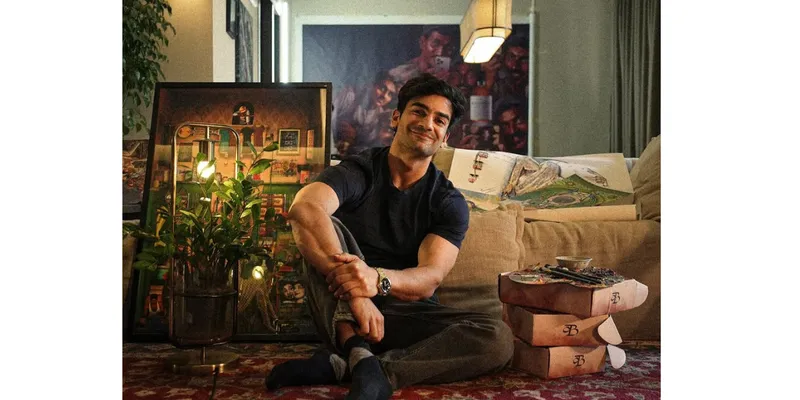
Artist explores symbolism, identity and contemporary culture, highlighting the growing relevance of surrealism in today’s visual landscape.
Surreal art is often described as a departure from reality, but artist Abhay Sehgal presents it instead as a way to express experiences and emotions that cannot always be communicated through literal imagery.
According to Sehgal, while realistic art can depict events, surrealism has the ability to convey how those events are experienced emotionally. In an environment where visual content is consumed rapidly and attention spans are increasingly limited, he argues that surreal art encourages viewers to pause, engage with ambiguity and consider multiple interpretations.
Rather than beginning with predetermined messages, Sehgal explains that his creative process starts with questions. Conversations, memories and emotions often serve as the starting points for his work, allowing the meaning of a painting to emerge during its creation instead of being defined in advance.
He notes that the period following the pandemic prompted broader reflection on identity, personal priorities and emotional experiences. Within this context, surrealism provides space for individual interpretation, enabling viewers to connect with artwork through their own perspectives and experiences.
Sehgal also points to India's long tradition of symbolic storytelling, referencing mythology, temple architecture, miniature paintings and textiles as examples of artistic forms that have historically conveyed layered meanings. He explains that symbols such as the lotus, the tiger and traditional carpet patterns have often represented ideas extending beyond their visual appearance.
Building on this tradition, Sehgal incorporates carpet motifs into his own paintings, combining historical symbols with contemporary visual references. He says this approach explores how modern Indian identity is shaped by both cultural heritage and global influences.
Reflecting on contemporary life, the artist observes that today's cultural experiences are increasingly interconnected, with influences drawn simultaneously from mythology, international fashion, cinema and digital media. He believes these overlapping influences create identities that are multifaceted rather than linear.
Sehgal also notes that viewers frequently ask about the meaning of his paintings, but he does not always assign a single interpretation to his work. In some cases, he says, he understands a painting only after completing it, while viewers often identify themes or ideas that were not consciously intended during its creation. For him, this ongoing dialogue between artwork and audience is an essential part of the artistic process.
Looking ahead, Sehgal argues that while artistic techniques and visual styles may be replicated, personal experiences and individual perspectives remain unique. He suggests that surrealism continues to resonate because it allows space for uncertainty and encourages engagement with questions that may not have definitive answers.