Surat Weavers Continue Work Amid Embroidery Workers’ Protests Over Wages and Working Hours
Textile Industry Representatives Say Weaving Units Remain Operational as Embroidery Workers Seek Eight-Hour Shifts and Weekly Holidays
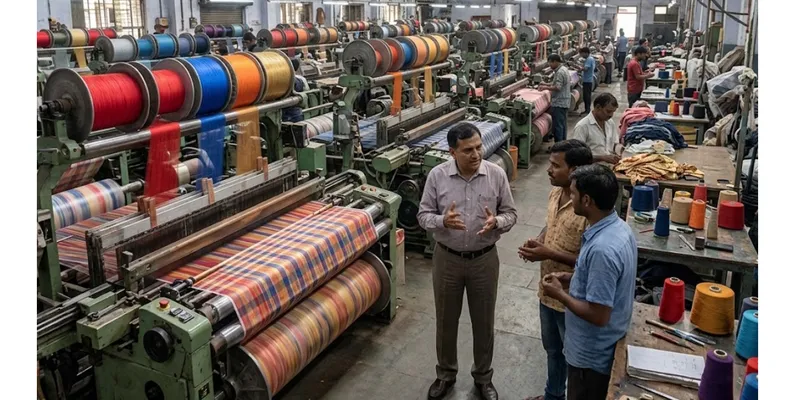
Weaving units across Surat continue to operate amid ongoing protests by embroidery workers over wages, working hours and weekly holidays. While embroidery workers have been raising demands for changes to existing work arrangements, industry representatives say weaving operations remain largely unaffected, with production continuing across the city’s textile manufacturing sector.
Weaving Units Maintain Production
Surat, one of India’s major man-made fabric manufacturing hubs, has a daily production capacity of six crore metres. According to industry stakeholders, weaving operations have remained largely unaffected despite attempts by certain groups to disrupt work.
The local textile sector employs around 15 lakh workers, with weaving units engaged in the production of man-made fabrics, processing and other related activities.
Industry representatives said production continues because workers’ earnings are directly linked to the quantity of fabric produced. They added that workers in weaving units have not objected to the existing arrangements, as their income depends on production output.
Embroidery Workers Seek Changes to Work Arrangements
Embroidery workers, meanwhile, are seeking an eight-hour shift and a weekly holiday, alongside wages equivalent to those paid for a 12-hour shift. According to industry stakeholders, earnings in embroidery units can amount to around Rs 30,000 on average.
The protests have continued as workers seek changes to existing working conditions and wage structures.
Industry Representatives Call for Dialogue
Industry representatives said uninterrupted weaving operations have been supported by regular engagement between employers and workers, as well as a production structure linked to output.
They also noted that wages differ according to fabric type and production rates.
Vijay Mangukiya, a weaving unit owner in Amroli, said:
“The workers are paid per metre of production and different fabrics have different wage rates. We have been giving a weekly day off when the shift changes,”
He added that weaving unit owner associations had given a weekly day off where embroidery protests turned violent in August.